OpenAI Slashes GPT-5.6 Token Rates
Running production agents gets expensive fast when model calls happen millions of times a day. If your infrastructure budget is spent grinding out document summarization or query routing, token rates dictate your operational limits. On July 30, 2026, OpenAI shifted those limits by slashing API prices for two key models in its frontier GPT-5.6 lineup.
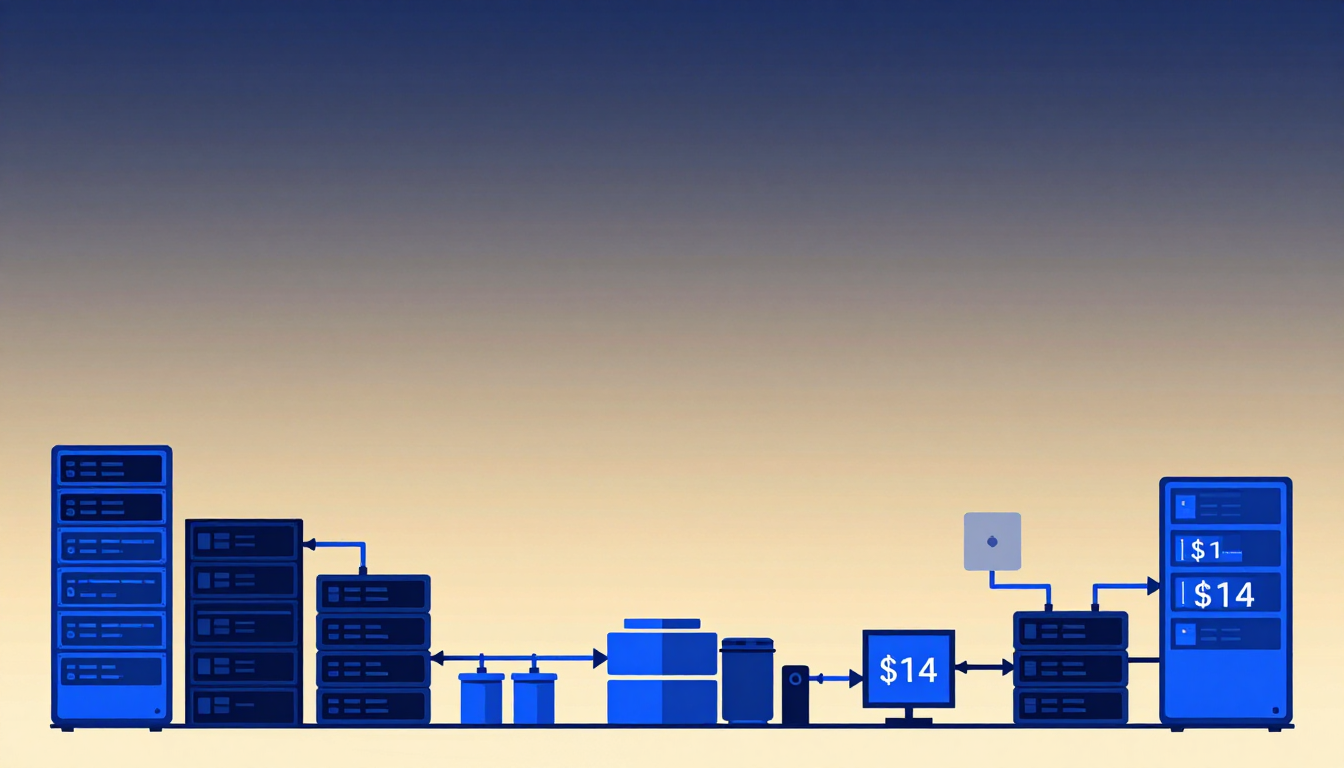
According to reporting from VentureBeat, OpenAI CEO Sam Altman announced what he called "major price cuts today" on X. The biggest headline is GPT-5.6 Luna. OpenAI cut Luna’s combined token price by 80%, dropping it from $7.00 per million tokens to just $1.40 per million. At the same time, mid-tier GPT-5.6 Terra dropped 20%, moving from $17.50 to $14.00 per million tokens.
These cuts don't come out of nowhere. Google recently introduced Gemini 3.6 Flash and Gemini 3.5 Flash-Lite, while Anthropic launched Claude Opus 5 at the same price point as its predecessor. But where Google is pushing efficiency through reduced tool calls and Anthropic is offering more capability at flat sticker prices, OpenAI is directly undercutting token costs. That difference changes how platform engineers architect multi-agent systems.
Inside the New GPT-5.6 Tier Pricing
The GPT-5.6 series first emerged in late June 2026 under a limited U.S. government rollout before opening to general availability. OpenAI designed the family with three distinct tiers: Luna for speed, Terra for general workloads, and Sol for heavy reasoning.
Luna Drops to Budget Tier
Luna used to sit in a middle ground that made high-throughput tasks hard to justify financially. At launch, it cost $1.00 per million input tokens and $6.00 per million output tokens. Now, input drops to $0.20 per million and output drops to $1.20 per million.
That combined $1.40 per million rate puts Luna straight into competition with low-cost commercial models. While hyper-budget open models like Xiaomi’s MiMo-V2.5 Flash ($0.40 total) and DeepSeek’s deepseek-v4-flash ($0.42 total) remain cheaper on paper for teams weighing open-weight models, Luna gives infrastructure teams a top-tier frontier model architecture at budget pricing.
For high-volume worker nodes—like classifier loops, log parsers, and routing proxies—an 80% price reduction is huge. It turns Luna into a default workhorse for lightweight agent tasks.
Terra Matches Gemini Pro Rates
Terra's price drop from $17.50 to $14.00 per million tokens ($2.00 input / $12.00 output) reshapes OpenAI's middle tier. At $14.00 combined, Terra matches Google’s Gemini 3.1 Pro Preview pricing for context windows up to 200,000 tokens.
More importantly, it provides a massive efficiency gap over legacy models. As Nic Dunz from Krea AI noted on X, Terra delivers intelligence comparable to GPT-5.4 but at roughly 1/13th the effective cost. That widened gap creates clear structural separation across the GPT-5.6 family: Luna costs one-tenth as much as Terra, while Terra costs 60% less than Sol Standard.
Sol Adds High-Speed Fast Mode
OpenAI didn't cut the base price of its top-end model, GPT-5.6 Sol Standard. That stays fixed at $5.00 per million input tokens and $30.00 per million output tokens ($35.00 combined).
Instead, OpenAI added Sol Fast mode. Priced at double the standard rate—$10.00 input and $60.00 output ($70.00 total)—Sol Fast offers up to 2.5 times higher throughput without modifying the underlying weights. It is the most expensive configuration in the frontier API market, aimed squarely at latency-bound enterprise jobs where execution speed overrides cost constraints.
How OpenAI, Google, and Anthropic Compete
This price war isn't just about sticker rates; it's a clash of optimization strategies.
Google framed its Gemini 3.6 Flash ($9.00 total) and Gemini 3.5 Flash-Lite ($2.80 total) around execution efficiency. Google argued that reducing reasoning steps and limiting unnecessary tool calls lowers total workflow costs. On the Artificial Analysis Index, Gemini 3.6 Flash used between 17% and 65% fewer output tokens on long engineering tasks compared to earlier releases.
Anthropic took a third path with Claude Opus 5. Priced at $5.00 input and $25.00 output ($30.00 total), Opus 5 keeps the exact pricing of Opus 4.8 while delivering capabilities near its premium Fable 5 tier at roughly half the price. Anthropic also added adjustable effort controls, letting engineers dial down depth to save tokens.
Yet independent benchmarks from Artificial Analysis show OpenAI winning on raw cost-per-intelligence metrics. Even Luna outperforms Gemini 3.6 Flash and older Gemini 3.1 Pro on evaluation benchmarks. AI coding startup Cognition highlighted on X that GPT-5.6 sits cleanly on the Pareto curve for price and performance efficiency, delivering higher benchmark scores per dollar spent than competing platforms.
Infrastructure Impacts for SREs and Platform Engineers
From an SRE perspective, raw token price drops change how we design agent orchestration pipelines.
When low-tier models cost $7.00 per million tokens, routing every inbound request through a front-door model added up rapidly. At $1.40 per million tokens, platform teams can afford to add aggressive filtering layers, continuous guardrail checks, and dedicated intent-routing workers in front of heavy reasoning engines.
Here is how infrastructure teams should think about deploying this updated tier structure:
- Move triage to Luna immediately: Log analysis, intent classification, and initial context distillation should migrate to Luna. You get frontier-line latency and reliability at a fraction of standard API rates.
- Standardize routine agents on Terra: Production coding pipelines, multi-turn document generation, and standard SRE incident tools fit Terra’s $14.00 price point without sacrificing core reasoning.
- Reserve Sol Fast for synchronous user flows: Unless a workflow directly blocks a human user or critical incident response loop, keep Sol on Standard mode or delegate to Terra. Paying $70.00 per million tokens for background automation will burn your cloud budget without delivering proportional value.
The shift in AI model competition is moving away from basic API access toward operational unit economics and long-term infrastructure strategy. As providers adjust rates and execution modes, building resilient, cost-aware model routing is no longer optional—it's core platform engineering.