Perplexity's Model Council Gets a Computer Platform Upgrade
Perplexity just pulled the Model Council feature out of its enterprise-only straitjacket and dropped it onto its Computer platform, where regular paying users can now configure multi-model advisory boards for a single question. The change, announced Tuesday, July 28, 2026, marks the feature's first major expansion since its February launch — and it's a meaningful one.
Originally, Model Council let you pick three models, no choice involved, and waited for a synthesizer to stitch together whatever answers came back. You got what Perplexity gave you. Now, with Computer, you pick anywhere from two to eight models. Frontier lab offerings from OpenAI, Anthropic, and Google sit alongside open-weight models like GLM and Kimi. You also control analysis depth. The synthesizer still reads everything and produces a report, but Computer can now turn that synthesis into actual work-ready assets — reports, board decks, the usual corporate machinery.
How the Council Actually Works
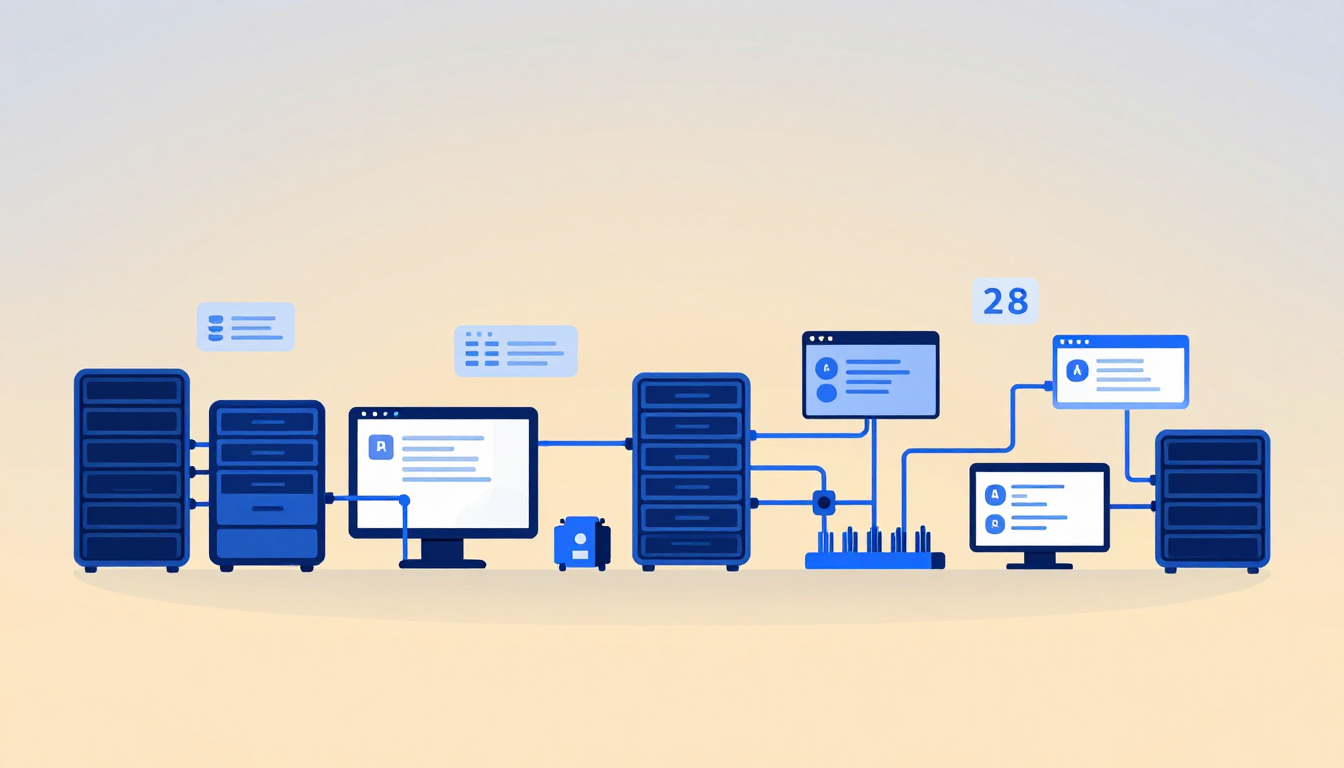
The feature functions as a skill that tells an orchestrator model to spin up parallel subagents, each acting as a full agent harness and tackling the problem independently. A wait barrier holds until every perspective finishes, then the model the user selected acts as the "chair," Jesse Dwyer, Perplexity's comms chief, explained in an email to The Register. It reads all the perspective outputs and synthesizes them, explicitly surfacing where the models agree and where they diverge.
That's the mechanism. The intent is clearer. Model Council targets ambiguous questions involving judgment calls, tradeoffs, risk assessment, or situations where there's no single right answer. Legal questions. Financial queries. Corporate decision-making. Business growth modeling. Engineering problems. The whole messy territory where the answer depends on assumptions you haven't explicitly stated.
Perplexity's pitch here is straightforward: consensus gives you confidence to move forward. Gaps show you where to go deeper. The model-to-model dialogue surfaces both.
What Users Can Actually Do
The expanded Computer platform lets you ask for additional details to sharpen the answer, then fire pointed follow-up questions to get a stronger result. Perplexity also encourages users to ask the Council for confidence levels — essentially checking what different models think of their collective output. The company notes that disagreements often stem from different starting assumptions, so asking each model to state the assumptions behind its conclusions is a useful exercise.
This isn't just a novelty. It's a way to stress-test reasoning across model families before committing to a course of action. The computer acts as an interface to Perplexity's model orchestration layer, which means the Council sits on top of an infrastructure that's already handling parallel execution. That's not nothing.
The Cost of Doing Business
Access to Model Council was previously restricted to enterprise tier customers — either $34 per month per seat for Pro or $271 for Max — plus individual Max customers at $200 a month. The Computer expansion now includes individual Max users, Pro users at $20 per month, and enterprise tiers. That's a meaningful broadening of the feature's reach.
But Computer runs on usage-based billing, and that's where things get interesting. Pro users get an initial pool of 4,000 bonus credits. Max customers get 35,000, plus a renewing 10,000 per month. Enterprise Pro customers start with 8,000 bonus credits plus 500 per month per seat. Enterprise Max customers begin with a 45,000 bonus pool and get 15,000 per seat per month.
One hundred Computer credits equal $1. A light task, like summarizing a document and pulling out key points, costs between 100 and 350 credits. A heavy task — creating work-ready assets like pitch decks — can run up to 2,275 credits. Computer credits function at the product level rather than mapping directly to raw AI token usage, so there's no clean way to predict how many credits a Model Council session will burn. Perplexity didn't get specific.
As Dwyer put it: query complexity will affect token usage more than the specific model selection. Simple queries in Computer can cost less than a penny. Complex tasks run higher.
Why This Matters
The Model Council expansion signals that Perplexity is betting on multi-model reasoning as a differentiator rather than a novelty. The feature targets the exact use cases where single-model answers tend to be most fragile — ambiguous situations requiring judgment, tradeoffs, and risk assessment. The Computer platform's orchestration layer handles the parallel execution. The synthesizer surfaces consensus and conflict. Users can drill deeper with follow-ups.
It's not free. The credit system means real costs, and the company's silence on per-session credit burn is notable. But for enterprises and power users who need to stress-test reasoning across multiple model families before making decisions, the expanded availability changes the calculus. The feature is no longer locked behind enterprise pricing. It's available to anyone willing to pay the credit toll.
Whether that's worth it depends on your use case. For legal analysis, financial queries, or corporate decision-making, multi-model consensus might be the difference between a confident decision and a costly guess. For everything else, you're paying for insurance.
Related Reading:
- What Agentic Labs Can Learn From AI's Discomfort With Uncertainty — exploring how AI systems handle uncertainty and why that matters for multi-model approaches
- Intelligent Routing: The Silent Moat for Enterprise AI Infrastructure — why model routing infrastructure is becoming critical for enterprise AI deployments
- The AI That Judges AI Agents Has No Scorecard — the challenge of evaluating AI agent outputs when there's no ground truth