Building generative media features into production software used to be simple. You picked an API, keyed in your credentials, wired up the prompt box, and called it a day.
That workflow died somewhere in early 2026.
The sheer explosion of video, image, and audio models hitting production environments over the past six months has turned model selection into a maintenance nightmare. Every few weeks, another proprietary lab or open-source team drops a checkpoint claiming benchmark supremacy while quietly altering price-per-generation math. For engineering teams, keeping up isn't just exhausting—it's expensive.
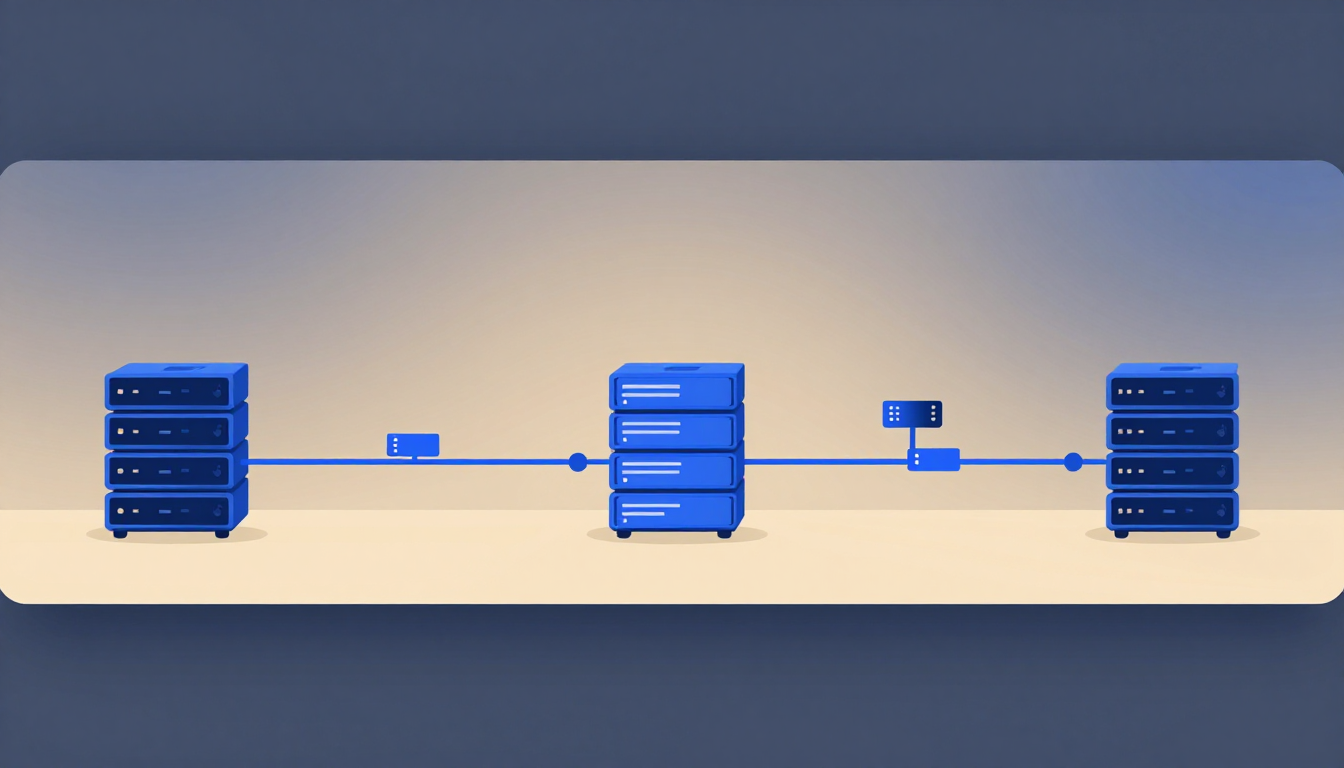
Runway’s launch of the Media Router through its developer platform, Runway Dev, marks a practical shift in response to this fragmentation. Rather than forcing software teams to lock themselves into a single generator, the system acts as an intelligent traffic controller. It automatically routes incoming media requests across visual quality, rendering latency, and token cost. It's a sharp strategic move: Runway is shifting from a pure model builder toward the underlying traffic manager for generative media.
From Frontier Benchmarks to Traffic Control
Runway earned its name on raw research. In December 2025, the company dropped Gen 4.5 alongside its first world model, briefly topping public benchmarks and beating out competing generators from tech giants like Google. By May 2026, they followed up with Aleph 2.0, a specialized video editing system.
Holding that top spot didn't last.
Public leaderboards maintained by Artificial Analysis show how crowded the generative video market has become. Top spots for text-to-video and image-to-video are now dominated by models out of Google, ByteDance, and Alibaba. Runway's Gen 4.5 no longer holds sole visual dominance across every prompt type.
Instead of trying to out-compute multi-billion-dollar cloud infrastructure providers on raw model scale alone, Runway is expanding its footprint. Co-founder and co-CEO Anastasis Germanidis noted that while Runway was long recognized primarily for its consumer creative web application, delivering production-grade media required building an entire backend stack—including custom inference engines, developer APIs, and now an orchestration layer. When enterprises build multi-shot video campaigns or automated asset generators, orchestrating outputs across multiple specialized models matters far more than relying on any single neural network.
As reported by TechCrunch, the router gives developers a unified access point to third-party models alongside Runway's own portfolio.
Balancing Latency, Cost, and Coherence
Model routers aren't new to text LLMs. System architects routinely route simple prompts to fast, low-cost models while saving heavy multi-step tasks for expensive reasoning engines—a pattern we analyzed in our look at intelligent routing. But Runway’s Media Router is the first dedicated gateway built explicitly for multi-modal generative media.
Evaluating media generation is trickier than scoring text output. You can't easily capture video motion stability, image composition, or voice lip-sync accuracy with simple perplexity scores. Chief Product Officer Anthony Maggio pointed out that most product teams don't have the bandwidth or testing rigs to benchmark every new third-party model against custom visual parameters.
Runway solves this by exposing an internal evaluation engine derived from its own product stack. In May 2026, Runway launched an agent capable of transforming text prompts into fully edited multi-shot video sequences. The routing logic that powered that internal creative agent is what now lives inside the developer API:
- Quality-driven routing: Benchmarks models across micro-capabilities, evaluating temporal movement in video, spatial layout in static images, or vocal naturalness in audio generation.
- Latency-driven routing: Sends time-critical jobs—like live user preview widgets—to high-throughput, low-latency render endpoints.
- Cost-driven routing: Caps spending by directing bulk tasks to budget-friendly APIs without blowing past token caps.
Enterprise platforms like Adobe, Cloudflare, ElevenLabs, Expedia, Shutterstock, and Quora already plug into Runway Dev APIs. For these engineering teams, the router removes the overhead of maintaining custom integration code for dozens of separate third-party endpoints.
Geopolitics, Token Tariffs, and Compliance
The financial pressure to route AI requests has intensified across the industry. Token bills from agentic workflows caught many product teams off guard in 2026, turning inference cost management into a core operational requirement—a trend explored in our deep dive on how engineering teams are routing AI costs for survival.
Runway felt this shift firsthand. Just weeks before introducing the router, the company replaced its unlimited subscription tiers with token-based metering. The change drew backlash from power users used to flat-rate rendering, but it forced alignment between company revenue and underlying compute costs. The Media Router gives enterprise clients the controls to manage those exact token budgets programmatically.
Beyond financial parameters, the router introduces location-aware policy constraints. Generative media models from Chinese labs like ByteDance and Alibaba have proven highly capable on visual benchmarks. But regulatory scrutiny and corporate data governance prevent many Western enterprises from sending user data or proprietary assets to foreign infrastructure. Maggio highlighted that developers can enforce geographic restrictions—for instance, locking model selection exclusively to U.S.-based providers. With the U.S. administration reviewing sanctions and trade restrictions on foreign open-weight models, geographic routing is fast becoming a hard regulatory requirement rather than an optional preference.
The Orchestration Layer Wins the Platform War
Since launching in 2018, Runway has focused on building at the intersection of machine learning and creative workflows. Transitioning Runway Dev into an open routing layer fundamentally alters its business model.
Instead of treating competing models as existential threats, Runway wraps them inside its monetized infrastructure. When a developer routes a generation request through the Media Router to an external model provider, Runway charges for orchestration and API management regardless of who renders the final pixels.
This shift presents a real architectural decision for engineering leads. Relying on the Media Router swaps single-vendor model lock-in for platform lock-in on Runway’s API. But in an environment where model rankings flip monthly, delegating model selection to an automated router is usually a trade worth making. Rather than spending engineering sprints rewriting integration pipelines whenever a new checkpoint drops, developers gain a single API contract that adapts under the hood.
Generative media won't be dominated by a single winning model. The winning architecture will belong to whatever gateway effectively manages the noise.