
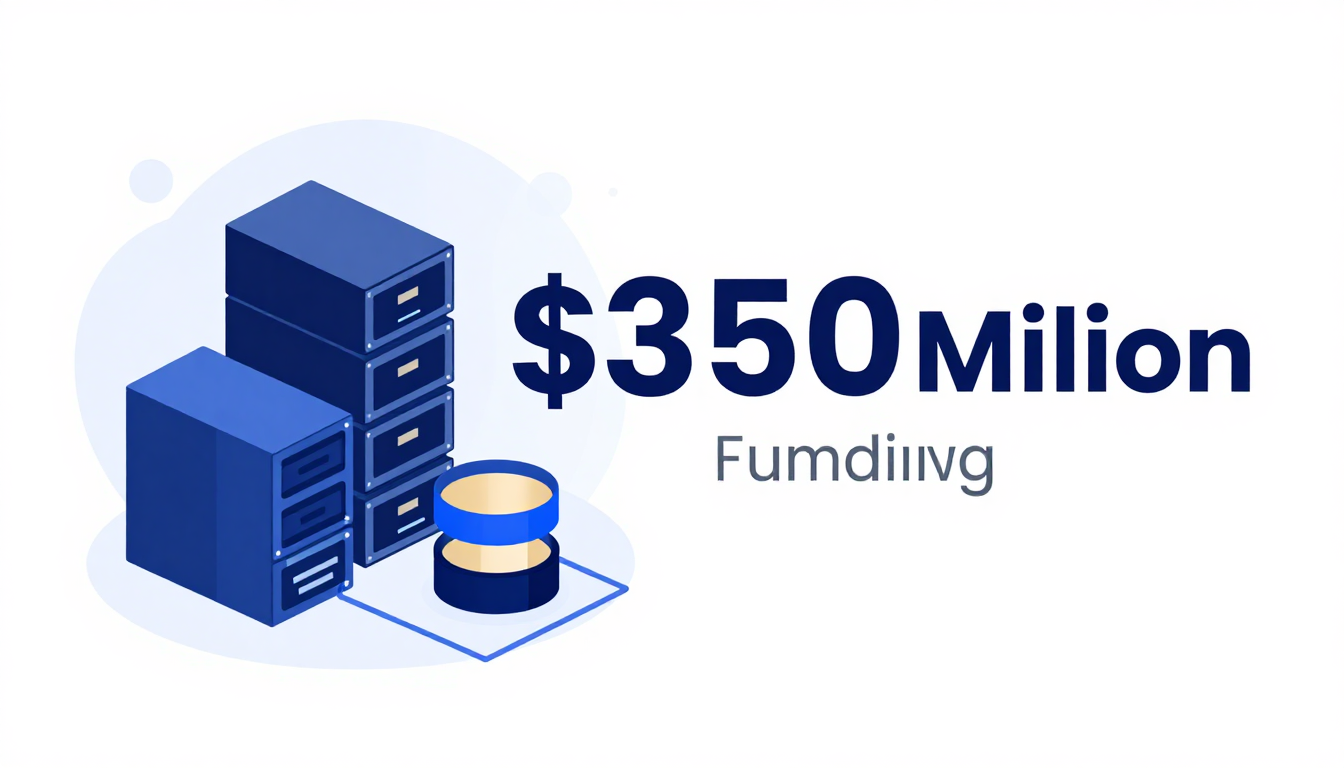
TensorWave Secures $350 Million to Scale AI Infrastructure with AMD Chips
TensorWave, an emerging AI infrastructure startup positioning itself as a compelling alternative to NVIDIA-centric data center operators, has closed a massive $350 million funding round that values the company at $1.55 billion.
The investment, led by prominent venture capital firms, will be deployed to rapidly expand TensorWave's global data center footprint with thousands of AMD's latest AI accelerators. The move signals a significant shift in the AI infrastructure landscape, offering enterprises and cloud providers an alternative path to access cutting-edge compute resources without being locked into NVIDIA's dominant ecosystem.
For more context on the competitive AI hardware landscape, see our coverage of AI infrastructure startups and how they're challenging traditional players.
A Strategic Alternative to NVIDIA Dominance
TheTensorWave funding round comes at a pivotal moment in the AI infrastructure race. While NVIDIA continues to dominate the GPU market with its H100 and upcoming B100 chips, TensorWave has carved out a niche by building hardware-agnostic infrastructure that can leverage AMD's MI300 series and future generations of accelerators.
Investors see TensorWave as a strategic hedge against the growing dominance and pricing power of NVIDIA. By securing supply agreements for AMD chips and designing its infrastructure around open standards, TensorWave offers a compelling value proposition to enterprises concerned about vendor lock-in and rising compute costs.
Compare this approach with industry giants: see our analysis of NVIDIA's pricing initiatives and the broader AI hardware market dynamics.
Expansion Plans and Data Center Strategy
The $350 million war chest will be primarily directed toward three key areas:
- Geographic Expansion: Building new data centers in key markets to serve global demand for AI compute
- Hardware Procurement: Securing long-term supply agreements with AMD to ensure stable access to MI300 and future chip generations
- Software Stack Development: Building orchestration tools that make it easier for developers to deploy workloads across heterogeneous hardware
Industry insiders estimate the funding will enable TensorWave to more than double its available AI compute capacity within the next 12 months, positioning it as a serious contender in the $100 billion+ AI infrastructure market.
For background on how data center investments are scaling with AI demand, see our feature on Indian data center growth.
The AMD Chip Advantage
While many AI infrastructure startups have pursued custom silicon or niche accelerator approaches, TensorWave's decision to standardize on AMD chips represents a strategic calculation:
- Competitive Pricing: AMD's MI300 series offers compelling performance-to-price ratios compared to NVIDIA's flagship products
- Supply Chain Diversification: Enterprises are increasingly interested in AMD as a supplier alternative, reducing dependency on NVIDIA's constrained capacity
- Open Ecosystem: AMD's open software strategy with ROCm provides developers with more flexibility than NVIDIA's CUDA ecosystem
The company's engineering team, many of whom have backgrounds at major cloud providers and GPU manufacturers, has built software layers that abstract away hardware differences, enabling seamless workload migration across AMD's product roadmap.
Learn more about the MI300 series and how it compares to competing solutions in our hardware deep dives.
Market Implications and Competitive Dynamics
The TensorWave funding round has significant implications for the broader AI infrastructure market:
- Increased Competition: More viable alternatives to NVIDIA could drive better terms and innovation across the sector
- Enterprise Bargaining Power: Companies using TensorWave's infrastructure gain leverage in negotiations with all major cloud and GPU providers
- Investor Interest: The $1.55 billion valuation signals strong confidence in the standalone AI infrastructure business model, separate from cloud provider margins
Analysts note that while NVIDIA remains the clear leader, the existence of well-funded alternatives like TensorWave is already influencing competitive dynamics, with NVIDIA recently announcing new pricing initiatives and partnership programs in response.
Explore our comprehensive AI business coverage for more insights into funding rounds and market shifts.
Looking Ahead
With its $350 million war chest and strategic focus on AMD hardware, TensorWave is positioned to challenge the status quo in AI infrastructure. The company's success will depend on its ability to execute on rapid scaling, secure competitive chip supply, and build developer adoption for its platform.
Industry watchers expect to see TensorWave announce partnerships with major enterprises and cloud customers within the next quarter as it begins turning its funding into real-world infrastructure. The coming months will be critical in determining whether the startup can translate its substantial funding into sustainable market share against entrenched players like NVIDIA and major cloud providers.
Stay updated by following our AI infrastructure blog for real-time coverage of this rapidly evolving market.