Beyond the Morning Boost: How Coffee Really Affects Your Brain
For most of us, that morning cup of coffee isn't really about the taste. It’s a ritual. It’s an essential, non-negotiable step to flip the switch from "snoozing" to "functioning." We drink it, we feel alert, the mental fog lifts, and we move on with our lives.
But treating coffee as simply a caffeine-delivery system is like admiring a piece of modern architecture only for its structural steel. You’re missing the point. Recent research is revealing that the liquid in your mug is a complex brew of hundreds of biologically active compounds—polyphenols, alkaloids, and compounds that act like fiber.
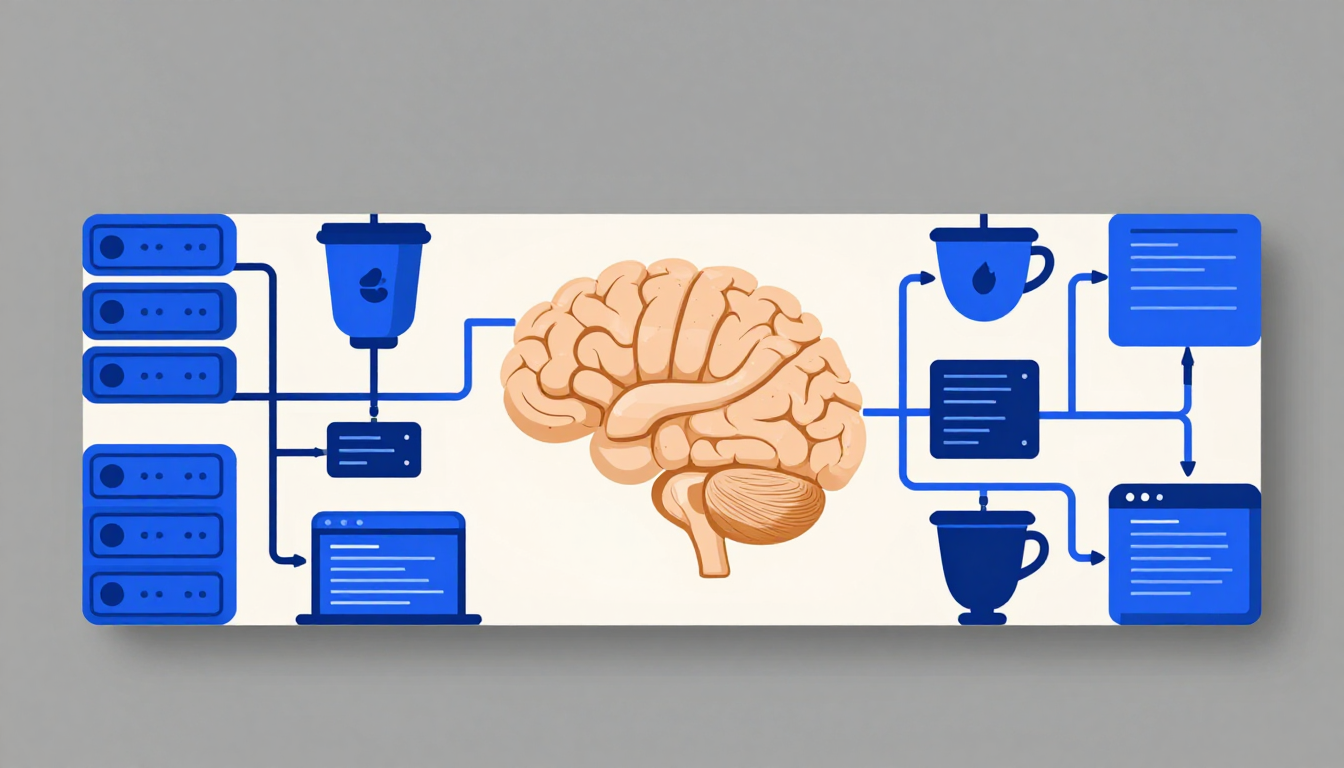
These substances aren't just passing through; they are interacting directly with your digestive system in ways that may change the very structure of your gut microbiome. This interaction, in turn, may be influencing your mood, memory, and cognitive performance through the sophisticated, bidirectional network known as the microbiota-gut-brain axis. It is a revelation that suggests the biological mechanisms of mental health and cognition influenced by coffee are far more intricate than we ever imagined.
The Microbiota-Gut-Brain Axis
The digestive system and the brain are in constant contact, a conversation managed by the gut-brain axis. This isn't a vague "gut feeling" but a profound, physical communication network involving the vagus nerve, your immune system, hormones, neurotransmitters, and specialized microbial metabolites.
Essentially, the bacteria in your gut are constantly breaking down the food you consume. In doing so, they produce substances that can directly influence your stress response, mood stability, and cognitive health. The composition of this microbial ecosystem is delicate; it is shaped by everything from diet and stress to genetics and medication.
Coffee is a particularly interesting player in this ecosystem because its constituents—specifically its polyphenols and compounds derived during the roasting process—reach the colon. There, they can be metabolized by gut microbes, potentially acting as prebiotics. This suggests that your coffee habit is quite literally feeding your gut flora, potentially altering the very landscape of the microbiome.
What the Research Revealed
To investigate this, researchers at University College Cork conducted a fascinating trial. They compared a cohort of 31 habitual coffee drinkers—those accustomed to 3–5 cups per day—with 31 individuals who did not regularly consume coffee.
The findings were striking. Habitual drinkers did indeed show a significantly different gut microbial composition compared to their non-coffee-drinking counterparts. Specifically, they exhibited higher relative levels of bacteria from the Cryptobacterium and Eggerthella groups. Furthermore, the study identified measurable differences in key microbial metabolites, including indole-related compounds and GABA (gamma-aminobutyric acid), a neurotransmitter linked to mood, stress, and dynamic neural regulation.
Perhaps most tellingly, these changes appeared at least partially reversible. After a two-week washout period where habitual drinkers ceased all coffee consumption, some of these metabolic shifts dissipated. Reintroducing coffee triggered additional, rapid changes in the microbiome, and intriguingly, some of these shifts occurred regardless of whether the coffee contained caffeine.
Caffeinated vs. Decaf: A Tale of Two Effects
We are all intimately familiar with the benefits of caffeine: by blocking adenosine receptors, it effectively reduces our perception of sleep pressure, making us feel more sharp and alert.
But this new research suggests that other compounds present in the bean play distinct and perhaps even complementary roles. In this study, while those consuming caffeinated coffee reported higher levels of alertness and (counterintuitively) lower anxiety, those drinking decaffeinated coffee experienced improvements in specific learning and memory functions.
Both groups, to varying degrees, reported changes aligned with improved mood, such as reduced perceived stress. This reinforces the idea that it is the whole package—the polyphenols and their metabolites—interfacing with our biological systems that drives these outcomes. It may also explain why individual responses to coffee are so intensely personal; your own unique microbiome may dictate how efficiently you metabolize these compounds.
Nuance and Future Directions
It is crucial to hold these findings in perspective. The study is exploratory, providing necessary biological links rather than definitive treatment protocols for depression or cognitive impairment.
Indeed, the picture is not uniformly positive. At the study's outset, habitual coffee drinkers actually demonstrated higher levels of impulsivity and emotional reactivity, while non-coffee drinkers performed better on certain memory metrics. These nuances highlight the complexity of the habitual coffee lifestyle. Habitual drinkers may, for instance, be compensating for chronic sleep deprivation or stress in ways that non-drinkers are not.
Rather than a simple formula for a "happier brain," these results paint a picture of a dynamic, individualized interaction. We are just beginning to understand how dietary nutrition and long-term brain health interact with daily coffee rituals to shape the biological pathways that influence how we think, feel, and react. Your morning cup may be doing far more for you than you realize—and it’s rarely as simple as just "waking up."
Disclaimer: This research represents early exploratory findings and is not a clinical substitute for addressing psychiatric conditions or cognitive concerns.
Sources
- Psychology Today: How Coffee Affects Mood and Cognition Via the Gut-Brain Axis
- WebMD: Health Benefits of Coffee