
The End of Sticky Sessions for AI Agents
If you ran Model Context Protocol (MCP) servers in production before July 2026, you know the infrastructure tax. Every client maintained a persistent, stateful connection to a specific server instance. If a Kubernetes pod restarted or a cloud node cycled, active agent sessions evaporated. Operations teams had to configure sticky routing, maintain distributed session stores, and manage brittle session IDs just to keep contextual workflows alive. That operational nightmare finally ended on July 28, 2026, when the Agentic AI Foundation (AAIF) released version 2026-07-28 of the specification.
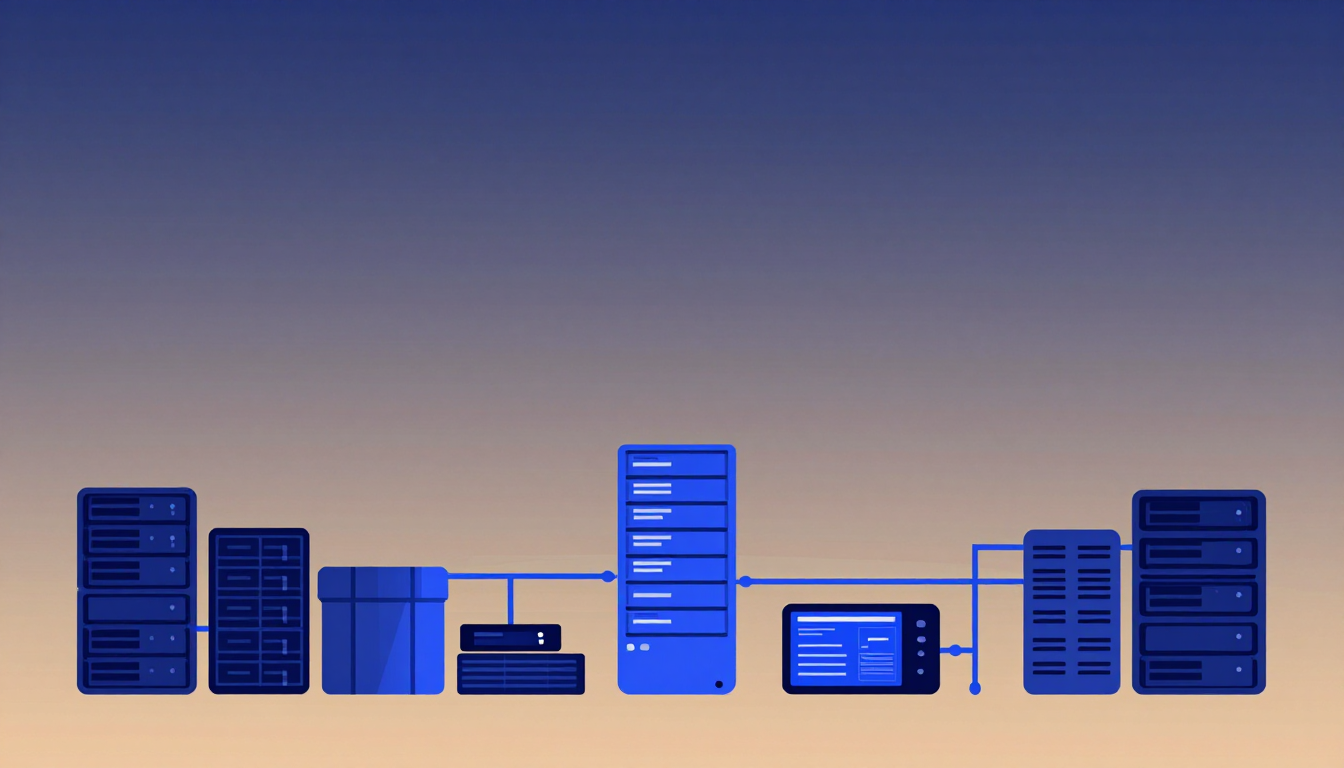
The headline achievement is complete statelessness. MCP servers can now sit behind standard cloud load balancers and scale horizontally like traditional web microservices according to detailed reporting from VentureBeat. As David Soria Parra, MCP co-creator and maintainer at Anthropic, observed during the launch, the update acts like a v2 in spirit by maturing the underlying architecture for large-scale enterprise deployments.
The shift mirrors the design choice that made the modern web possible. Under the previous stateful architecture, if a compute pod went down, incoming client requests failed instantly. Den Delimarsky, a lead protocol maintainer, pointed out that removing state management from the server pod removes that fragile failure mode entirely. AAIF Executive Director Mazin Gilbert framed it squarely against internet history: just as browsers rely on HTTP load balancing across interchangeable web servers, enterprise fleets running tens of thousands of AI agents require standard serverless routing without session stickiness.
Eliminating stateful connections removes the biggest operational bottleneck blocking pilot projects from moving to enterprise scale. As organizations shift from cloud rental to owning enterprise AI infrastructure, teams no longer need complex routing topologies or custom ingress controllers to keep AI agents connected to internal tools.
Data Layer Mechanics and Architectural Trade-offs
Under the hood, the updated Model Context Protocol Specification relies on self-contained JSON-RPC 2.0 message exchanges. In version 2026-07-28, every request carries its relevant protocol version and capability metadata inside a _meta header field. Because each incoming request is entirely self-describing, any backend server instance can process it independently without querying an in-memory session database.
As detailed in the MCP Architecture Overview, the protocol maintains a clear split between the JSON-RPC data layer and the underlying transport layer. Local workflows continue using the Stdio transport for low-latency process communication, while remote deployments utilize Streamable HTTP over standard HTTP POST requests paired with Server-Sent Events (SSE) for streaming responses. Before executing tool invocations or resource reads, clients perform a mandatory server/discover request to negotiate supported capabilities and API versions.
Statelessness comes with engineering trade-offs. Shifting session context onto the wire means request payloads grow slightly larger. Soria Parra noted that while payload sizes increase when context travels with every request, JSON-RPC payloads remain highly compressible and small relative to standard web HTTP traffic.
The maintainers also pruned obsolete protocol surface area. Legacy sampling capabilities were formally deprecated in version 2026-07-28 to enforce clean boundaries between clients and servers. Out-of-band server logging—which previously allowed remote servers to push arbitrary log messages to clients outside active requests—was removed entirely. Maintainers scraped open-source code across GitHub prior to the release, confirming that out-of-band logging had virtually zero adoption in real-world deployments. Shifting state management to application developers simplifies server runtimes while letting teams manage persistence using their existing database infrastructure.
Hardened OAuth Validation and Managed Enterprise Identity
Scaling agentic infrastructure requires bulletproof authentication. Prior to this update, security teams raised concerns over potential authorization gaps when connecting agents to sensitive internal data stores. Version 2026-07-28 directly addresses identity risk by hardening protocol-level OAuth validation and introducing corporate identity controls.
The core specification now mandates explicit validation of the OAuth issuer (iss) parameter on all incoming authorization responses. This requirement closes an entire class of identity mix-up attacks where a malicious actor could trick an MCP client into accepting authorization tokens from an untrusted identity server. Delimarsky highlighted that this change represents preventive security engineering rather than reactive patching, closing theoretical attack surfaces before bad actors could exploit them in production environments.
For enterprise environments, the headline addition is the Enterprise Managed Authorization extension, developed jointly with Okta. The extension allows security administrators to enforce centralized corporate Identity Provider (IdP) policies across every internal MCP server. Instead of individual developers embedding custom personal API keys or static credentials inside agent environments—a key driver of non-human identity sprawl—access is routed through corporate Single Sign-On (SSO) and OAuth workflows.
Security principles in the 2026-07-28 specification reinforce strict explicit user consent boundaries:
- Hosts must obtain explicit user approval before transmitting resource data or invoking server tools.
- Descriptions of tool behavior and annotations must be treated as unverified inputs unless supplied by an authenticated, trusted server.
- Protocol extensions require explicit opt-in negotiation during initialization, preventing silent feature exposure.
Looking ahead, protocol working groups are actively evaluating proposals for demonstrated proof-of-possession (DPoP) and workload identity federation to further secure machine-to-machine context exchanges across zero-trust networks, aligning with broader industry shifts toward agentic cybersecurity platforms.
Modular Extensions: MCP Apps, MCP Tasks, and Elicitation
Rather than bloating the core JSON-RPC specification, the maintainers established a modular extension framework. Extensions evolve on independent release cycles while requiring explicit capability negotiation during initialization. Two high-demand features graduated to official extension status in the July 2026 release alongside new interactive primitives.
MCP Apps allows remote servers to deliver server-rendered UI components directly inside AI client interfaces. Instead of restricting agent responses to plain Markdown text or unformatted JSON strings, servers can render inline forms, interactive data charts, and dynamic dashboards. This shifts agent interfaces from simple conversational bots into rich operational software.
MCP Tasks addresses long-running background operations. Standard HTTP request-response cycles break down when an agent triggers process-heavy operations like video rendering, database indexing, or complex log analysis. Under MCP Tasks, a server immediately returns a durable task handle upon invocation. The client can safely disconnect, cycle connections, or poll for status updates asynchronously without holding open fragile network streams.
The update also refines interactive primitives:
- Client Elicitation: Standardizes server-initiated requests asking human users for input or confirmation mid-execution.
- Multi-Round-Trip Requests: Enables interactive parameter negotiation over a single stream before executing complex tool actions.
By decoupling asynchronous task management and interactive UI rendering from the core framing protocol, MCP maintains a lean runtime while supporting sophisticated enterprise agent workflows.
Governance Neutrality and Enterprise Stability Guarantees
Beyond technical changes, enterprise adoption hinges on governance stability. Anthropic originally launched MCP in November 2024 before donating the project to the Agentic AI Foundation (AAIF) under the Linux Foundation in December 2025. By July 2026, foundation membership grew from 40 founding organizations to 240 member entities, incorporating diverse institutions such as CERN and Consumer Reports.
To reassure enterprise engineering leaders who cannot afford breaking API changes, maintainers established a formal 12-month deprecation policy. Negotiated with engineering leads at Google, Microsoft, and Amazon, the agreement guarantees at least one full year between formal feature deprecation and actual code removal. Delimarsky emphasized that the policy creates a dependable window for corporate migration, ensuring protocol revisions follow structured feedback periods rather than sudden breaking drops.
Project maintainership now spans a multi-vendor committee representing Anthropic, Microsoft, OpenAI, Google, Amazon, and Block. Anthropic's overall share of code contributions dropped below 50 percent, reflecting broad open-source distribution. Soria Parra confirmed that while founding maintainers retain technical veto rights on paper, consensus driving protocol evolution has been unanimous across participating vendors.
Scale metrics underscore how rapidly the standard took hold across software development:
- Weekly SDK downloads across supported languages hit 8.2 million in July 2026.
- Active open-source MCP server implementations exceeded 14,000 repositories across GitHub.
- Production deployments across Global 2000 enterprises surpassed 1,200 organizations.
By turning stateless routing, corporate OAuth identity, modular apps and tasks, and vendor-neutral governance into protocol standards, version 2026-07-28 transitions MCP from an experimental connectivity spec into core operational infrastructure for enterprise AI agent fleets.