
The "Brain Fog" of Sleep Debt
We've all experienced the cognitive haze following a night of poor sleep—the "brain fog" that makes it difficult to remember where we left our keys or the name of a person we just met. For decades, neuroscientists assumed this amnesia was the result of a failure to consolidate or physically store new information. However, new research from the University of Groningen completely upends this model. This cognitive "fogginess" mirrors the attentional bottlenecks found in artificial intelligence systems when they are overwhelmed by conflicting data.
The phenomenon extends far beyond the minor inconvenience of misplaced car keys. Sleep deprivation-induced amnesia represents a fundamental breakdown in how our brain accesses stored information, affecting every aspect of daily life—from social interactions to professional performance and personal safety. When we pull an all-nighter before an exam, work a double shift as a healthcare professional, or try to manage childcare while maintaining a career, we're not just tired—we're literally losing access to memories that are still physically stored in our brains.

The Neuroscience of Social Memory
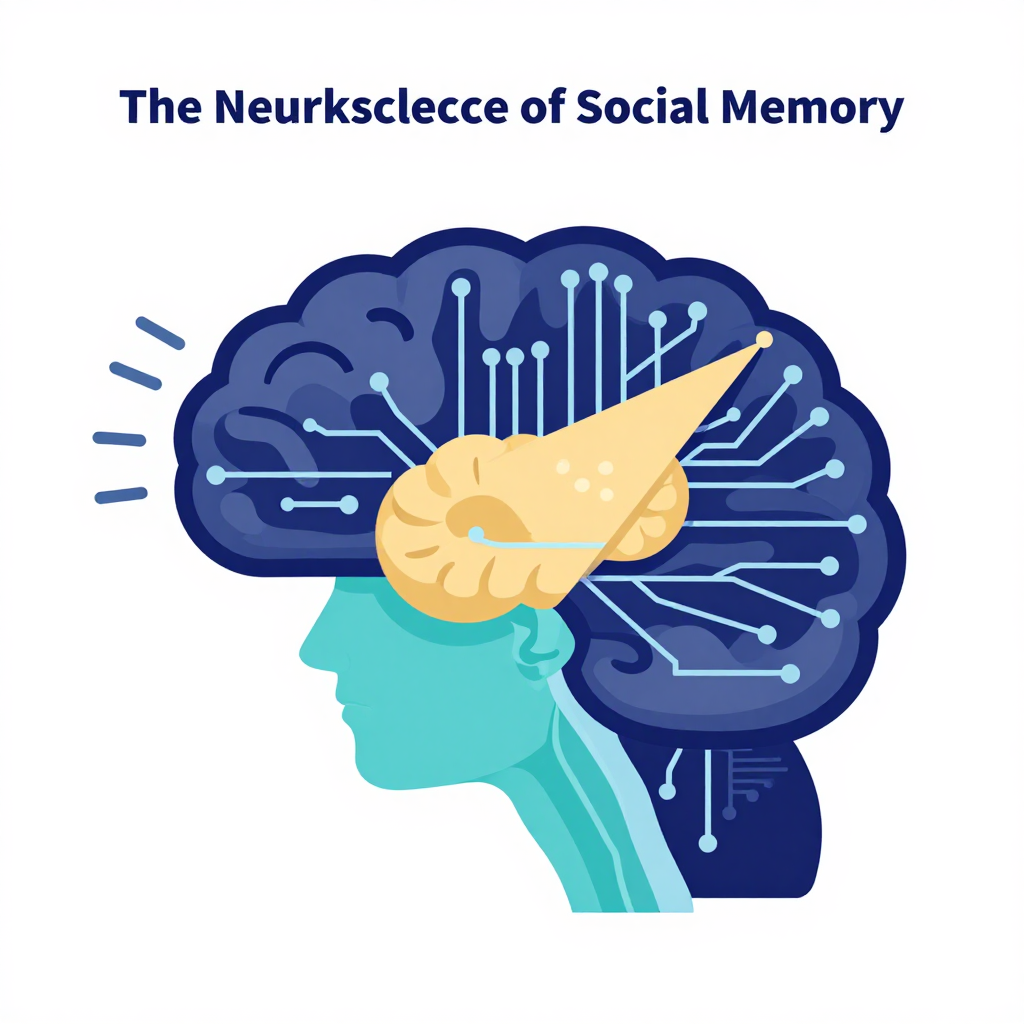
Social memory—the ability to recognize and remember individuals we've encountered—represents one of the most complex cognitive functions. Unlike simple recall tasks where a single piece of information needs retrieval, social encounters involve multiple contextual variables: who the person is, when and where we met them, what we discussed, and how we felt during that interaction. The brain must simultaneously encode these variables and later retrieve the appropriate combination to recognize someone correctly.
This complexity makes social memory particularly vulnerable to disruption. When sleep-deprived individuals enter a room with multiple people, their brains face an overwhelming contextual challenge. Each person in the room represents not just a single memory trace but a unique constellation of social information that must be activated simultaneously. The research from the University of Groningen specifically targeted this vulnerability, creating a controlled environment that mirrors real-world social complexity.
Intact Engrams, Lost Operational Keys
A study published in Science Advances on June 10, 2026, demonstrates that acute sleep deprivation disrupts the operational pathways required to retrieve memories while leaving the underlying physical traces, known as engrams, completely intact. The team, led by neuroscientist Robbert Havekes and first author Adithya Sarma, utilized high-precision optogenetics and structural pharmacology to track how sleep loss impairs a mammal's ability to differentiate between social encounters.
Engrams—the physical neural substrates of memory—were first conceptualized by Richard Semon over a century ago. The modern understanding describes engrams as distributed networks of neurons that fire in specific patterns during memory encoding and are reactivated during retrieval. The critical insight from this research is that sleep deprivation doesn't erase these engrams; it simply breaks the operational "keys" needed to access them.
Think of your brain as a vast library containing every memory you've ever experienced. Each book represents a specific memory, carefully cataloged and stored on shelves. Sleep deprivation doesn't destroy these books; instead, it removes the catalog system that tells you where to find them. The information is still there—you've just lost the ability to retrieve it.
The Shared Environment Challenge
In everyday life, social interactions do not occur in a vacuum; individuals regularly encounter multiple distinct peers within the exact same room or office. To replicate this real-world complexity, researchers exposed mice to several different mice in a fixed environment over multiple sessions. This "shared environment multi-individual test" created conditions that closely mirror human social scenarios.
Under normal circumstances, well-rested mice effortlessly distinguish between different individuals they've previously encountered. They show appropriate social recognition behaviors—investigating new mice more thoroughly than familiar ones, engaging in different social behaviors based on recognized relationships. Sleep-deprived mice, however, suffered total recognition failure, confusing familiar peers with total strangers. This wasn't a general social impairment; it was specifically a retrieval issue.
The researchers observed that when sleep-deprived mice encountered familiar individuals, their neural activity patterns failed to activate the appropriate recognition pathways. The social memory engrams were present but inaccessible, much like a computer with all the correct files still present but whose operating system has crashed.
The Molecular Gatekeeper: PDE4 and cAMP Signaling
The research team identified phosphodiesterase-4 (PDE4) as the molecular gatekeeper disrupted by sleep deprivation. PDE4 enzymes regulate cyclic AMP (cAMP) signaling, a critical second messenger system in neurons. cAMP plays a fundamental role in synaptic plasticity—the ability of synapses to strengthen or weaken over time, which is essential for memory formation and retrieval.
During normal sleep cycles, cAMP levels fluctuate in a precisely regulated pattern that supports memory consolidation. Sleep deprivation disrupts this delicate balance, causing PDE4 to become overactive and break down cAMP faster than it can be produced. The result is a signaling cascade failure that prevents memory retrieval despite intact engrams.
This discovery is particularly significant because PDE4 inhibitors already exist as clinically approved drugs. Roflumilast, used to treat severe asthma and COPD, works by inhibiting PDE4 and increasing cAMP levels. The fact that a safe, approved drug could bypass the sleep-induced memory block suggests immediate translational potential.
Restoration via Roflumilast and Optogenetics
The researchers found that sleep-deprived mice failed to recognize familiar peers, confusing them with strangers. Strikingly, the team was able to restore these "lost" social memories using two distinct methods. First, they administered roflumilast, a clinically approved phosphodiesterase-4 (PDE4) inhibitor used to treat severe asthma and COPD. The drug successfully bypassed the sleep-induced block, matching results from previous spatial memory tests.
The experimental protocol involved exposing mice to several different individuals in a controlled environment, thensleep-depriving them for six hours. When the mice were re-exposed to the same individuals, researchers administered roflumilast thirty minutes before the test. The treated mice instantly recognized familiar peers, investigating them appropriately rather than treating them as strangers. Control groups that received saline instead showed the expected recognition failure.
Optogenetic Engram Reactivation: Definitive Proof
To provide definitive, indisputable proof that the social memories were completely intact inside the brain, neuroscientists deployed optogenetics—a technique that uses light to control genetically modified neurons. By tagging the specific ensemble of hippocampal neurons that fired during the initial social introduction, researchers could later shine laser light to manually reactivate those exact cells.
The optogenetic experiment represented the most compelling evidence. Researchers first identified and labeled the neural engram cells active during initial social encounters using viral vector technology. After sleep deprivation, when mice failed to recognize familiar peers, researchers delivered precise laser pulses to reactivate only the tagged engram cells. The result was immediate and dramatic: mice who had shown no social recognition began interacting with familiar peers as if they remembered them perfectly.
This experiment proved conclusively that sleep deprivation creates a retrieval failure, not an erasure. The memory traces remain physically intact; only the access pathways are compromised.
The Persistence of Recovery
Perhaps most remarkably, once the hidden memory engram was artificially reactivated via light or pharmacologically with roflumilast, the mouse retained natural, un-aided access to that social memory for several days afterward. This finding suggests that a single targeted retrieval event can permanently repair sleep-induced amnesia tracks.
The researchers tested this persistence by retesting mice three days after the initial rescue intervention. Mice that had received either optogenetic reactivation or roflumilast showed no decline in social recognition ability. Their performance matched that of well-rested control mice, indicating that the restoration was not temporary but established a new, stable access pathway to the previously inaccessible memory.
This persistence effect has profound implications for therapeutic development. If a single intervention can restore long-term memory access, treatments could potentially provide durable relief for patients suffering from retrieval failures due to sleep loss or neurodegenerative conditions.
Translational Hope for the Modern World
This discovery has massive implications for public health, particularly for shift workers, medical personnel, and parents managing chronic sleep debt. By identifying the molecular gatekeeper that sleep debt disrupts, researchers have provided a blueprint for therapeutic targets to restore memory recall in conditions like retrograde amnesia and Alzheimer's disease.
Shift Workers and the Economic Impact
Approximately 20% of the working population in industrialized nations engages in some form of shift work, including night shifts, rotating shifts, and early morning shifts. This represents tens of millions of workers worldwide who regularly experience chronic sleep disruption. The University of Groningen research suggests that many workplace errors attributed to fatigue may actually stem from memory retrieval failures.
In healthcare settings, this is particularly critical. Medical professionals working extended shifts often must recall complex patient information—names, medication regimens, test results—that becomes inaccessible due to sleep-induced retrieval failure. The potential for roflumilast or similar PDE4 inhibitors to restore this access could significantly reduce medical errors and improve patient outcomes.
Alzheimer's Disease and Dementia Applications
The mechanism uncovered by this research appears fundamentally similar to the memory retrieval failures observed in early-stage Alzheimer's disease. Both conditions involve intact engrams with disrupted access pathways, rather than complete memory erasure.
In Alzheimer's, amyloid plaques and tau tangles disrupt neural circuitry and signaling pathways, much like sleep deprivation disrupts cAMP signaling. The successful restoration of social memory in mice using PDE4 inhibition suggests that similar approaches might help dementia patients access memories that still exist but have become inaccessible.
Pharmaceutical companies are already exploring PDE4 inhibitors for cognitive enhancement in neurodegenerative conditions. This research provides the strongest evidence yet that such approaches could work for memory retrieval specifically, not just general cognitive enhancement.
Parents and Caregivers
Parents of newborns and young children regularly experience chronic sleep fragmentation. While the social memory effects in parents may seem less dramatic than in shift workers or dementia patients, they manifest in ways that significantly impact family functioning and child development.
The ability to remember and respond appropriately to a child's needs, maintain consistency in parenting approaches, and recall important information about family routines all depend on intact memory retrieval systems. Chronic sleep disruption may contribute to the "parenting fog" that many caregivers report, where they know what needs to be done but struggle to access the specific details or appropriate responses.
The Student Population Crisis
College and university students frequently engage in all-nighters before exams, sacrificing sleep at the very time when memory consolidation and retrieval are most critical. Traditional educational approaches assume that studying through the night enhances learning, but this research suggests the opposite: sleep-deprived students may encode information initially but then be unable to retrieve it during exams.
The findings suggest that educational institutions should reconsider their expectations around sleep and academic performance. Instead of glorifying all-nighters, schools could promote sleep hygiene education and consider the timing of exams and assignments in light of this research on retrieval failure.
Therapeutic Development Pathway
The path from this mouse study to human applications involves several key steps:
-
Repurposing existing drugs: Roflumilast is already FDA-approved for asthma and COPD, meaning safety data exists. The challenge becomes determining appropriate dosing for cognitive enhancement without respiratory side effects.
-
Targeted delivery systems: Developing delivery methods that specifically target brain PDE4 enzymes without affecting peripheral tissues could minimize side effects.
-
Clinical trials: Phase II and III trials would need to demonstrate efficacy for specific conditions—social memory in shift workers, retrieval failure in early Alzheimer's, etc.
-
Non-pharmacological approaches: Understanding the precise neural circuitry disrupted by sleep deprivation could lead to neurostimulation therapies or cognitive training protocols designed to strengthen retrieval pathways.
The existence of an approved drug that already bypasses this mechanism significantly shortens the timeline for human translation. If clinical trials confirm the mouse data, treatments could become available within three to five years.
Ethical Considerations
The ability to pharmacologically enhance memory retrieval raises important ethical questions. Should night-shift workers be encouraged or required to use cognitive-enhancing drugs? Could this create pressure for employees to accept dangerous shift schedules, knowing they can "fix" the cognitive consequences with medication?
Similar questions arise for students. Should colleges provide cognitive enhancers to help students perform better on exams? Would this create an uneven playing field for students who cannot afford or choose not to use such treatments?
These questions don't have simple answers, but they must be addressed before these discoveries translate to widespread clinical use. The research community has a responsibility to engage with policymakers, ethicists, and the public as this science moves from laboratory to clinic.
The Future of Sleep Medicine
This research represents a fundamental shift in how we understand sleep deprivation. Rather than viewing it as causing general "fatigue" or "cognitive decline," we should understand it as creating specific, targeted failures in memory retrieval systems.
This precision changes the therapeutic landscape. Instead of broad-spectrum stimulants like caffeine or modafinil, which affect multiple neurotransmitter systems and can have significant side effects, future treatments could target specific retrieval pathways with minimal disruption to other brain functions.
The discovery also highlights the importance of sleep for memory access, not just storage. This should influence how we structure our daily lives, scheduling important meetings, exams, and critical decision-making during periods of adequate sleep rather than relying on later interventions to fix the damage.
Conclusion: A Paradigm Shift in Memory Research
The University of Groningen research fundamentally shifts our understanding of sleep deprivation-induced amnesia from a general cognitive impairment to a specific retrieval failure mechanism. The ability to bypass this block through both pharmacological and optogenetic means demonstrates that the memories remain intact even when inaccessible.
For the millions of people managing chronic sleep debt—from shift workers to parents to students—this research offers tangible hope. The existing approved status of roflumilast means that clinical applications could emerge much faster than typical drug development timelines.
Most importantly, this research challenges the assumption that memory loss equals memory erasure. In many cases, the memories still exist within us; we just need the right key to unlock them. This paradigm shift could transform how we treat not only sleep-related memory issues but also neurodegenerative conditions characterized by retrieval failure.
The next time you experience that "brain fog" and struggle to remember basic information, remember: the memory is likely still there, waiting for the right signal to access it. This research has found one such signal—and it could change everything.