
The Myth of the Central Mastermind
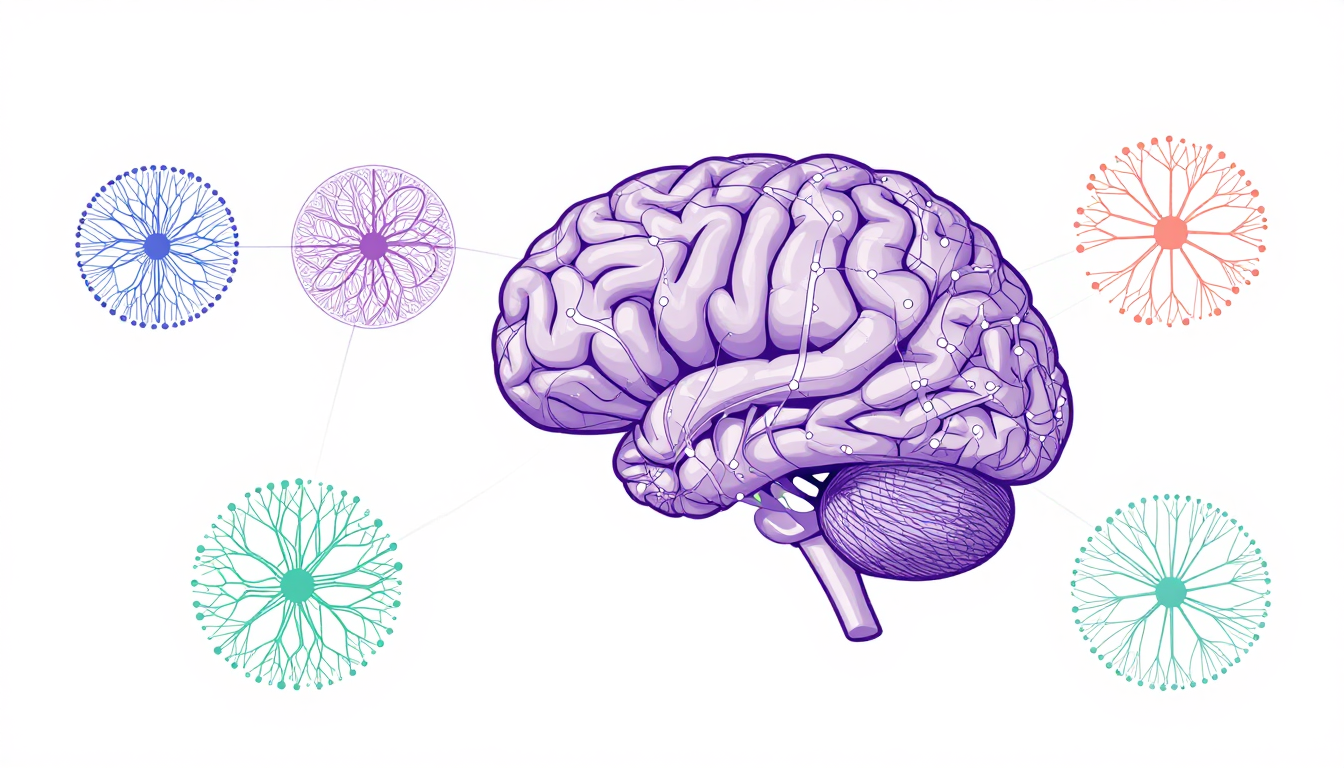
For a long time, we’ve looked at the animal brain like a sprawling, bureaucratic corporation. We assumed, quite reasonably, that it had a CEO—a central hub, nestled in the skull, that issues edicts to every muscle and appendage, dictating precisely how, when, and where to move. It’s an intuitive model: the Brain tells the Body what to do.
But as it turns out, nature has a much more efficient, if rather chaotic, filing system.
In a landmark study just published in Nature, a massive international team has finally mapped the complete central nervous system connectome of an adult fruit fly (Drosophila melanogaster). This isn’t just a fuzzy, high-level overview; it is a synapse-level wiring diagram—the most detailed map of a complex, functioning brain-body interface we’ve ever constructed. And the most shocking takeaway? The "central master" model is mostly wrong.
Instead of a command-and-control hierarchy, the fruit fly’s nervous system is a marvel of decentralized democracy. The fly’s brain isn’t directing every twitch of its leg or flutter of its wing. It’s offloading the heavy lifting to localized neural modules placed right where the action happens.
This isn’t just a win for entomologists. It’s a paradigm shift that demands we rethink everything we know about complexity, how nervous systems integrate, and how—crucially—we might build smarter robots.
Bridging the Brain and the Body
The fruit fly, Drosophila, has long been the darling of the biological world. It’s easy to keep, fast to breed, and despite having a nervous system of roughly 160,000 neurons, it navigates a world of dizzying complexity. It flies with precision, navigates social hierarchies, learns from experience, and responds to a barrage of sensory input in real-time.
But for years, our understanding was split. In 2024, the FlyWire Consortium, led by Mala Murthy and Sebastian Seung, gave us a tour de force: a complete connectome of the fruit fly brain. It was a massive achievement. Yet, it was, quite literally, just the brain.
"The brain and nerve cord connectomes are each useful on their own," explains Helen Yang, a co-first author of the new work at the Wilson Lab. "But until you can bridge the two, it’s hard to understand how information moves between the brain and the body."
Enter the nerve cord. Think of it as the fly’s spinal cord. It controls the legs, wings, and other appendages, processing a relentless stream of sensory information. By mapping this, the team at the Lee Lab—led by Wei-Chung Allen Lee—finally finished the puzzle. By integrating the Brain and the Nerve Cord (the BANC) dataset, we can now, for the first time, follow the entire pipeline from incoming sensory data to the physical outcome of behavior.
The scale of this undertaking is frankly staggering. To build this, the researchers had to slice a single fruit fly’s central nervous system into thousands of ultra-thin, serial sections. They then employed state-of-the-art electron microscopy to capture millions of high-resolution images. Finally, they used custom-made AI alignment tools to stitch those millions of images into a single, cohesive, 3D synaptic map. It’s essentially the Google Maps of an invertebrate nervous system. And like the human genome map before it, it is now entirely open-source, providing a foundational baseline for almost any neurobiological question you care to ask.
The Power of Local Autonomy
Perhaps the most gripping discovery in this entire map is the sheer independence of the body's neural circuits.
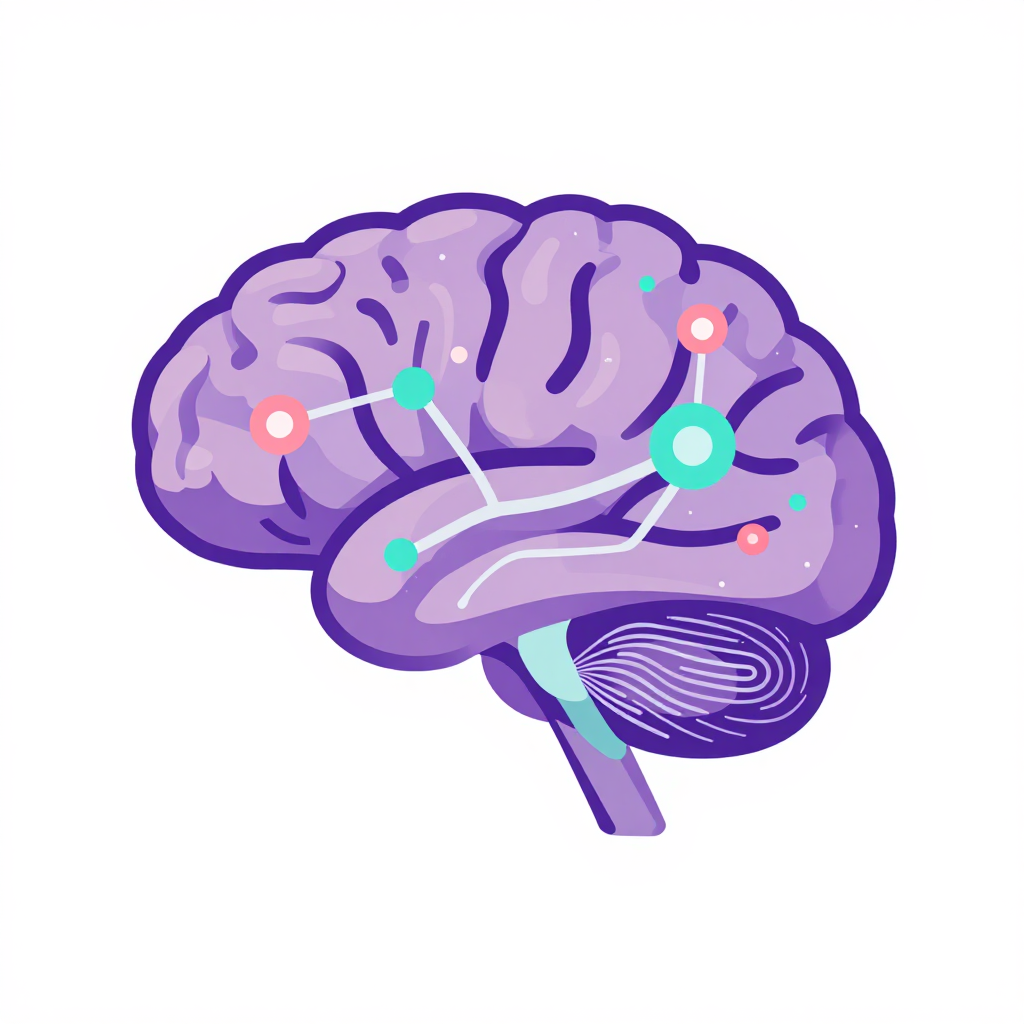
We usually treat motor control as a top-down phenomenon. But when the team analyzed the BANC dataset, they found that when a fly needs to walk, it doesn’t send a "left-leg-step-forward" signal from a master hub in the brain. Instead, the motor circuits located directly within the leg appendages themselves handle the heavy procedural work. The local circuitry handles the local mechanics, and then, crucially, these local circuits network with neighboring leg modules to coordinate a gait.
This creates a kind of local autonomy that is incredibly resilient. If the fly needs to walk while it's also grooming itself or dealing with a threat, it doesn't need to jam the central brain with constant, low-level operational data about leg mechanics. It essentially "outsources" those mechanics to the limbs.
It’s a massive lesson in biological efficiency. The limbs provide feedback to the rest of the nervous system, sure, but they are clearly doing the lion's share of their own operational management.
"Our findings suggest that control for actions is highly distributed in local modules that link up and work together in different ways," says Alexander Bates, another co-first author.
This is a complete breakdown of the centralized command dogma. By understanding how the brain truly integrates with the body, researchers can finally begin to study how these different systems—sensory, endocrine, motor—actually cross-talk. It raises the provocative question of how much of our own behavior is similarly managed by pre-programmed, local neural circuits that we aren’t even conscious of.
If this decentralized system is the norm in a fruit fly—a creature that navigates complex environments with ease—why would we assume it isn't also the foundational architecture for far more complex organisms, including humans? It’s a question that researchers like Wei-Chung Allen Lee are already beginning to explore in other models like mice. I would be genuinely shocked if this distributed architecture turned out to be unique to the fly. Nature doesn't usually invent an elegant, efficient solution like this and then only use it once.
What This Means for the Future
So, why does a mapping project for a fly matter to you specifically?
First, on the most fundamental level, this is a masterpiece of collaborative science. The sheer number of contributors, the integration of multiple labs, and the decision to make the dataset public and interactive are a blueprint for how future large-scale research projects must operate if they are to tackle the staggering complexity of modern biology.
Second, the applications for artificial intelligence and robotics are profound. We have spent years trying to build AI agents that can "think" and "act." We often throw massive amounts of computing power at the problem, trying to create a "central controller" for a virtual or physical robot. But looking at the Drosophila, we see that even the most complex AI we've built can struggle to replicate the effortless fluid movement of a tiny, buzzing fly.
The lesson for engineers is simple but difficult to implement: maybe we don't need a more powerful, centralized AI. Maybe we need a decentralized one. By modeling AI agents on the distributed architecture of the fruit fly’s nervous system, we could potentially create more resilient, efficient robots capable of smarter navigation in unpredictable physical environments. The connectome provides the concrete, mathematical proof-of-concept that this kind of architecture works, and it works spectacularly well.
As we look toward the future, the team behind the BANC dataset is already planning to add more layers: information about neuropeptides, the chemical language that neurons use to communicate over longer distances, which could clarify even more nuances of the brain-body feedback loop.
Ultimately, this connectome is more than just a map. It’s a mirror. It forces us to confront the fact that our biological intuition about "control" is fundamentally flawed. We are not just a brain contained in a cage, directing a vehicle. We are a unified, embodied system with intelligence spread thin through every part of us—from our cortex to the tips of our fingers.
This tiny fruit fly, with its dizzying 160,000-neuron connectome, has shown us that to truly understand intelligence, we have to look past the hub. We have to map the whole damn thing. And as our methods for mapping improve, we are only going to find more, and more startling, evidence that the decentralization of intelligence isn't a quirk of the fly—it's likely a universal principle of the living world.