
A Horse Isn't a Machine—He's a Brain
When you stand beside a horse and feel the subtle shift of weight in your seat, the invisible cue that lifts his shoulders without a word, it feels like magic. There's a hush in the arena, not of silence, but of deep listening—two nervous systems humming on the same frequency. That's not metaphor; it's neurobiology.
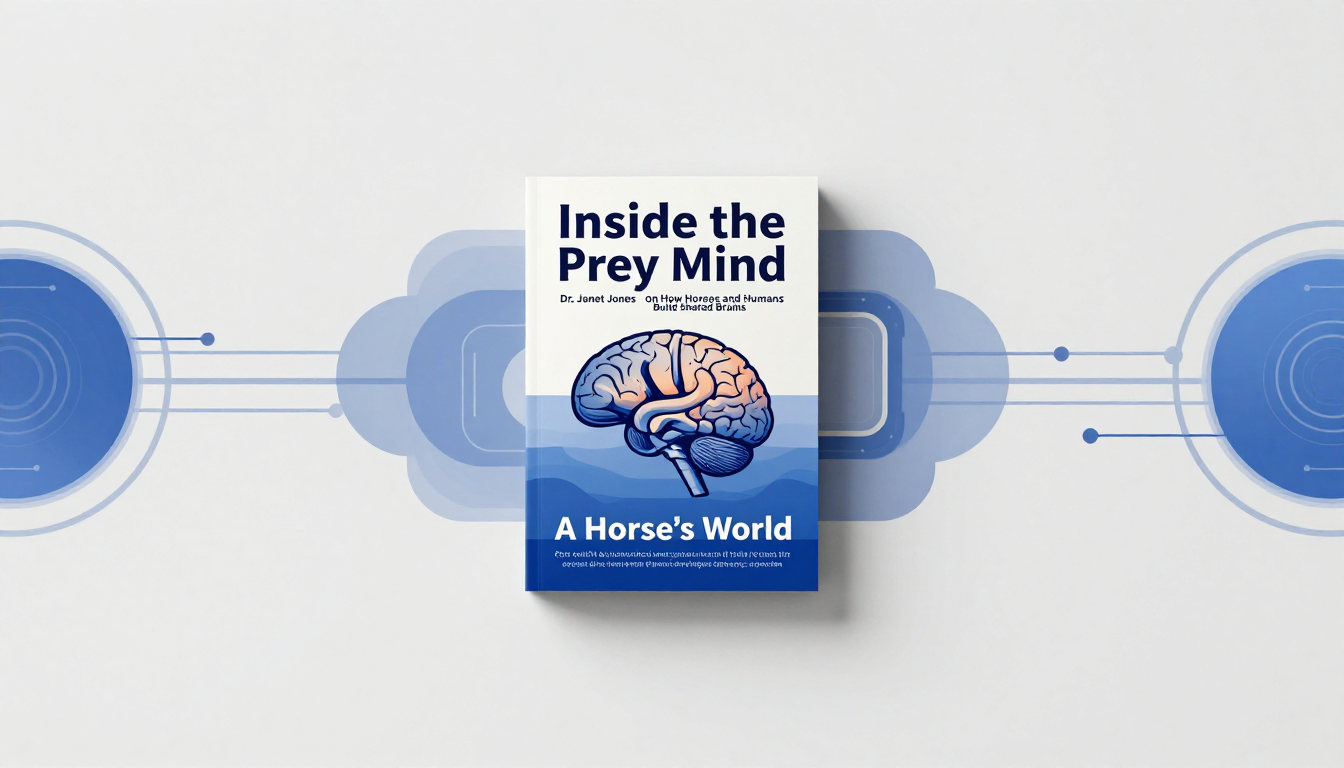
Dr. Janet Jones has spent more than two decades proving that what we call horsemanship is, at its best, brain-to-brain communication. As a cognitive scientist who taught perception and memory at UCLA for 23 years, and as someone who's worked with nearly a thousand horses from the most retired reining stallion to the boldest foal, she's built a bridge between two worlds: the lab and the paddock. Her new book, A Horse's World, arrives like a long-coming sunrise—not just as a memoir of training, but as the first popular science book entirely dedicated to horses as subjects, not tools.
This isn't another story of famous racehorses or war mounts. It's the true saga of True North, a Dutch Warmblood colt whom Jones raised from age two to eight, showing how prey animals learn, feel, and connect when their brains—not our assumptions—are the starting point. If you've ever watched horses in a field and wondered how they talk to each other, or felt your own horse's neck muscle tighten just before he spots something you didn't—and realized his body had already decided to flee before your brain caught up—you'll recognize the raw truth embedded here.
What makes horses such astonishing collaborators, even partners, is that their brains are built differently from ours—and from the predators most animal cognition studies use as defaults. They don't ruminate like cows, they don't hunt like cats, and they certainly don't negotiate deals like chimpanzees. Horses are flee-first-or-never thinkers, wired for constant awareness and instantaneous triage: Is that movement a threat? How close is it? What's the fastest path away? That constant, non-negotiable vigilance shapes everything about how they remember, how they express emotion, and crucially, how they coordinate with humans.
You won't find the kind of intelligence that solves puzzles on command. You'll find memory so long-term it rivals ours, yet lives entirely in the present moment; complex social hierarchies forged without speech; and a sensory world so nuanced that even the smallest imbalance in stirrup pressure broadcasts intent across six feet of living, breathing muscle. A horse doesn't need words to know whether you're confident or afraid; his whole nervous system listens for it in your seat, your breath, and the tension of your thumbs on the reins. When that tuning is right—when human and horse share neural activation in real time—we're looking at what researchers have begun calling the "neurobiological miracle" of cross-species cooperation. This is what happens when a predator and prey animal stop being adversaries and start building a third mind between them.
In what follows, we'll unpack the science of that miracle: how horses see (and miss) the world around them, why their facial language holds trillions of possible expressions, and how a brain without a prefrontal cortex can be more emotionally honest than our own. You'll meet True North, the colt who taught Jones everything she needed to know about trust—and discover why horses, despite being among the most domesticated animals on Earth, remain the least understood from their own point of view.
Inside the Prey Brain: When Every Shadow Is a Signal
Most animal cognition research runs on predator logic. Dogs bark at puzzles, cats stalk toy mice, dolphins solve tasks in tanks—each a descendant of hunters who stalked, captured, and killed. But horses? Horses descended from animals that spent their lives running. That changes everything—not just in training, but in how they think and feel.
Dr. Janet Jones puts it bluntly: "If you train a horse like he's supposed to think like you, you're going to get it wrong." She's not speaking metaphorically. When she first started applying neuroscience to horsemanship in the early 2000s, what surprised her wasn't how badly horses performed under traditional methods, but how often they succeeded despite those methods—thanks to their own neural architecture, not ours.
Horses have no prefrontal cortex—the part of the brain we rely on for planning, prioritizing, and overriding instinct. That might sound like a deficit, but it's actually a feature: no room for second-guessing when a predator appears. Their decisions are fast, embodied, and tied to sensory input so closely that it's more accurate to say they feel their way through problems rather than reason them out. In practical terms, this means a horse doesn't "learn" to fear the plastic bag by logical deduction; he feels his muscles prepare for flight before he consciously registers the crinkling sound. His memory is not stored as a checklist, but as an emotional echo—a visceral this feels like that time—which explains why a horse who stumbled on mud once will hesitate long before the puddle is visible.
And yet, those same instincts give horses superpowers we take for granted. Their smell sensitivity, Jones points out, matches that of dogs—not because horses evolved to sniff out prey, but because they needed to distinguish subtle variations in grass quality, detect predators upwind, and recognize individual herd members by scent alone. Their eyes, too, operate under different rules. Unlike predators who have overlapping fields of vision for depth perception, horses enjoy nearly 360-degree sight—except for blind spots directly in front of their nose and behind their tail. They also see less detail up close; a horse's muzzle is more tactile than visual, and he may need to nudge something with his nose before he knows what it is.
That brings us to balance. Most riders know their horse feels heavy in the neck when he's bracing, light when he's engaged—but few realize how deeply this sensitivity is wired into the horse's nervous system. Horses don't just sense pressure; they are pressure—continuously monitoring weight distribution across their bodies to keep balance on uneven terrain. A rider's unbalanced seat doesn't just feel awkward; it sends alarm signals through the horse's nervous system, because imbalance in the rider equals instability in the herd. This is why "feel" isn't mysticism; it's proprioception shared across species.
It also explains why a horse can't truly be "wild" anymore—even the most remote mustang herd is descended from domesticated animals, meaning their brains carry both wild vigilance and domesticated tolerance. As Jones writes, "wild" is a habitat description, not a personality trait.
The takeaway here isn't that horses are inferior thinkers. They're just thinkers in a different key—fast, holistic, and deeply attuned to their surroundings. When we stop trying to make them behave like miniature ponies with human reasoning and start respecting how they actually process the world, horsemanship becomes less about control and more about collaboration.
The Neurobiological Miracle: When Rider and Horse Share One Brain
The most astonishing claim in A Horse's World isn't that horses remember things well or express rich emotions. Those are now widely accepted, even mundane. It's the idea that horse and human can literally share neural activation in real time—without a single word spoken.
Jones calls it brain-to-brain communication, and she's careful to stress this isn't poetic license. In controlled experiments with EEG monitoring, horse–rider pairs who have trained together for years show correlated brainwave patterns during complex maneuvers. The patterns are most pronounced in the beta and gamma frequency bands, known for attention and sensory binding—exactly when and where performance matters most. When the rider consciously decides to ask for a lead change, his brain fires in sequence with the horse's motor cortex—not because he shouted "change leads!" but because his seat shifted half a centimeter earlier, his inside rein lightened by 3 millimeters, and his breath exhaled just before the request.
These are not cues for the horse. They're cues with him, and that distinction changes everything.
Think about it this way: most training focuses on teaching the horse to respond to signals. Brain-based horsemanship, by contrast, teaches the human to produce signals that the horse will naturally understand—because they're already built into his nervous system. A half-halt isn't a pull and release; it's a momentary suspension of energy that the horse interprets as "reset." A rider who understands timing will wait for the natural swing of the horse's stride, then ask, not command. The result isn't compliance; it's partnership.
This is where True North becomes essential to Jones's narrative. We follow him through months of his second year—when he still jumped at tar on the road, when his neck arched like a question mark, and when every transition felt like negotiation. Then we watch the turning point: not a specific lesson, but weeks of consistent, subtle communication that accumulate like tiny sparks until one day he offers a perfect canter transition before she's even seated in the saddle. That wasn't obedience; it was anticipation born from shared neural pathways.
The neuroscience here is simple: repeated co-activation strengthens connections. When a rider's intention and the horse's action line up over hundreds of repetitions, the brain begins to simulate the outcome before it happens. The rider thinks canter, and his horse's motor neurons fire first—not because he's reading minds, but because they've shared a behavior so many times that their brains have merged into one functional unit.
It's worth noting: this only happens when the human isn't forcing compliance. A horse trained with punishment or excessive pressure shuts down participation; he becomes reactive, not responsive. But a horse who feels understood—and whose nervous system is treated as an equal partner—becomes eager to read the human's intent and anticipate moves before they're verbalized.
That mutual anticipation is what the British Horse Society means when it calls these webinars "events." They're not about tricks; they're about building the scaffolding for this kind of connection—week by week, step by step, signal by invisible signal.
If you've ever watched a Grand Prix dressage pair and thought, How do they move as one?—you're sensing what Jones describes: the real-time electrical symphony between prey and predator, translated into grace. It's not magic; it's neurology.
17 Points, 805 Expressions, and Trillions of Meaning
Most horse owners know the phrase "resting mare face"—that enigmatic expression that reads as neutral but hides a complex inner world. Dr. Jones doesn't stop there. Her research, building on studies from equine ethologists and neuroscientists, confirms that horses express emotion with a facial vocabulary rivaling primates—only they do it without eyebrows, vocal cords, or hands.
Here's what that actually means: horses monitor 17 separate facial areas—ears, eyes, nostrils, muzzle—and each one can move in multiple directions at varying speeds. Combine those degrees of freedom, and you get 805 distinct expressions that researchers have documented in real interactions—everything from playful nudge to defensive grimace. That's only the tip of the iceberg: a rough calculation shows that the number of possible combinations stretches into the hundreds of trillions. It's not hyperbole to say that, for horses, every glance has a dialect.
The implications go well beyond observation. Horses don't just produce expressions—they read them, too. In controlled tests, horses have been shown to match human facial expressions with corresponding vocal tones: when they see a smiling face and hear an angry voice, they look longer at the speaker, suggesting they detect the mismatch. They avoid people who frown and approach those with relaxed features—not because we told them to, but because their brains evolved to read micro-expressions for survival. A predator's "smile" (bared teeth) means trouble; a relaxed muzzle means safety. That instinct is still wired in today's domestic horse, even when the threat no longer exists.
Jones tells a telling anecdote about training an Arab gelding who would tense whenever his rider entered the roundpen. A closer look revealed that the woman, a seasoned rider, had developed an anxious micro-expression when she thought no one was watching—a slight squint and tightened jawline that meant danger to the horse's nervous system. Once they filmed her entry and reviewed it, she caught herself in the act and began relaxing before entering. Within a week, the gelding's tension decreased dramatically. Not because she changed her cues—she hadn't—but because she changed how her face looked before the cue.
This is why equine facial assessment has become a key diagnostic tool in welfare evaluations. A horse with a tense muzzle, pinned ears, and wide, still eyes isn't "bad"—he's communicating that his nervous system is overloaded. The same horse, given time and space to reset, may offer an ear flick, a slow blink, or even a gentle nudge—signs of recalibration. His brain is trying to tell us something, and we're finally learning the grammar.
What's particularly remarkable is that horses don't use these expressions selectively. They mirror human emotions in real time, sometimes before the rider even knows what she's feeling. That emotional honesty is a product of their lack of a prefrontal cortex—the very thing that makes them so raw, so unguarded, and ultimately, such powerful partners in therapy and life.