
The Index is Gone, the Disk is Safe
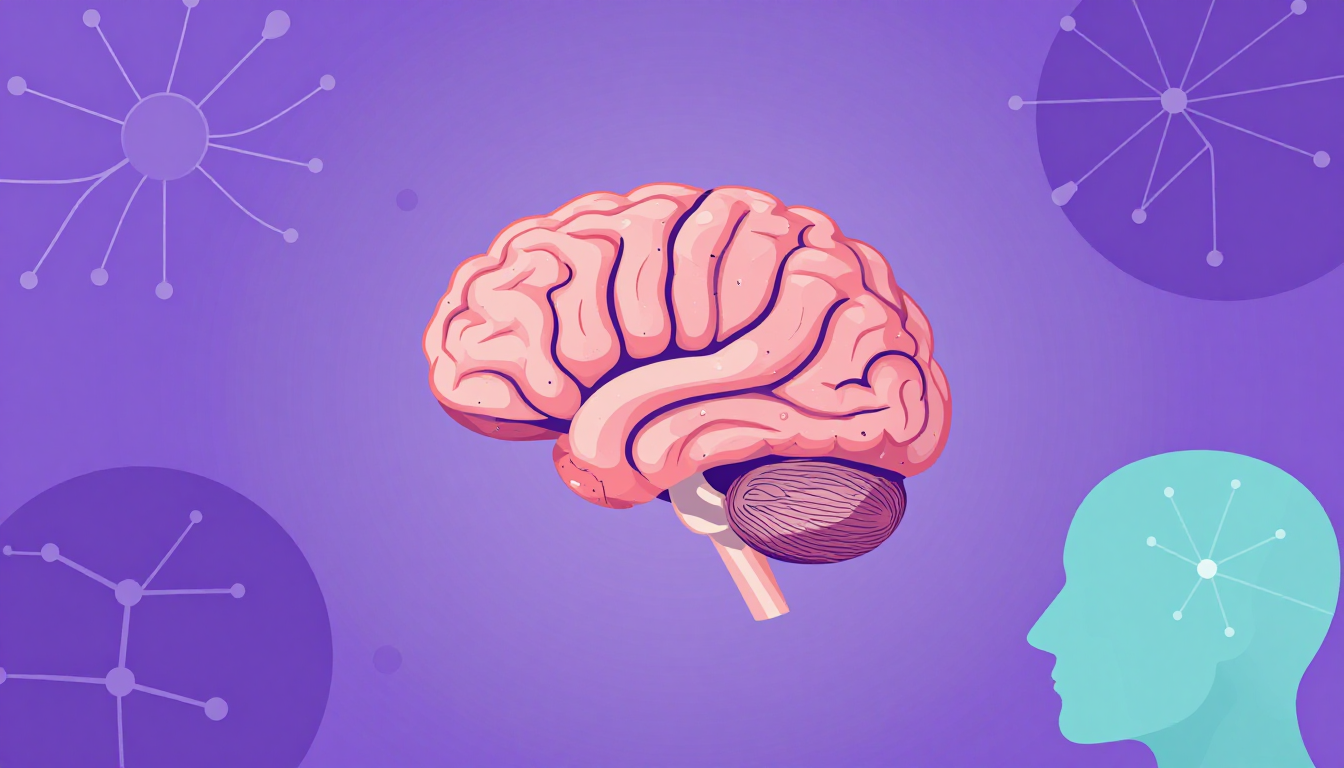
Stop telling me sleep loss deletes your memories. It doesn't write zeros over your hard drive. I spend my life dealing with database indexing bottlenecks, and when a query fails, the data is almost always still there on the disk—you just can't locate the address. A brand new study out of the University of Groningen published in Science Advances proves the exact same thing happens in the hippocampus. When you pull an all-nighter or get wake-sleep fragmented, your brain doesn't fail to store what happened during the day. It fails to retrieve it. The pointer reference is broken, but the raw binary of the memory remains completely intact.
This is a massive shift in how we think about cognitive amnesia. For decades, the consensus was that if you don't sleep, your brain fails to consolidate and physically lock down the memory trace. Basically, a bad save file. But Robbert Havekes and his team decided to test this by examining social memory in mice. They did this by looking at how animals distinguish between multiple personal encounters in the same room. Rested mice handled it easily. Sleep-deprived mice? Total failure. They couldn't tell a friend from a stranger. But the memory was not gone. We know this because scientists were able to bring it right back by dialing in two different bypass techniques: one chemical, and one light-activated.
The Sandbox: Multi-Individual Shared Environments
In most lab experiments, memory tests are clean, isolated, and completely artificial. You put a mouse in a box, show it a blue block, then put it back later and see if it looks at the block. But real life doesn't work in clean boxes. You don't meet one person in a white room and then go to sleep. You meet five different colleagues in the same noisy office space and have to keep their faces, names, and contexts separate. To match this messy reality, the Groningen group used a new paradigm: the Shared Environment Multi-Individual Test.
They exposed mice to several different peers inside the exact same chamber over successive days. When a mouse is healthy and rested, its hippocampus builds a spatial and social map. It links who it met with where it met them, even when the environment is identical. It is a highly specialized indexing task. When they sleep-deprived the mice immediately after these social introductions, their ability to recognize those peers later evaporated. On the next encounter, they treated their previous cage-mates as total strangers. If you looked at this on the surface, you’d assume the neural pathways recording the social interaction were never built. You'd say the memory consolidation crashed. You'd be wrong.
This hippocampal routing operates on similar principles to how we approach complex biological signal monitoring. For instance, when we look at how researchers are harnessing fMRI for precision TMS to target specific cortical networks, the focus is on localizing the functional nodes of the brain. Similarly, social indexing relies on precise spatial-social coordinates within the dentate gyrus. When you starve the brain of sleep, those coordinates become unreadable, causing index collision.
The Chemical Override: Roflumilast
To prove the data was still there, the researchers needed to bypass the broken indexing mechanism. They did this first with chemistry. They used an FDA-approved drug called roflumilast. It is a phosphodiesterase-4 (PDE4) inhibitor, typically prescribed to treat severe chronic obstructive pulmonary disease (COPD) and asthma. Why would an asthma drug do anything for sleep-deprived amnesia? It is all about cyclic adenosine monophosphate (cAMP).
When you are sleep-deprived, the signaling pathways inside the hippocampus that rely on cAMP get severely degraded. The cell-to-cell communication signals drop below the threshold required for successful retrieval. Think of it like massive packet loss on a network switch. Roflumilast works by blocking the PDE4 enzyme, which is the biological cleanup crew that normally breaks down cAMP. By shutting down the cleanup crew, you flood the hippocampal cells with cAMP, boosting the signal strength.
The team injected the mice with roflumilast right before the second introduction. The result was instantaneous. The sleep-deprived mice suddenly recognized their peers, running their social tests perfectly and distinguishing old acquaintances from new ones with the ease of a well-rested animal. This matches previous spatial memory studies where the drug rescued spatial maze navigation. The implications here are huge. It means the consolidation phase did not fail. The memory was written to disk. The asthma drug didn't write a new memory; it just boosted the gain on the reader head until it could read the degraded sectors.
Optogenetics and the Engram Key
While the roflumilast results were impressive, pharma can be messy. Drugs have systemic effects. To prove beyond any doubt that the memory itself was intact and that retrieval was the sole point of failure, the team turned to optogenetics. This is the hardware engineer's dream: using light to turn specific neural circuits on and off.
During the initial social introductions, the researchers used genetic tagging to label the active ensembles of neurons in the dentate gyrus. These activated cell networks are called engrams—the physical footprints of memory. The cells were engineered to express light-sensitive proteins. Later, when the sleep-deprived mice failed to recognize their social partners, the researchers did not use drugs. They simply shone a laser light through an optic fiber target-straight at the dentate gyrus engram cells.
Boom. The light flashed, the cells fired, and recognition was restored instantly. The mouse immediately remembered its peer. Even more fascinating was the persistence: once the engram was artificially reactivated with light, the mouse retained natural, unaided access to that memory for days afterward. A single targeted boot-up repaired the routing table. It proves that sleep debt disrupts the reactivation of experience-specific engrams, not the engram's formation or its structure. The block is in the trigger, not the payload. It's like finding a lost index file on a storage array, rebuilding the pointer once, and having the database resume normal operations without needing to re-import the backup.
Rebuilding the Human Network
This isn't just about mice in cups. The human cost of sleep debt is staggering. Think of night-shift workers, ER doctors, air traffic controllers, and parents of newborns. We force them into chronic sleep fragmentation and then expect them to make critical, memory-heavy decisions. We've always assumed the cost of an all-nighter was permanent cognitive degradation—that we are physically burning out the machinery.
But this research shows the machinery is tougher than we thought. If we can map the exact molecular gatekeeper that sleep debt disrupts, we can design therapeutics that restore recall without needing to pump the brain full of heavy stimulants. We already know that social interactions are deeply tied to biological states. Look at how physiological synchrony spikes during shared focus, where people's heart rates literally mirror each other in close proximity. As we explore in The Collaborative Apes: How Evolutionary Biology Explains Evolved Altruism and Community Trust, that synchrony depends on recognizing the other person and holding their context in your head. If sleep deprivation breaks that indexing, you don't just lose your keys; you lose the ability to align biologically with your community.
We are also seeing similar patterns in general clinical diagnosis. When using AI to spot epilepsy during silent brain states, we are looking at baseline electrical footprints rather than waiting for an active seizure. And as we discuss in Navigating the AI Frontier: Professional Practice Without Traditional Training, the balance of human oversight remains critical. Rebuilding memory indexing is the same problem: looking for the quiet, hidden structures and re-enabling them. The data is waiting. We just need to stop thinking of sleep-induced memory loss as disk corruption, and start treating it as a routing problem. Now, if you'll excuse me, I need to go get some sleep before my search index crashes.