
Cognitive Neuroscience
Articles on cognitive neuroscience, belief revision, and the neurobiological basis of mental models.
Cognitive Neuroscience: The Biology of the Mind PDF and Bioenergetic Decision Shifts
A theoretical study published in Physical Review Letters by researchers from the University of Tokyo and RIKEN demonstrates that organisms abruptly switch between real-time sensory reaction and memory-based decision-making based on bioenergetic resource limits and environmental noise.
Generalists, Not Specialists—The Brain’s Real Wiring
A study of 43 mouse cortical regions reveals that most neurons function as versatile generalists rather than specialized units, enabling complex, high-dimensional computations crucial for cognitive flexibility.
The Neural Sync Revolution: How Real-World Brainwave Alignment Is Reshaping Science and Therapy
A decade-long body of real-world neuroscience has proven that “being on the same wavelength” is a measurable neurobiological reality—reliable, scalable, and now poised to reshape therapy.
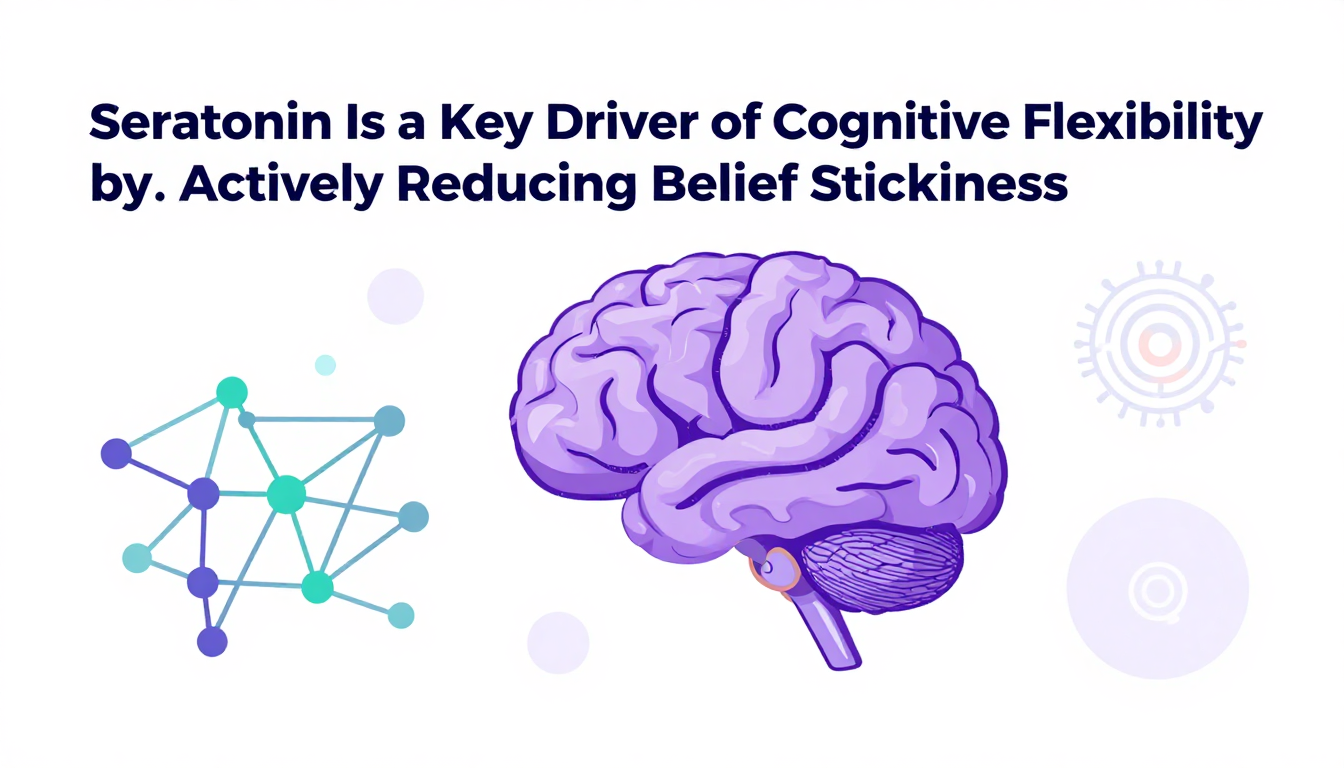
How Serotonin Helps the Brain Update Its Beliefs — And What That Means for OCD Treatment
A new computational psychiatry study reveals that serotonin directly reduces 'belief stickiness,' the cognitive failure to abandon outdated ideas despite new evidence. The findings reframe OCD as a state-inference breakdown rather than a habit disorder and suggest that pairing SSRI medication with psychotherapy in the same session could dramatically improve treatment outcomes.
How Serotonin Helps the Brain Let Go of Obsessive Thoughts
A new study reveals that serotonin directly reduces 'belief stickiness'—the cognitive failure to abandon outdated ideas despite contradicting evidence—offering a biological explanation for why OCD patients struggle to update their mental models and suggesting new timing strategies for combining medication with therapy.
Cellular Aging as a Signature for the Emotional Side of Depression
A recent study in the Journal of Gerontology suggests that accelerated immune-cell aging may be specifically linked to the emotional, rather than physical, symptoms of depression, providing a new perspective on the mind-body connection.
Beyond the Surface: Challenging the Cerebellar Biomarker Paradigm
A breakthrough study from Virginia Tech reveals that Purkinje cell activity fails to reliably predict deep cerebellar nuclei behavior, necessitating a change in how we understand and treat movement disorders.
When Hearts Beat Together: Tracking Social Connections in Real-World Settings
New research reveals that heart rate synchronization is a reliable biomarker for real-world social engagement, spiking during close-proximity interactions and shared focus.
The Double-Edged Sword of Joint Care: Glucosamine's Metabolic Pathway Linked to Faster Dementia Onset
A detailed look at new evidence linking a popular joint supplement to accelerated cognitive decline in MCI patients, analyzing the mechanistic evidence of hyperglycosylation.

Overcoming the 20-Minute EEG Bottleneck: How AI Decodes Background Brainwaves to Spot Epilepsy
A new machine-learning algorithm decodes baseline EEG readings to identify genetic epilepsy markers, bypassing the need for active seizure events.
Beyond Habit Loops: Serotonin Resets the Brain's Sticky Beliefs in OCD
A pioneering computational psychiatry study demonstrates that boosting serotonin levels directly counteracts belief stickiness, offering a new state-inference framework for obsessive-compulsive traits and optimized drug-therapy integration.