
Science & Research
Physics, quantum, academic research and scientific method.
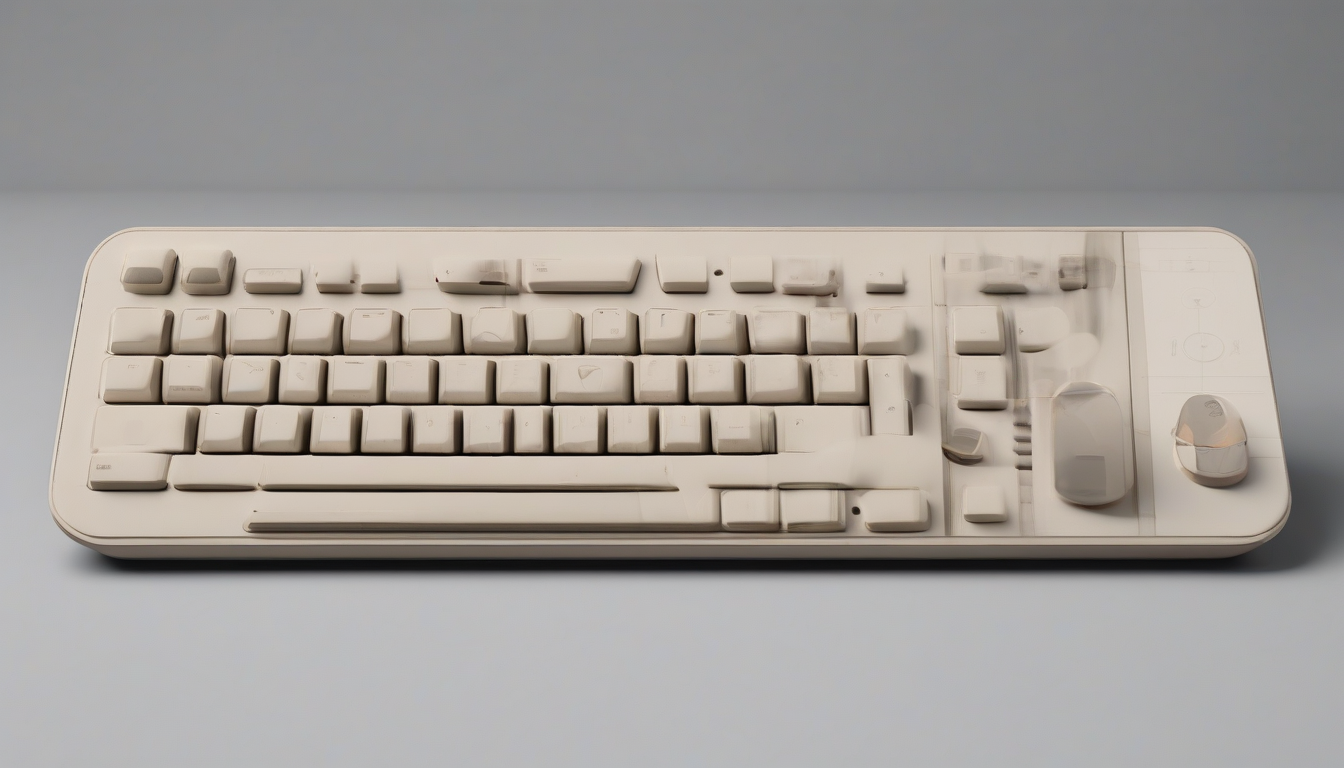
Physical Keys and Context-Aware Design: The Next Phase of AI Consumer Hardware
Project Mirage's Dune keypad brings context-aware physical keys to macOS, offering deep integration with Claude Desktop to write custom shortcuts in plain language.

Maintaining Academic Integrity as a Competitive Advantage in an AI-Driven World
Explores how universities prioritizing academic rigor amidst the rise of generative AI may achieve superior long-term market valuation for their degrees.

The Humanizer Paradox: When AI-Powered Polish Masks Research Subtlety
A critical look at the rise of 'AI humanizing' tools in academia and their impact on research integrity.
You Can't Train Your Way Past Mathematical Impossibility in Chaotic Systems
New research using Koopman operator learning demonstrates that infinite training data cannot overcome inherent unpredictability in chaotic systems, reveals why AI hallucinates, and introduces a lightweight algorithm with built-in error bounds that beats supercomputers on Arctic sea ice analysis.
Unlocking Nature’s Arsenal: A Novel 'Megacluster' Target Against Superbugs
A groundbreaking discovery in Streptomyces bacteria reveals a massive genetic 'megacluster' capable of disrupting essential bacterial pathways, offering a promising new strategy against antibiotic-resistant infections.

Tragedy Denied: A Parent’s Journey From Fear to Disability Pride—What Barriers Really Block and Who We All Lose Without Belonging
After a therapist labeled her daughter’s cerebral palsy diagnosis “tragic,” the author discovered that the real barrier wasn’t physical limitation, but society’s refusal to remove barriers and embrace difference. Drawing on Disability Pride Month, ADA 36th anniversary milestones, and stories from activists with disabilities—including her co-founder role in the Bold Beauty Project—the article redefines independence as dignity, challenges the medical model, and argues that belonging is a human right.

The Civility Spillover: How Our Blunt Dialogue With AI Frays Human Connections
An exploration of how the direct, command-driven language we use with artificial intelligence is spilling over into human-to-human interactions, eroding linguistic politeness, decreasing overall talk rates, and threatening the cooperative foundations of society.

Why 2,000 Calories Became the World's Most Persistent Food Meme
An exploration of how the FDA's 2,000-calorie recommendation became a dominant cultural meme through evolutionary mechanisms of replication, variation, and selection.

Food Noise: The Chatter About the Wrong Things
A comprehensive exploration of the emerging concept of 'food noise'—persistent, intrusive thoughts about food—including its origins with GLP-1 medications, cultural variations across countries, commercialization by telehealth and weight-loss industries, and the biopsychosocial factors that make food feel \"loud\" in modern environments.

AMD's $4,000 AI Workstation Turns Strix Halo Into a Ready-Made ML Lab
AMD's Ryzen AI Halo Developer Platform packs 128 GB of unified memory into a palm-sized box for $3,999 — but DRAM price hikes have nearly doubled its original launch cost, making it a tougher sell against Nvidia's DGX Spark.
Inside Autodesk's $350 Million AI Experiment: Why CMCO Dara Treseder is Betting Big on Training, Not Replacing, Teams
A close look at Autodesk's $350 million training commitment to ready its workforce for generative AI adoption, led by Chief Marketing and Commercial Officer Dara Treseder — both inside the company and across its external ecosystem.

Cannabis Psychosis May Represent a Distinct Subtype: New Research Challenges Traditional Classification
Recent Yale research suggests cannabis-induced psychosis may be a distinct subtype rather than just drug-induced symptoms, with clinical, cognitive, and brain-based differences from non-cannabis-associated psychosis.