
Introduction: The Predictive Convergence
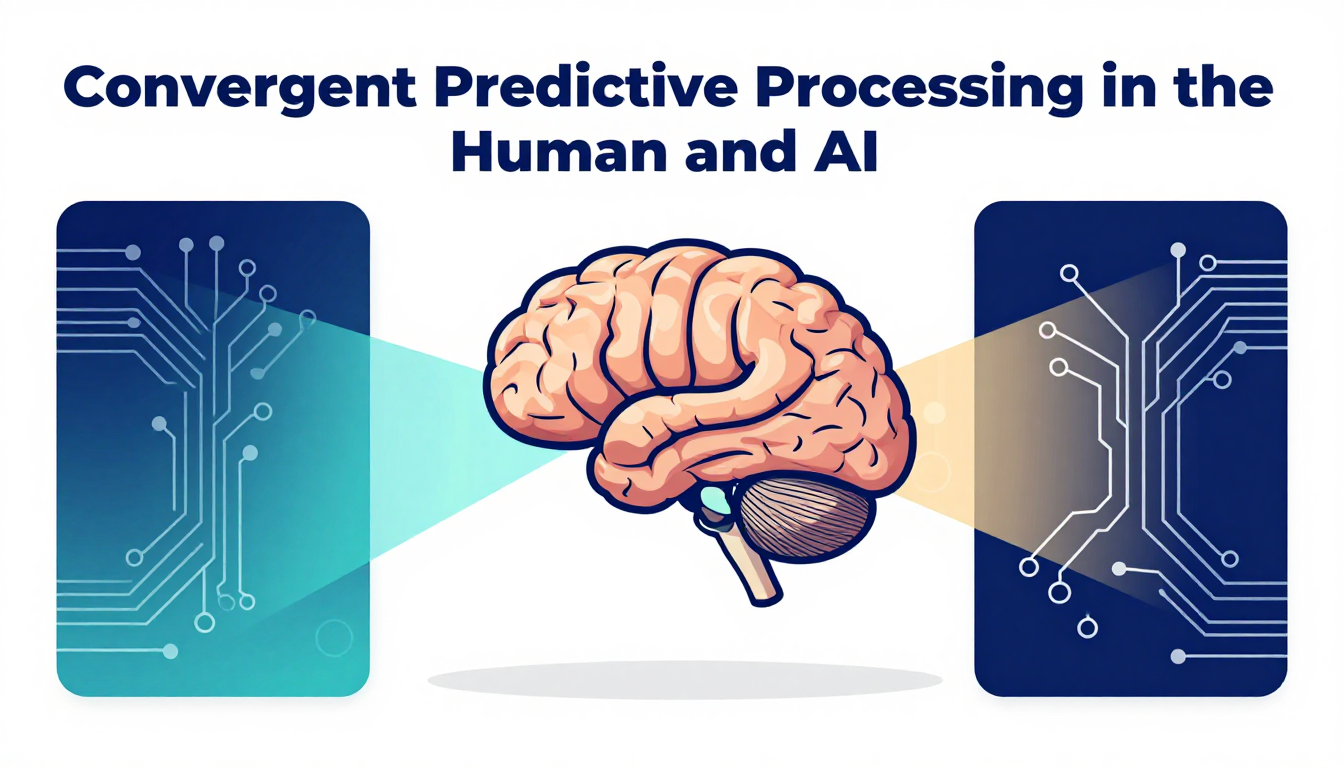
Across the vast divide between biological wetware and silicon hardware lies an astonishing convergence: both the human brain and large language models (LLMs) organize, process, and predict language using fundamentally parallel computational principles. For decades, cognitive scientists studied neural activation patterns during speech comprehension with the hope of uncovering universal principles of language processing. Today, that dream draws closer to reality as researchers harness millisecond-scale magnetoencephalography (M/EEG) tracking to observe the brain's anticipatory mechanisms—findings that mirror remarkably with the internal computations of state-of-the-art LLMs.
This convergence is not merely metaphorical; it represents a shared architectural blueprint for handling linguistic uncertainty. Both systems operate in continuous time, constantly forecasting what words or sounds are most likely next, then updating their internal representations when predictions fail. The neural signatures of prediction errors—those sharp spikes in brain activity that occur precisely when unexpected input arrives—parallel the attention-weighting mechanisms embedded within transformer architectures. Where probability is high, resources are conserved; where uncertainty reigns, processing intensifies.
The implications stretch far beyond academic curiosity. Understanding how biological and artificial systems arrived at parallel solutions for language processing offers a roadmap to more robust, transparent, and efficient AI. Equally important, it provides clinicians with novel diagnostic markers: deviations in predictive processing may signal early cognitive impairment long before overt symptoms manifest. As we stand at this nexus of neuroscience and artificial intelligence, a new paradigm emerges—one where the brain serves as both inspiration and validation for AI design, and where LLMs become tools to decode the very neural processes that gave rise to them.
The Brain as a Prediction Engine
At the heart of modern cognitive neuroscience lies the predictive coding framework—a theory stating that perception is not a passive reception of sensory input, but an active process of hypothesis testing. The brain constantly generates predictions about what it expects to perceive next, and only the mismatch between prediction and reality—known as prediction error—propagates upward through neural hierarchies. This principle finds its most precise validation in millisecond-scale M/EEG studies of speech comprehension.
When listeners hear continuous spoken language, their brains do not wait for each word to arrive before constructing its meaning. Instead, neural populations fire in anticipatory patterns that align with the statistical regularities of the language being heard. Researchers using MEG (magnetoencephalography) and EEG (electroencephalography) can track these neural dynamics with millisecond temporal resolution, revealing that the brain begins predicting upcoming words several hundred milliseconds before they are uttered.
A groundbreaking finding emerging from multiple labs is the inverse relationship between prediction strength and neural response amplitude. When a word arrives with high predictability—say, the word "sugar" following "coffee and---"—neural activity remains relatively stable. But when an unexpected word appears—a semantic anomaly like "coffee and hammer"—a sharp increase in neural activity occurs approximately 400 milliseconds post-stimulus, known as the N400 component in EEG literature. This component represents the brain's prediction error signal, a neural spike that quantifies just how far the actual input deviated from the brain's internal forecast.
The elegance of this mechanism is its efficiency. By focusing neural resources on unexpected input, the brain avoids wasting energy processing what it can already anticipate. This predictive efficiency explains why native speakers comprehend speech at remarkable speeds, often understanding multiple words per second in real-time conversation. The predictive machinery operates continuously and unconsciously, fine-tuned through years of exposure to linguistic statistics in one's native tongue.
LLMs as Computational Analogues
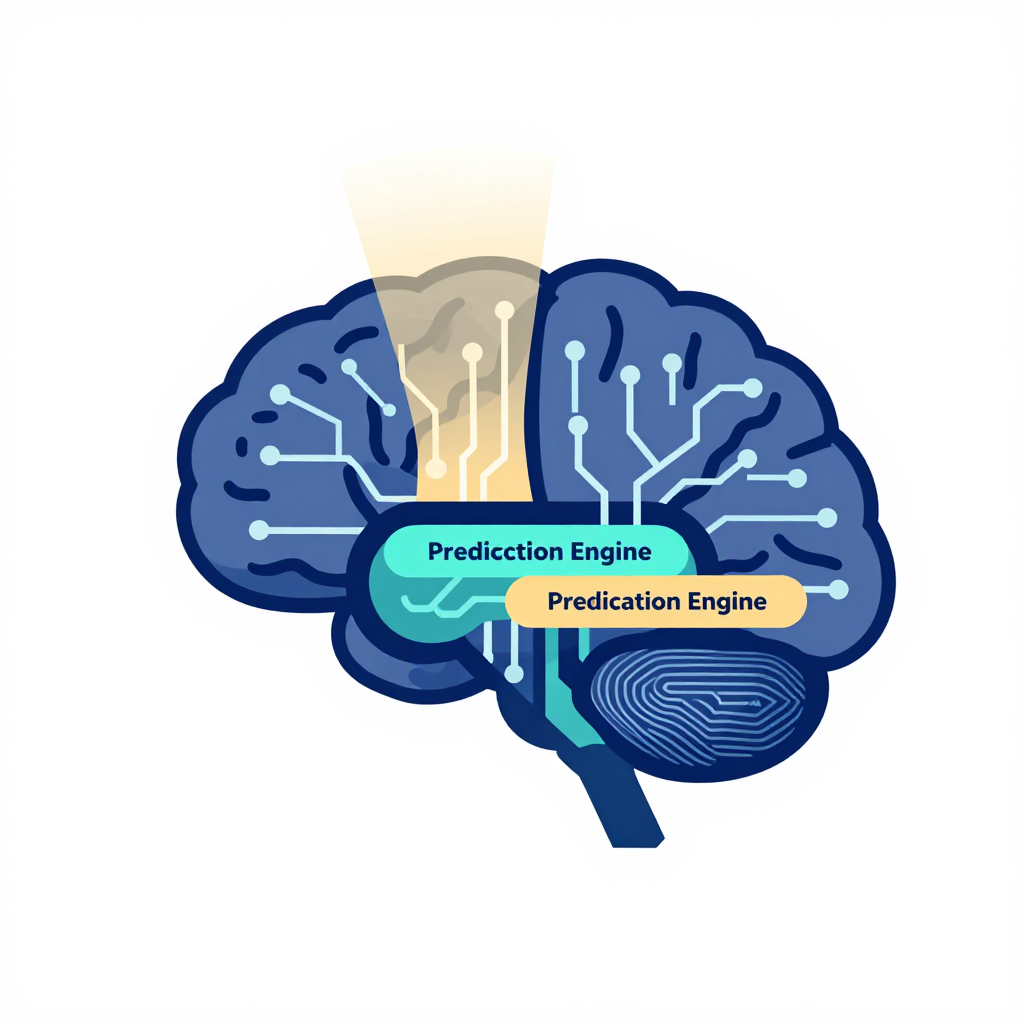
Large language models, particularly transformer-based architectures, implement their own version of predictive processing—only instead of neural populations and electrochemical signals, they rely on attention mechanisms and matrix multiplications. The central operation in a transformer is self-attention, which allows each word position to attend to all previous positions and compute weighted representations of their context. This is not unlike the brain's hierarchical prediction mechanism, where higher-level regions generate predictions that are passed down to lower areas for comparison with incoming sensory data.
Crucially, transformers predict the next word in a sequence by computing probability distributions over their vocabulary. This is not simply statistical coincidence; it is a deliberate design choice that mirrors the brain's predictive strategy. When an LLM encounters a highly predictable word, its attention weights shift toward high-probability paths in the computation graph. When uncertainty is high—perhaps due to ambiguous pronouns, unusual syntax, or novel vocabulary—the model allocates more computational resources to resolve ambiguity.
The parallel becomes even more striking when researchers attempt to bridge the two systems. In a notable study published in Proceedings of the National Academy of Sciences, scientists trained transformers on massive corpora and then used their internal representations to predict neural activation patterns recorded during human reading tasks. The model's hidden layer activations at various depths correlated strongly with fMRI and ECoG signals from cortical regions involved in language processing. The deepest layers of the transformer corresponded to higher-order association areas, while earlier layers aligned with primary sensory cortices. This hierarchical alignment suggests that both systems—biological and artificial—converged on similar information-processing strategies, despite operating on entirely different substrates.
Neural Mirroring Through LLM Representations
Google researchers have taken the brain-LLM parallel further by developing methods to "decode" neural signals from LLM representations and vice versa. In their 2024 paper, the team demonstrated that transformer activations could predict human neural responses across multiple experimental conditions with striking accuracy. The approach involved mapping each layer of the transformer to specific neural markers, finding that early layers corresponded to sensory encoding regions, while deeper layers aligned with inferotemporal and prefrontal areas involved in semantic integration.
One particularly elegant demonstration involved subjects listening to narratives while undergoing fMRI scans. Researchers extracted LLM representations of the same narratives at various abstraction levels and then trained linear decoders to predict brain activity from these representations. The results showed that transformers trained only on text could accurately predict neural responses to spoken language, even though the models were never exposed to auditory input. This finding strongly supports the idea that predictive processing principles transcend modality—whether hearing spoken words or reading text, the brain employs similar representational strategies that LLMs have inadvertently learned to replicate.
The mirroring works in both directions. Researchers have also used neural recordings to inform LLM training, creating hybrid architectures that incorporate biologically inspired constraints. When transformers are regularized to produce neural predictions aligned with human M/EEG data, they show improved robustness to distributional shifts and better generalization on out-of-domain language tasks. This bidirectional exchange between neuroscience and AI represents a virtuous cycle: the brain inspires better algorithms, while algorithms help decode the brain.
Structural Parallels Despite Physical Differences
It is remarkable that two systems so different—biological neurons connected via synapses versus silicon transistors linked by circuit boards—arrive at similar solutions for language processing. The human brain contains approximately 86 billion neurons, each forming thousands of synaptic connections, resulting in a network with incomparable parallelism and adaptability. In contrast, state-of-the-art LLMs consist of billions to hundreds of billions of parameters optimized through gradient descent on massive datasets. Yet both systems exhibit the same fundamental property: predictive parallelism.
The structural similarity manifests in hierarchical organization. Both systems process language in a bottom-up fashion, with early stages extracting low-level features like phonemes or character n-grams, and later stages integrating these into semantics and discourse-level meaning. This hierarchical prediction allows both systems to handle ambiguity efficiently—by maintaining multiple hypotheses in parallel and pruning them as more evidence accumulates.
Moreover, both systems exhibit context-dependent representations. In the brain, the meaning of a word like "bank" shifts depending on whether it appears in "river bank" or "savings bank," with distinct neural activation patterns corresponding to each sense. Similarly, LLMs produce context-sensitive embeddings where the same word receives different vector representations based on surrounding tokens. This contextual flexibility arises not from memorization but from the predictive training objective: to minimize surprise, the model must learn to represent words in ways that reflect their future predictive utility.
Parallel Processing and Temporal Dynamics
Time plays a crucial role in both biological and artificial prediction. The human brain operates in real-time, making predictions on the scale of milliseconds during continuous speech comprehension. This temporal precision is made possible by parallel processing across distributed neural networks, where multiple hypotheses about upcoming input can be evaluated simultaneously. The brain does not wait for a sentence to complete before assigning meaning; instead, it builds predictions incrementally, revising earlier commitments as new information arrives.
LLMs approximate this temporal behavior through their autoregressive generation process. Each token is predicted based on all previous tokens, simulating a kind of real-time prediction, albeit at a coarser temporal granularity. Research teams have begun developing continuous-time models—neural differential equations and spiking neural networks—that more closely mimic the brain's millisecond dynamics. These models aim to bridge the gap between discrete-token prediction and the continuous flow of neural processing.
What's more revealing is how both systems handle uncertainty. When faced with incomplete input—such as listening to someone speak across a noisy room—the brain does not simply fail; it engages in probabilistic inference, generating multiple plausible interpretations and weighting them according to prior expectations. LLMs, too, encode uncertainty in their output distributions; the entropy of their softmax probabilities reflects confidence in predictions. High entropy indicates uncertainty and triggers either risk-averse sampling (selecting high-probability tokens) or curiosity-driven exploration (sampling diverse possibilities). This parallel suggests that uncertainty management may be a universal principle of intelligent prediction, whether implemented in biological or artificial substrates.
Applications in Brain-Computer Interfaces
The convergence between brain and AI predictive processing opens exciting avenues for next-generation brain-computer interfaces (BCIs). Current BCI systems often struggle with speed and accuracy because they attempt to decode intentions directly from neural signals without leveraging powerful language models. The new paradigm proposes integrating LLMs into the decoding pipeline: instead of mapping neural activity to individual words or phrases, researchers train decoders to predict what language model representation best explains the observed neural activity.
Early demonstrations have yielded impressive results. In one study, participants imagined typing sentences while neural activity was recorded via ECoG electrodes. A decoder trained on transformer representations achieved spelling rates of up to 90 words per minute, dramatically surpassing previous BCI methods. The key insight was that the brain's predictive signals align with LLM internal representations, allowing the decoder to exploit this alignment rather than attempting direct word recovery.
This approach also enables error correction in real-time. When neural prediction errors spike—indicating uncertainty or conflict—the system can prompt disambiguation queries or wait for additional input before finalizing its output. Such adaptive interfaces mimic the brain's own prediction-error handling mechanisms, creating more intuitive and responsive communication pathways for users with speech impairments.
Beyond spelling and command interfaces, this predictive decoding opens doors to richer interaction modes: users could conceptually dictate entire paragraphs while the system fills in grammatical details, corrections, and stylistic choices based on learned expectations of natural language structure.
Clinical Diagnostics Through Predictive Signatures
Deviation from normal predictive processing patterns may serve as an early biomarker for cognitive disorders ranging from autism spectrum disorder to schizophrenia and aphasia. Clinical studies have found that individuals with certain neurodevelopmental or psychiatric conditions exhibit atypical N400 responses, altered prediction error signaling, or disrupted hierarchical prediction chains during language comprehension tasks.
LLMs offer a novel tool for quantifying these deviations. By training models on neural data from healthy controls and patients alike, researchers can create predictive profiles—digital phenotypes that capture individual differences in brain function. These profiles are more granular than behavioral measures alone, capturing millisecond-scale dynamics of prediction and error correction that traditional tests might miss.
For example, in autism research, some individuals show heightened prediction error responses to minor syntactic violations, suggesting over-sensitivity to unexpected input. In schizophrenia, flattened prediction errors may underlie disorganized thought patterns and hallucinations, where the brain fails to properly weight prior expectations against sensory evidence. By mapping these neural signatures onto LLM representational spaces, clinicians gain a quantitative framework for diagnosis and treatment monitoring.
The promise extends beyond diagnostics. Predictive profiling could guide personalized interventions: individuals with weak predictive signals might benefit from training regimens designed to strengthen anticipatory processing, while those with excessive prediction error responses could learn strategies for better expectation management.
Towards Transparent and Explainable AI
One of the most pressing challenges in modern AI is explainability—understanding why a model made a particular prediction. Black-box language models often generate correct outputs while appearing inscrutable in their reasoning. The brain-LLM convergence offers a path toward interpretability by grounding model behavior in established neural principles.
If LLM representations parallel human brain activity, then decoding strategies developed for neuroscience can be repurposed to interpret LLM decisions. Researchers have used techniques like representational similarity analysis (RSA) to compare layer-specific activations in transformers with neural data, identifying which parts of the model are most critical for specific language phenomena. This has revealed that syntactic processing in transformers emerges in middle layers, while semantic integration peaks in deeper layers—a pattern mirroring the brain's hierarchy.
Even more importantly, prediction error signals in LLMs—such as high-loss tokens or attention spike points—can be flagged as areas requiring human review. If an LLM assigns high surprise to a particular input phrase and subsequently generates an unusual output, this corresponds to the brain's N400 response: a region of computational uncertainty worth flagging for quality assurance. By integrating predictive uncertainty metrics into AI safety and monitoring pipelines, developers can catch failures before they reach end users.
Furthermore, the bidirectional insight—using neural data to improve AI and AI to explain neural activity—creates a virtuous cycle for transparency. Each advance in neural understanding informs better model design, and each improvement in AI interpretability provides new hypotheses about brain function. This synergy stands to accelerate progress in both fields far beyond what either could achieve independently.
Future Prospects
The convergence of brain and AI predictive processing signals the dawn of a new era in cognitive science and artificial intelligence. No longer must researchers choose between biological realism and computational tractability; the emerging framework suggests they can pursue both simultaneously.
Future work will focus on scaling these insights to more complex linguistic phenomena—poetry, humor, irony—where context and pragmatic reasoning dominate. Current LLMs still stumble on subtle cues that humans process effortlessly; understanding how the brain manages such nuances could inspire next-generation architectures with richer contextual awareness.
Additionally, closed-loop systems combining neural recording and LLM decoding are becoming increasingly feasible. Imagine a future where an individual's thoughts are translated into text in real-time, not through brute-force decoding of motor commands but by reverse-engineering the brain's predictive representations. Such systems would not merely replicate speech; they would capture intent, nuance, and cognitive style with unprecedented fidelity.
On the AI side, biologically grounded training objectives—encouraging models to minimize prediction errors aligned with neural signatures—may yield more robust, generalizable systems less prone to adversarial attacks and Hallucination. On the neuroscience side, AI provides tools for analyzing massive neural datasets, uncovering hidden patterns in brain activity that decades of traditional analysis missed.
Most profoundly, this convergence challenges deep philosophical questions about intelligence itself. If two vastly different systems arrive at similar solutions for language understanding, perhaps predictive processing is not just one approach among many—it may be the optimal path toward linguistic competence. As we continue to explore this convergence, we are not merely studying the brain or AI in isolation; we are uncovering fundamental principles of how intelligent systems, whether born of evolution or engineering, make sense of language and the world it describes.