What the Replication Crisis Actually Means
A 2015 paper shook psychology to its foundations. Researchers attempted to replicate 97 previously published studies and found that fewer than 40 percent held up under the same methodology. That single number — less than half — reframed a decade of quiet suspicion into something louder: a crisis of credibility that the field is still working through.
The term "replication crisis" originated in the early 2010s, when a paper claiming evidence of precognition — the ability to perceive future events — was published in a mainstream journal and then failed to be reproduced. The embarrassment catalyzed a broader reckoning. Scientists started asking a question they'd been avoiding: how many other findings in the literature are false positives too?
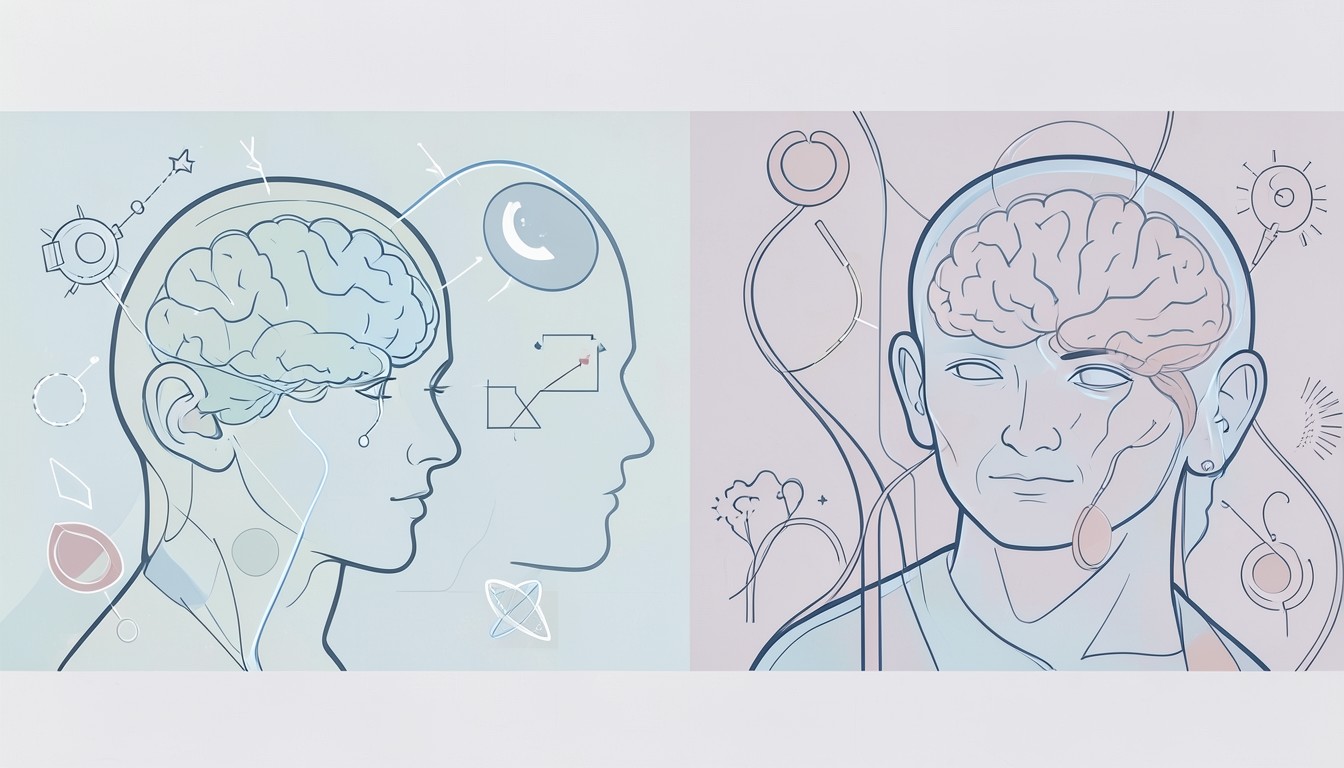
For anyone whose work intersects neuroscience mental health research, this isn't an abstract epistemological puzzle. It determines which interventions get funding, which therapeutic techniques get taught to trainees, and which claims get translated into clinical guidelines that real patients encounter in real waiting rooms.
How We Got Here: Systemic Causes
No one is to blame in the villainous sense. The replication problem emerged from structural incentives that rewarded the wrong behaviors.
Publication bias tops the list. Journals want surprising results. A study finding that something counterintuitive is true gets accepted; a study finding no effect, which is often the more honest result, gets rejected as boring or insignificant. So researchers, facing genuine career pressure, adapted. They learned to package their data in ways that produced the headline-worthy positive finding.
Then there's what methodologists call questionable research practices: deciding mid-study to add a few more participants after peeking at preliminary results, dropping an outlier that doesn't fit the hypothesis, choosing among several measures of the same construct after seeing which one yielded significance. None of these individually looks like fraud. Collectively, they inflate the probability of reporting a statistically significant result even when no real effect exists.
The p-value threshold compounds the problem. The standard benchmark, p < .05, means roughly a one-in-twenty chance that your observed result appeared by random chance if the null hypothesis is actually true. But that threshold is arbitrary. It's a convention, not a law of nature. Some researchers have proposed lowering it to .005 to reduce false positives, though changing the threshold doesn't solve the underlying incentive structure.
A Type 1 error (false positive) means you detect an effect that isn't there. A Type 2 error (false negative) means you miss an effect that is. Greater statistical power, driven by larger sample sizes and more precise measurement, reduces Type 2 errors. The replication crisis is, at its core, a Type 1 problem: too many effects in the literature that aren't real.
The Landmark Replication Projects
Three major efforts in the mid-to-late 2010s quantified the scale of the problem:
- 2015: 97 replication attempts in psychology, fewer than 40 percent successful. This is the result that broke the dam.
- 2018 (broad): 28 findings dating from the 1970s through 2014 tested; about half held up.
- 2018 (top-tier): 21 findings published in top journals, two-thirds replicated successfully.
That last number deserves a pause. If you restrict to the most influential studies, the ones most likely to be cited, taught, and built upon, the replication rate is meaningfully better. It suggests that selection pressure in high-impact venues does something useful, even if imperfectly.
Still, findings that didn't replicate included some famous ones. Priming effects (the idea that subtle environmental cues shift your behavior in predictable ways). Power posing. Certain self-control models. These weren't fringe claims, they were taught in textbooks and cited in popular books.
Not Just Psychology
Note that psychology isn't alone here. Cancer research and economics have faced parallel methodological scrutiny. Reproducibility questions extend across any science that measures noisy, complex phenomena with imperfect instruments and human decision-makers at the helm.
What makes psychology and the social sciences potentially harder is measurement itself. A blood pressure reading has a defined physical referent. A self-report scale measuring "trait openness" or "life satisfaction" is a proxy, and proxies can drift, confound, and fail to capture what they nominally describe.
What Survives the Wrecking Ball
Here's something the doom-and-gloom framing often obscures: plenty of psychological findings do replicate. Even prominent skeptics of the field's methods accept that personality traits remain fairly stable across adulthood, that individual beliefs are genuinely shaped by group beliefs, and that people systematically seek out confirming evidence for what they already think. These aren't fragile claims. They've been tested and tested again and held.
The replication crisis doesn't say "nothing in psychology is true." It says "we need better tools for separating the findings that are true from the ones that aren't." That's a more modest and more productive claim.
Reform: Pre-Registration, Open Science, and the Road Ahead
The response from the reform-minded portion of the field has been concrete. Pre-registration, filing your hypothesis, methodology, and analysis plan publicly before you collect a single data point, prevents post-hoc storytelling. It forces you to commit to what you're testing before you know what you've found. If your result is significant only because you tried twelve different regression models and reported the best one, pre-registration catches that.
Open data and open materials mean other researchers can actually see what you did, not just what you reported. Journals that accept registered reports, reviewing and accepting papers based on methodology before results exist, flip the incentive structure so that good design, not surprising findings, gets published.
It remains to be seen how far these reforms reach. The "replication crisis" framing itself is contested; some in the field have argued the crisis is exaggerated or that it unfairly singles out psychology while ignoring its many robust findings. That debate continues.
Why This Matters Beyond the Lab
The stakes aren't academic. Psychological research feeds directly into mental healthcare protocols, educational policy, business management practices, and political campaign strategies. When a finding about cognitive behavioral techniques or about the efficacy of a therapeutic intervention turns out to be a false positive, the cost isn't just an embarrassed researcher. It's clinics that trained staff on an unsupported method. It's insurance coverage decisions made on faulty evidence. It's a patient who got a weaker treatment than they deserved.
This is why the replication crisis intersects so directly with the integrity of neuroscience mental health research as a whole. New tools, including AI in mental health care, are being built on top of the evidence base. If that base contains a meaningful fraction of false positives, the systems we construct on it inherit those errors. The work on AI and mental health challenges gets harder when the foundational research it draws from is itself uncertain.
The Honest Take
Fields don't have "crises" when they're broken. They have them when they're self-correcting. The fact that psychology mounted systematic replication projects, publicly grappled with its own weaknesses, and began restructuring incentives is, counterintuitively, a sign of health. A field that never questioned itself would be worse, not better.
The work isn't finished. Publication bias hasn't vanished. Pre-registration rates are still low by many counts. But the question is no longer whether psychology has a credibility problem. It's how fast the reform efforts can outpace the accumulated weight of weak findings already in the literature.
That's a slower, less dramatic story than "everything you read about psychology is wrong." It's also the true one.