
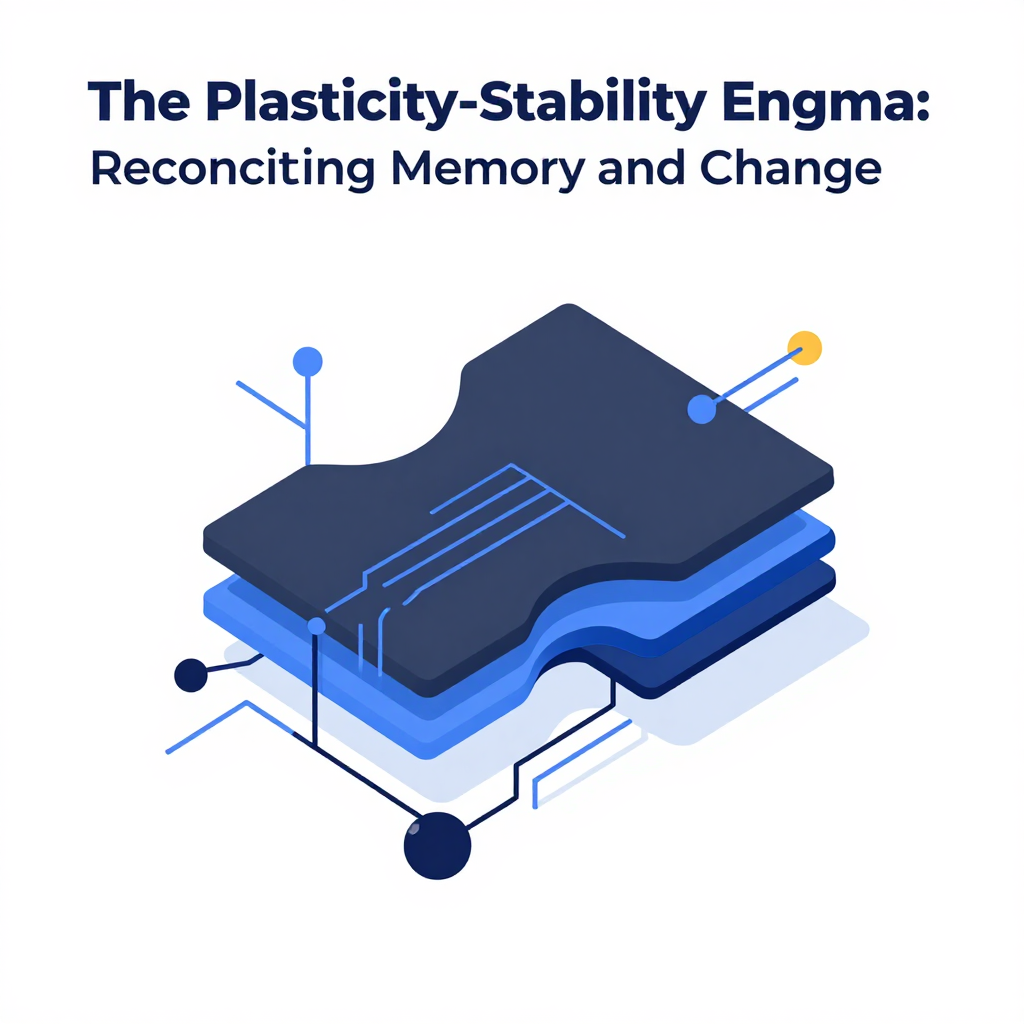
The Plasticity-Stability Enigma: Reconciling Memory and Change
The human brain manages a seemingly paradoxical feat: it is profoundly flexible, allowing us to acquire new skills, learn languages, and navigate unfamiliar environments, yet it remains incredibly stable. For decades, neuroscientists have struggled to explain this fundamental mystery, known as the "Plasticity-Stability Enigma." How can our neural circuits absorb novel experiences and encode them into long-term memories without causing retroactive interference—or, worse, overwriting and erasing the foundational knowledge maps we rely on daily?
For a long time, the prevailing wisdom assumed that the brain must either isolate these processes in separate regions or rely on complex, perhaps energy-expensive, mechanisms to constantly balance these competing demands. We imagined the hippocampal formation as a heavily segregated set of distinct processing units, each tasked with a specific type of memory. But a groundbreaking study, published in Nature (May 2026) by researchers at NYU Langone Health, has finally unmasked the cellular blueprint behind this balancing act, challenging our understanding of hippocampal architecture. By tracking hundreds of individual neurons simultaneously in moving mouse models, the team identified a sophisticated “memory switchboard” within the hippocampus—the very region essential for encoding new experiences—that elegantly resolves this tension, not through physical segregation, but through dynamic, temporal cellular activity. This research complements findings on how extensive training rewires brain connectivity to automate skills elsewhere.
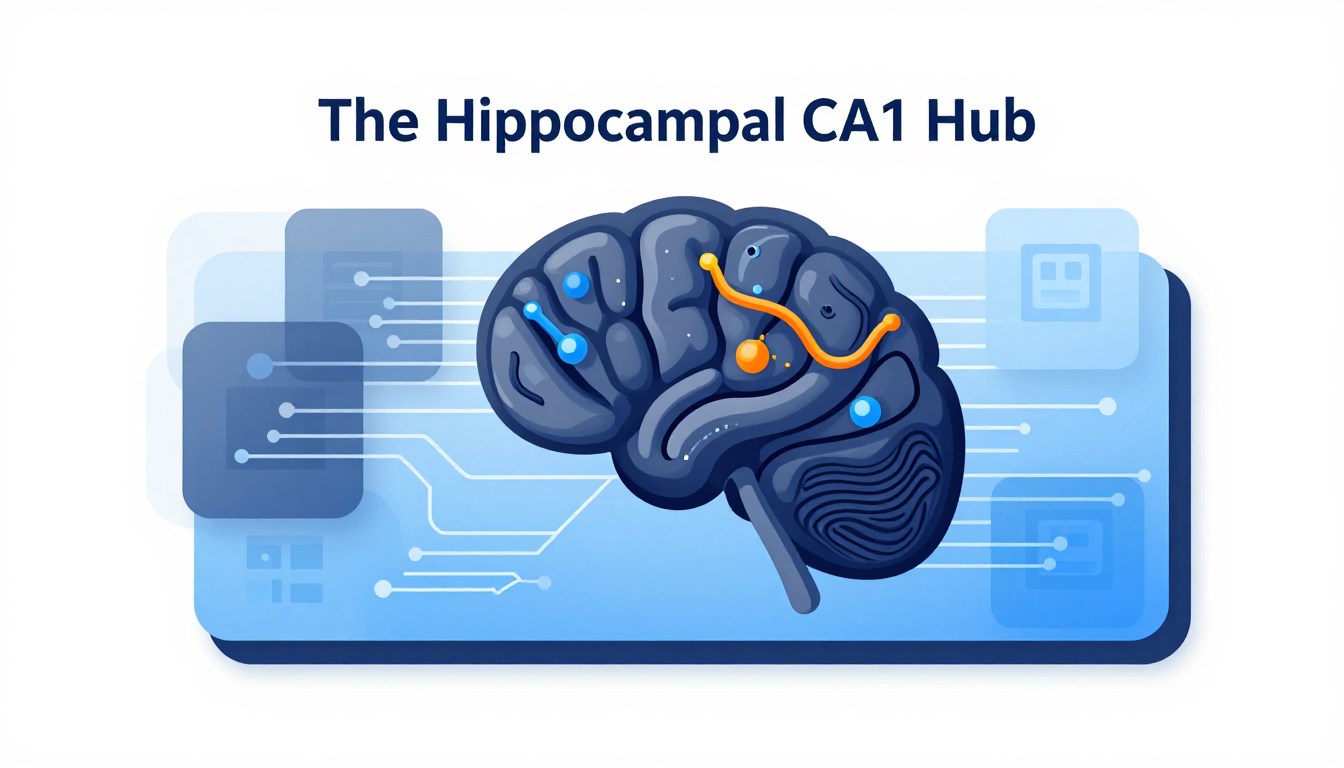
The Hippocampal CA1: A Functional Switchboard
At the heart of this discovery lies the cornus ammonis 1 (CA1) region of the hippocampus. The research highlights that the CA1 does not function as a monolithic storage unit nor as a simple relay station. Instead, approximately 25% of its neurons play a specialized role, acting as a shared physical “hub” that orchestrates the flow of both incoming and outgoing memory signals.
Think of it like a massive telecommunications switchboard. In such systems, a centralized hub manages thousands of concurrent calls—incoming requests and outgoing data—routing them efficiently to their destinations without the signals crossing lines or interfering with each other—all while using a limited set of infrastructure. The CA1 hub neurons appear to perform a similar function, employing divergent firing patterns to efficiently manage communication channels in a way that respects the autonomy of the hippocampus-cortex circuits.
The study mapped a chain of connected areas essential for memory:
- Cornus ammonis 3 (CA3): This hippocampal region transmits fast-changing, fleeting information from current, ephemeral experiences. It acts as the "recorder" of the immediate.
- Cornus ammonis 1 (CA1): The pivotal central hub that bridges these incoming signals, processing, refining, and preparing them for cortical storage.
- Retrosplenial Cortex: This cortical region is fundamental for spatial navigation and rebuilding scenes—key components of long-term memory. It acts as the "repository."
The core challenge, which this circuit solves, is how to receive fast, high-rate information from the CA3 while ensuring that the outgoing information sent to the retrosplenial cortex for storage is clean and coherent. The team discovered that while the same minority of CA1 neurons handle both the input from the CA3 and the output to the retrosplenial cortex, the magic lies in how they fire. They do not just "pass along" the information. They actively transform it.
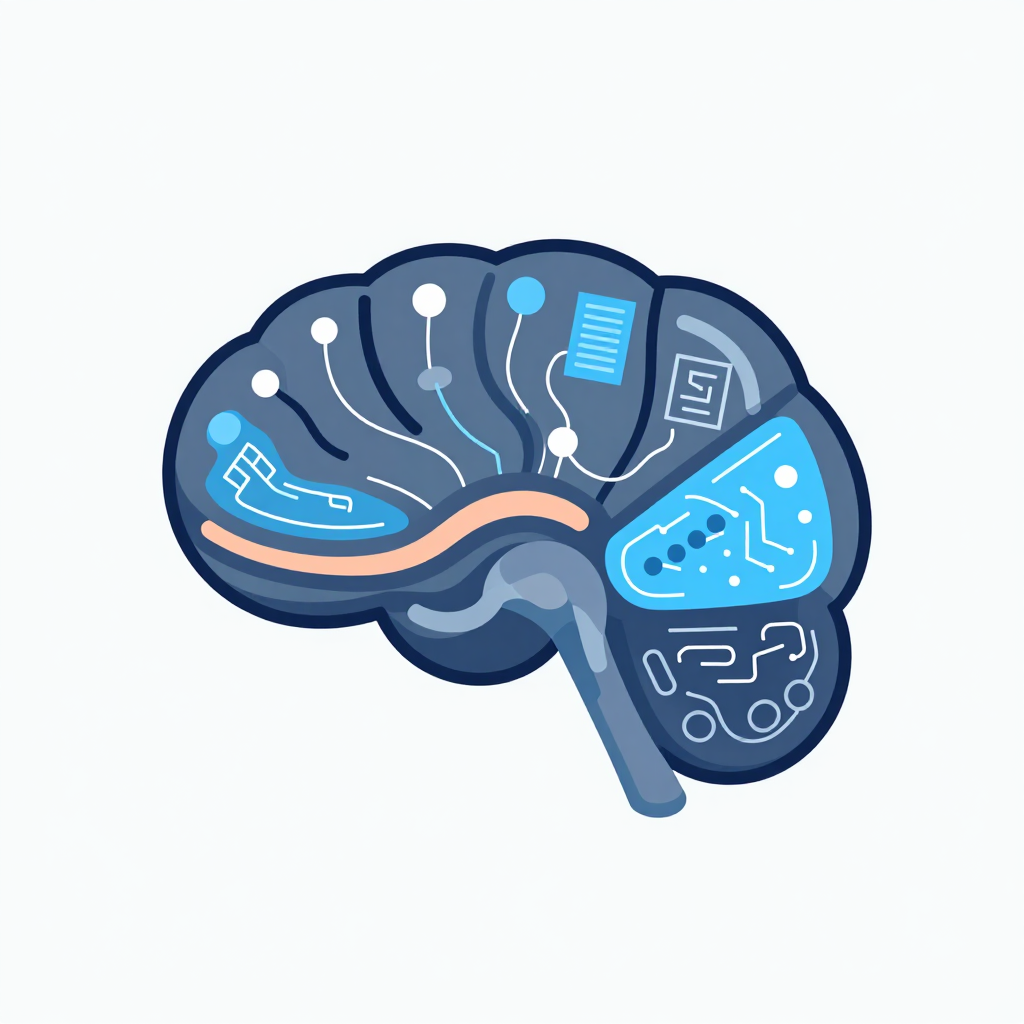
Divergent Firing Patterns: The Secret Mechanism of Signal Separation
The research team found that a minority of CA1 neurons gather the bulk of incoming, rapidly changing data from the CA3 region. But when transmitting that data onward to the retrosplenial cortex, those very same cells shift their behavior, firing in a completely different, coordinated pattern. This divergent activity ensures the separation of the incoming and outgoing signals.
This mechanism suggests that the brain does not need to constantly generate new cells to separate distinct memories or to shield old ones from new inputs. Instead, it reuses the same structural infrastructure (the CA1 neurons) but dynamically modulates the patterns of their firing. By altering the temporal dynamics of the signal—essentially changing the timing and rhythm of neural code rather than the physical wiring—the hippocampus can keep its information organized and protect older, established memory maps from being overwritten by the relentless influx of new sensory data.
This process is fundamentally efficient. If the brain relied on allocating new neurons for every distinct input, it could never maintain the capacity needed for a lifetime of information storage. By reusing the infrastructure through high-fidelity temporal modulation, the CA1 hub maximizes functional throughput while maintaining stability. As co-lead author Joaquín Gonzalez, PhD, notes, "By changing how the same cells fire together instead of turning on new cells, the brain can keep information organized and protect older memories." This suggests a brain that is "re-programmable" rather than just "additive."
Nighttime Replay: Solidifying Memories
The remarkable efficiency of the CA1 switchboard does not end when the animal falls asleep. Indeed, for memories to shift from ephemeral to enduring, nighttime processing is essential. The research uncovered that these critical CA1 hub neurons remain highly active during nocturnal sleep inside brain events known as sharp-wave ripples. During these quiet periods, the brain effectively "replays" the firing patterns it acquired during waking experience.
Because the very same core of CA1 neurons is involved in both daytime processing—the intake of new memories—and nighttime replay—the consolidation of those memories—the pathway from the hippocampus to the cortex remains open and functional. This continuity is essential for solidifying and stabilizing new information into long-term memory, effectively integrating new knowledge into established networks without destabilizing them.
The mechanism also reveals that the "switchboard" itself may be the locus of memory consolidation—the hub is active both in receiving experience and in strengthening the connection to the cortex (the repository). This robust bridge between the ephemeral nature of daily experiences and the enduring structure of episodic memory explains why memory is both moldable and remarkably enduring against decay.
Broader Implications: Navigating Alzheimer’s and AI Architectures
While the study focused on mice, its implications reach far beyond hippocampal physiology, touching upon both human clinical challenges and the future of artificial intelligence.
Understanding Circuit Failures in Alzheimer’s
For clinical neurobiology, this research offers a new lens for investigating circuit dysfunction in conditions such as Alzheimer’s disease. Cognitive decline often involves a profound breakdown in the ability to form and retrieve memories, specifically the stabilization of spatial and episodic maps. Understanding the "switchboard" mechanism provides a crucial new blueprint to study how these circuits fail—or become corrupted—when their regulatory firing patterns are disrupted. This may allow researchers to move beyond searching for generalized damage and instead identify earlier, circuit-specific biomarkers of decline, as well as therapeutic targets that focus on maintaining signal separation and temporal coordination within the hippocampal circuits.
A Biological Template to Fix 'Catastrophic Forgetting'
Perhaps most intriguingly, this research offers a potential solution to a persistent problem in artificial intelligence known as “catastrophic forgetting.” Current neural network models typically struggle to learn new tasks continuously—as soon as they are trained on a new data set, they tend to forget the information they learned previously because the new data overwrites existing weight distributions in the network.
The hippocampal CA1 switchboard suggests that the solution is not to simply increase the number of parameters or create more "nodes" (the digital equivalent of neurons) or even to simply use more storage. Instead, AI architects may need to incorporate mechanisms that allow for divergent signal routing and pattern-based signal modulation, allowing networks to update their knowledge base while structurally preserving the integrity of previously learned information. By mimicking this biological masterstroke of efficiency—where information is separated not by storage location, but by temporal coding—future AI systems could potentially achieve the resilient, continuous, stable learning that the human brain handles so effortlessly, even under intense informational load. The key is in structural reuse managed by dynamic pattern separation. This echoes insights from the fruit fly connectome mapping, where decentralized modular control replaces directed central hub activity.
Conclusion
The discovery of the hippocampal CA1 “switchboard” marks a major advance in our understanding of the plasticity-stability dilemma. It suggests that our ability to hold onto our past while rapidly absorbing the novelty of the present is not due to structural complexity, but rather sophisticated temporal management of the same neural infrastructure. This study, led by the NYU Langone Health team, bridges a critical gap in memory research, offering insight into the biological mechanisms of daily learning, the pathogenesis of neurodegenerative disease, and a promising template for the next generation of stable, continuous-learning artificial intelligence.
As we look toward the future, the CA1 hub stands as a testament to the evolutionary imperative of efficiency—proving that when it comes to the memory systems designed by nature, what you do with the neural bandwidth is just as important as how much of it you have.