
Neuroscience & Decision Theory
Articles on neuroscientific models of human decision-making, including cognitive biases, neural circuitry, and theoretical frameworks challenging traditional economic models.

Indian Enterprises, AI Leadership and the Brain’s Hard Choices
A neuroscience study links inhibition with selecting among competing options. Here is what it may—and may not—mean for Indian enterprise AI leadership.

Justice Sensitivity and Moral Judgment: What a 2014 Brain-Scan Study Found
Keith J. Yoder and Jean Decety’s University of Chicago fMRI study examined how justice sensitivity related to praise, blame and neural activity during brief moral judgments.

How reward experience shapes risky choices in pigeons and people
A 2014 Biology Letters experiment put pigeons and humans through formally identical learned-choice tasks. Both became more risk-seeking for larger rewards, suggesting experienced reward context can matter—without making the species’ decisions identical.
The Theta Signal: What a Tiny EEG Card Game Really Showed About Risk
A small Friedrich Schiller University Jena study linked frontal midline theta activity to cautious choices in a two-card gamble. Here is what the data actually support, what they don't, and how a careful reader might think about them without overreaching.
The 'Sandwich Model' Fallacy: How Neurophilosophy Challenges Core Assumptions of Decision Neuroscience
A groundbreaking neurophilosophy framework challenges the sandwich model of cognition, arguing that brain decisions emerge from decentralized interactions between sensory systems and motor actions, offering new insights for autonomous and edge AI development.
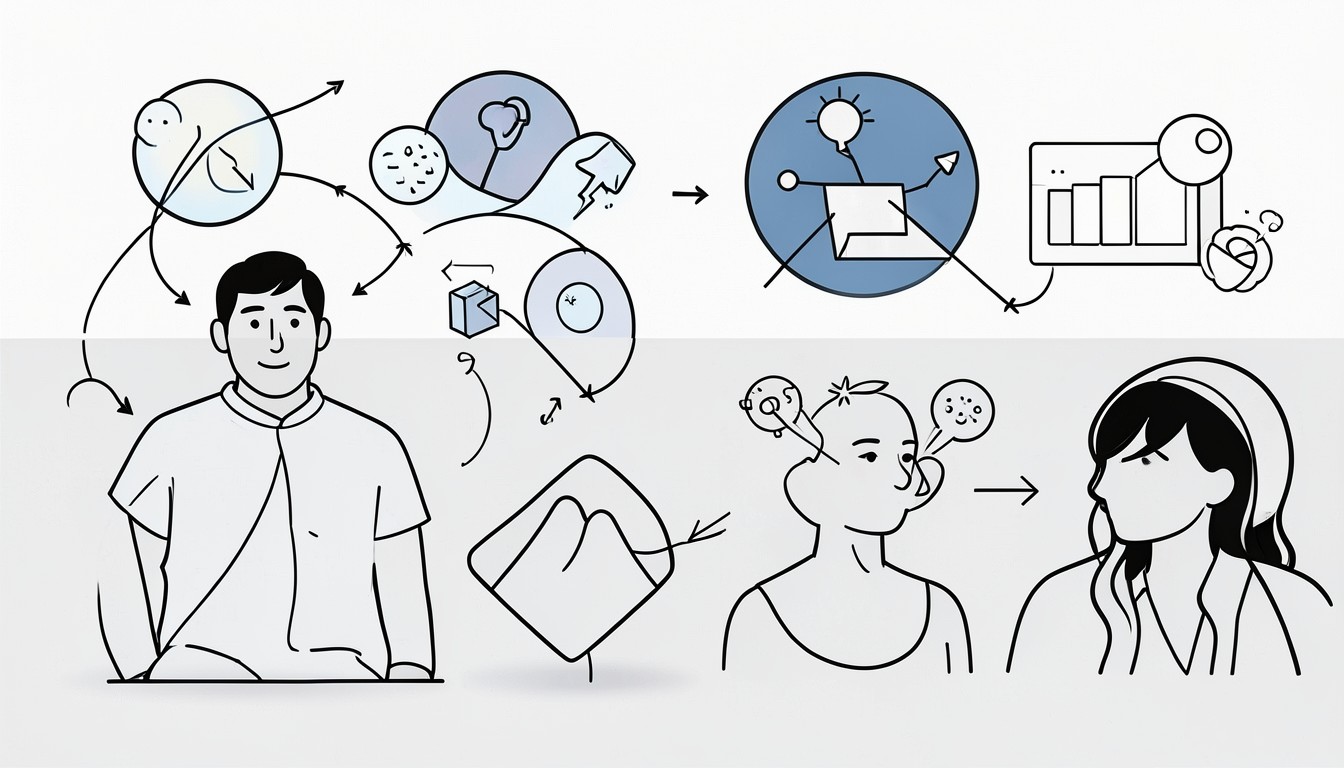
LLMs and Behavioral Mathematics Scale Analysis of Human Decision-Making Texts
A new study combines Large Language Models and behavioral mathematics to analyze human decision-making text data at scale, using fine-tuned LLMs to decode thousands of free-text justifications and validate them against objective choice mathematics.