
AI Infrastructure
GPUs, silicon, data centres and the data platforms underneath.
The Experimentation Trap: Why AI-Accelerated Growth Teams Build Fast and Decide Poorly
In the AI era, building experiences has become virtually free, while scaling meaningful outcomes remains rare. This piece explores how to build a high-threshold testing framework, using recent industry milestones from Miro, Reforge, and Statsig to outline how teams must pivot from velocity to judgment.

Silicon Valley's Consumer AI Optimist on Why Apps Will Outlast the Chip Boom
TechCrunch podcast: Goodwater Capital co-founder Chi-Hua Chien — who helped source Accel's early Facebook investment — argues the AI era's biggest winners will be application companies, not infrastructure, and shares what he sees inside consumer AI from hyper-personalized entertainment to women's health platforms.

Bing's IndexNow Champion Fabrice Canel Steps Down After Nearly 30 Years at Microsoft
Fabrice Canel, the Principal Product Manager who led Bing's crawling and indexing team and championed IndexNow, has announced his retirement from Microsoft effective July 1 after nearly three decades with the company. He took advantage of Microsoft's Voluntary Retirement Program, concluding a career that made him one of the most visible contacts for the SEO and webmaster community.

Third-Party Testing Shows Heterogeneous Compute Platform Combining H200s and SN50 RDUs Churning Out 763 Tok/s in MiniMax M2.7
SambaNova’s heterogeneous compute architecture—pairing Nvidia H200 GPUs with SN50 RDUs—delivers 763 tokens per second on MiniMax M2.7, reshaping how enterprises approach inference efficiency and air-cooled deployment.

Beyond Ethernet: Architecting High-Performance Fabrics for AI Workloads
AI training and inference demand unprecedented bandwidth and low latency, straining traditional Ethernet-based fabrics. We explore the architectural shift toward intent-based, AIOps-driven network fabrics in the modern AI datacenter.

Qualcomm Bets on 3D-Stacked 'High-Bandwidth Compute' to Break the AI Memory Wall
As AI workloads shift toward memory-intensive inference, Qualcomm is pivoting its datacenter strategy, moving compute closer to memory with a novel 3D-stacked architecture to bypass traditional high-bandwidth memory limitations and improve power efficiency.
Structured Knowledge Graphs for Websites: Google OKF + Machine-First Markdown Since 2004
Google's Open Knowledge Format brings structured, linked markdown for internal knowledge. Combined with machine-readable Markdown since 2004, it enables agents to traverse relationships across a site instead of reading flat pages.
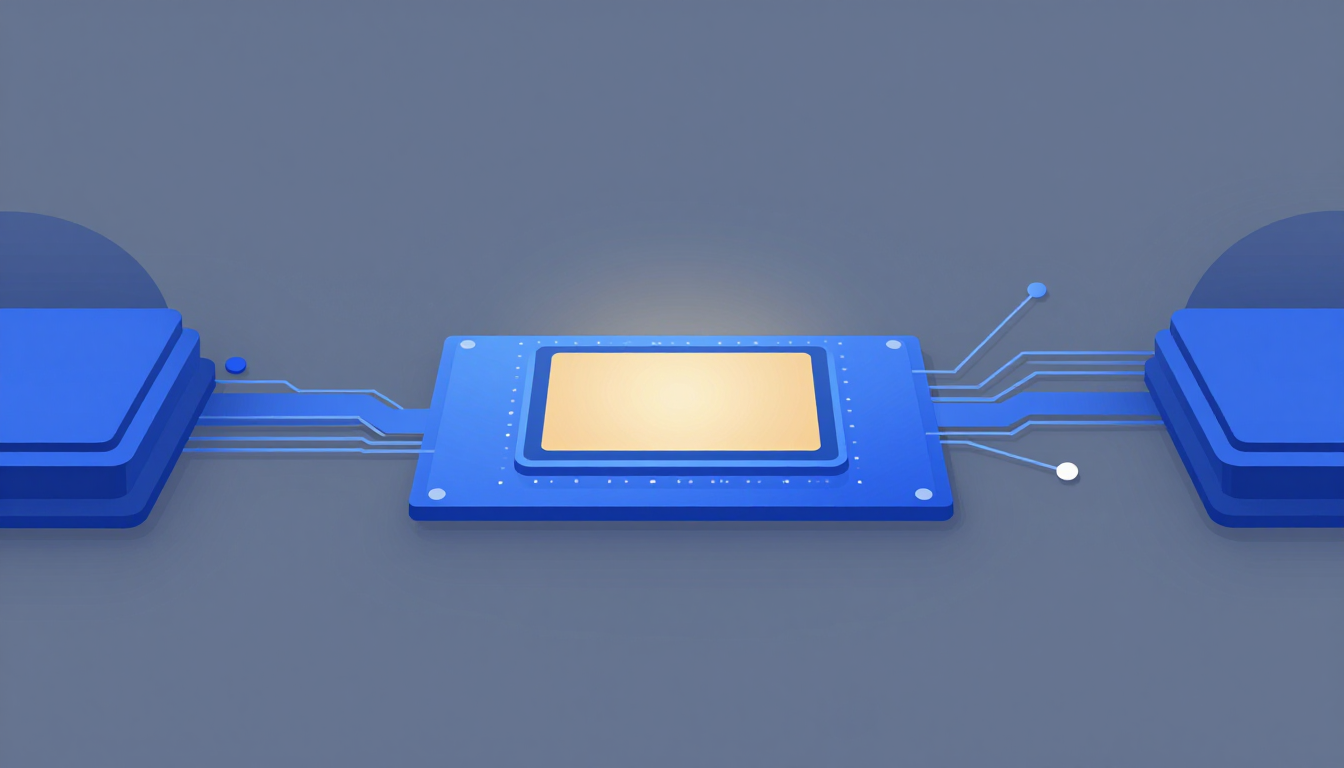
Nvidia’s Optics Offensive: Securing the AI Interconnect Pipeline
Nvidia is investing heavily in optical interconnect infrastructure, including vendors like Coherent, Lumentum, and Marvell, to address the data transfer bottlenecks limiting its GPU scale, as AI demand drives a shift toward faster 800G/1.6T modules and co-packaged optics.
A Twenty-Year Bet on Big Compute: Inside Anthropic's $19 Billion Kentucky Datacenter Deal
An analytical breakdown of Anthropic's high-stakes 20-year, $19 billion datacenter lease with TeraWulf at the Justified Data campus in Kentucky, exploring the capital requirements, pre-IPO liquidity pressures, and the broader real estate risk profile of the AI infrastructure boom.

Surging AI Infrastructure Costs Drive Broad Apple Price Increases
Apple has increased prices across its Mac, iPad, and peripherals lineups, attributing the shift to acute component shortages stemming from the aggressive global buildout of AI data centers.
Why EDB Wants You to Run Analytics Inside Postgres Instead of a Lakehouse
EDB's converged analytics approach leverages Postgres as the operational source of truth, using Apache Iceberg to connect analytical engines without ETL pipelines. The play: keep data on infrastructure you control, simplify governance, and support AI agents that need real-time access to both transactional and historical data.
AWS's Graviton 5 Is a Chip Triumph Buried Under AI Marketing Noise
Amazon's Graviton 5 delivers 35% faster performance over its predecessor, but AWS and partners keep mislabeling the general-purpose CPU as an "AI chip" — a marketing habit that obscures what Annapurna Labs has actually built and risks the credibility of a $20B+ silicon business.