
AI Infrastructure
GPUs, silicon, data centres and the data platforms underneath.

How OpenAI Used Its Own Models to Build the Jalapeno Chip—Faster
OpenAI’s first custom inference chip didn’t just run its own models—it was built *by* them. Omar Fayed dissects how closed-loop AI development turned chip design into a real-time feedback loop.

Micron's $41 Billion Quarter: What the Memory Chip Boom Actually Means
Micron posted $41.45B in quarterly revenue and $28.2B in profit as AI-driven memory scarcity sends shares up 13%. Here's what the numbers actually tell us about the memory chip economy.

Meta's Strategic AI Infrastructure Bet in India: Partnering with Reliance for a 168-Megawatt Data Center
Meta is expanding its AI infrastructure footprint in India through a partnership with Reliance Industries, marking its first major AI data center investment in the country. The collaboration includes a 168-megawatt facility in Jamnagar, Gujarat, and aligns with India's growing prominence as a hub for AI infrastructure.
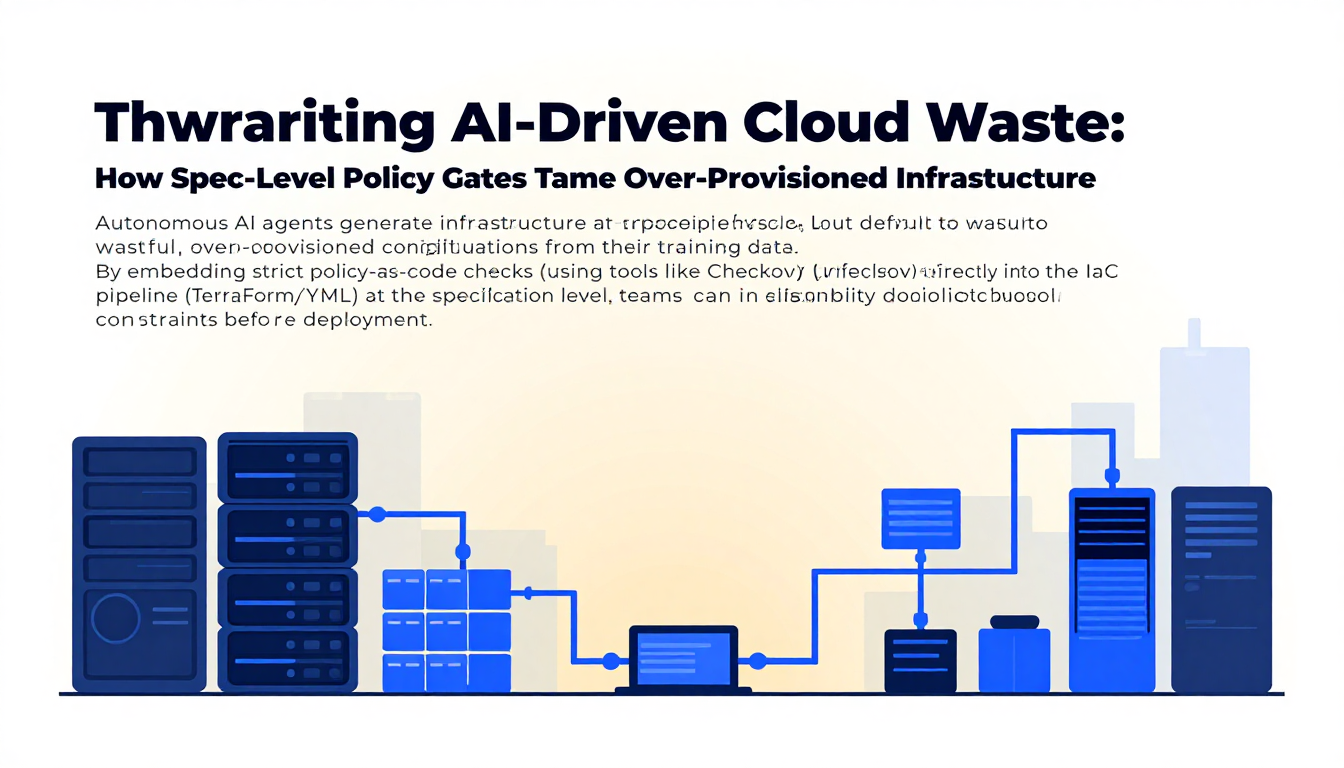
Thwarting AI-Driven Cloud Waste: How Spec-Level Policy Gates Tame Over-Provisioned Infrastructure
Autonomous AI agents generate infrastructure at unprecedented scale, but default to wasteful, over-provisioned configurations from their training data. By embedding strict policy-as-code checks (using tools like Checkov) directly into the IaC pipeline (Terraform/YAML) at the specification level, teams can enforce sustainability constraints before deployment.

HPE's VMware Escape Hatch: Free VM Essentials and $1 Zerto for Displaced Customers
HPE's aggressive migration program offers VMware customers free VM Essentials for a year and $1 Zerto licenses, aiming to capitalize on Broadcom's controversial licensing changes.

AWS Lambda MicroVMs: Extending Runtime Limits with Firecracker Technology
AWS has introduced Lambda MicroVMs, built on its Firecracker virtual machine monitor, which can run isolated Linux containers with runtimes of up to eight hours. This article explores the features, use cases, pricing, and availability of this new offering.

Rebuilding AI from the Ground Up: How Oscillator-Based Computing Could Slash Power Use by 1,000x
Naveen Rao's startup, Unconventional AI, is betting on a radical oscillator-based architecture to cut AI's energy consumption by 1,000x. With a working image-generation model and plans for custom chips, the company aims to redefine AI hardware.
DeepSeek Enters Silicon Business: plans to develop its own AI chips amid US export controls
DeepSeek, the Chinese startup developing large language models competitive with US companies like OpenAI and Anthropic, is planning to enter the silicon business by developing its own AI chips, according to Reuters.

Nvidia-Backed Nscale Boosts Global AI Data Center Capacity with $900 Million Infusion
U.K.-based AI infrastructure startup Nscale has secured $900 million to accelerate its data-center buildout across Europe, the U.S., and the Asia Pacific, signaling continued investor commitment to AI foundational technologies.

Station F Prepares Second Cohort of AI Accelerator to Fast-Track European Startups
Paris-based startup hub Station F, founded by Xavier Niel, is launching its second F/ai accelerator batch in September 2026. The program aims to help AI startups generate €1M in revenue within six months, backed by major tech companies including AMD, Anthropic, AWS, Google, Meta, Microsoft, and OpenAI. Station F has invested in Future 40 companies since 2022 and leverages its position as a cornerstone of la French Tech.

The Developer Who Stole Your Face: How One App Builder Scraped Millions of Photos Into a Surveillance Database
An app developer secretly scraped millions of social media photos to construct a facial recognition database, raising serious privacy concerns about unauthorized biometric data collection and the ethical implications of building surveillance technology without user consent.

Molecular Locked-Gate: How Obesity Accelerates Brain Aging
New research from Virginia Tech identifies a shared molecular mechanism, K63 polyubiquitination, that drives both obesity-related memory deficits and premature brain aging, suggesting potential therapeutic targets.