
Introduction: A Monumental Leap in Neural Mapping
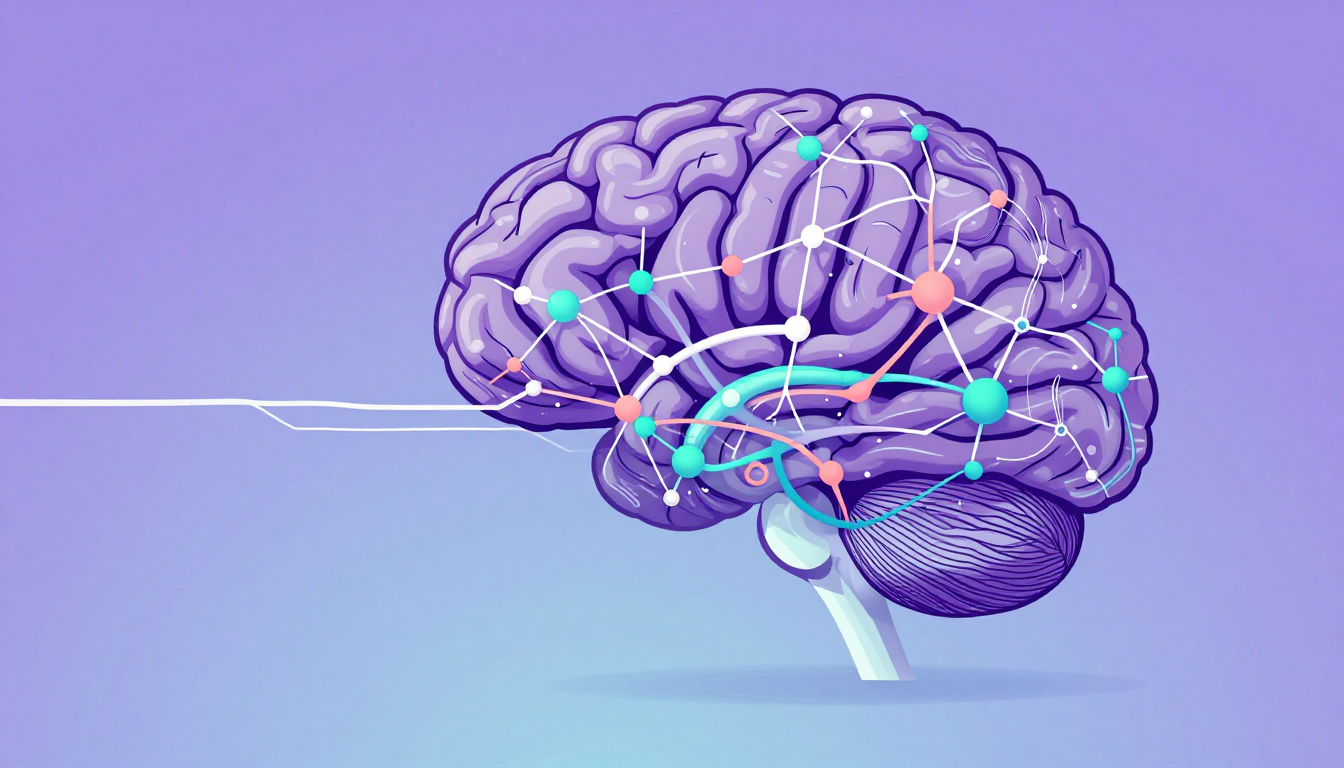
In a groundbreaking milestone that signals a new era for computational and structural neuroscience, an international coalition of researchers has successfully mapped the first complete central nervous system connectome of an adult fruit fly (Drosophila melanogaster). Published on June 8, 2026, in the journal Nature, this monumental achievement represents the culmination of years of intense collaboration, imaging breakthroughs, and artificial intelligence-assisted reconstruction. By tracing every single neuron and synaptic connection, the research team has delivered an unprecedented structural blueprint of how a multicelled organism coordinates complex behaviors from sensation to motor action.
The fruit fly has long served as a cornerpiece of genetic and behavioral research. Despite its diminutive scale, Drosophila melanogaster exhibits a remarkably sophisticated behavioral repertoire. With a central nervous system consisting of roughly 160,000 neurons, these flies perform navigation, social interaction, associative learning, memory retrieval, mating rituals, and highly dynamic flight avoidance maneuvers. Up until now, scientists were restricted to studying either isolated brain subregions or disconnected motor centers. The newly completed connectome breaks these boundaries by uniting the brain and the body’s motor controls into a single, cohesive wiring diagram.
Bridging the Mind and Body: The BANC Dataset
Historically, neuroscience has suffered from a structural division between cognitive mapping and physiological execution. In 2024, the FlyWire Consortium achieved a historic triumph by publishing the complete connectome of a fruit fly brain. Separately, researchers at Harvard Medical School and Boston Children's Hospital were mapping the fly’s nerve cord—the biological analog of the vertebrate spinal cord, which governs leg movements, wing beats, grooming, and local sensory feedback.
While both datasets on their own provided vital insights, they remained isolated. To truly understand behavior, researchers had to bridge the gap. The newly unveiled Brain and Nerve Cord (BANC) dataset achieves this union. By mapping the connections between descending neurons originating in the brain and the localized circuits of the nerve cord, the research team created an integrated diagram of the entire central nervous system. Co-first author Helen Yang, a research fellow in neurobiology at Harvard Medical School, emphasized that "until you can bridge the two, it's hard to understand how information moves between the brain and the body." The BANC dataset allows scientists to trace the complete path of information flow: from the reception of a visual, chemical, or mechanical signal in the head, through the decision-making circuits of the fly's brain, down to the motor neurons driving physical action.
The Collaborative Engine: FlyWire and Global Science
An achievement of this magnitude would be impossible under the traditional model of isolated laboratory research. The project was driven by a gargantuan international consortium led by groups at Harvard Medical School and Princeton University. Key leaders included Rachel Wilson, the Joseph B. Martin Professor of Basic Research in the Field of Neurobiology at HMS, and Wei-Chung Allen Lee, associate professor of neurobiology at HMS and professor of neurology at Boston Children's Hospital. Princeton’s neuroscience expertise was represented by Mala Murthy, the Karol and Marnie Marcin '96 Professor of Neuroscience and director of the Princeton Neuroscience Institute (PNI), and Sebastian Seung, a pioneer in computational neuroscience.
This group pooled resources with dozens of laboratories worldwide, operating under the FlyWire Consortium. By utilizing open collaborative science platforms, researchers across the globe could access, verify, and curate individual neural pathways. The shared nature of the dataset transformed the mapping process from a highly exclusive venture into a community-supported ecosystem, dramatically accelerating the speed of error correction and proofreading.
Methodological Precision: Electron Microscopy, GridTape, and AI Alignment
Mapping a neural network containing 160,000 neurons and tens of millions of synaptic connections requires physical and computational precision at the nanometer scale. The reconstruction process began with slicing a single fruit fly into thousands of ultra-thin serial sections. To handle the scale of imaging, researchers utilized GridTape technology—a tape-collecting substrate developed at Harvard University that automates the collection and electron microscopic imaging of serial sections.
Once millions of high-resolution electron micrographs were captured, the team faced the monumental challenge of reconstruction. Aligning and tracing the microscopic projections of neurons—dendrites and axons that weave through dense biological structures—is a task that would take human annotators hundreds of years to complete manually. The researchers solved this problem by employing advanced convolutional neural networks and machine learning models developed in partnership with Zetta AI—a prime example of how AI is accelerating scientific progress in complex biological mapping. These AI tools aligned the imaged slices, recognized the contours of cell membranes, and traced individual axons and dendrites in 3D across thousands of section boundaries.
Following the automated reconstruction, the FlyWire community performed rigorous quality control, manually proofreading complex branch points and correcting errors. The final map provides an explicit connectivity list, charting exactly which neuron connects to which, down to the level of individual chemical synapses. Crucially, the researchers used historical physiological literature and structural cues to identify specific cellular groups, linking the neural wiring diagram directly to the sensory organs on the fly’s appendages and its muscular systems. This structural integration effectively "embodies" the connectome, transforming a static matrix of connections into an interactive, functional template.
A Paradigm-Shifting Surprise: Highly Distributed Control
When the research team began analyzing the newly assembled circuit diagram, they discovered a neurological surprise that challenges a long-standing dogma in neuroscience. Traditionally, the brain has been conceptualized as a highly centralized steering column, containing command centers that formulate complex decisions and broadcast explicit execution signals downward to passive spinal or motor systems.
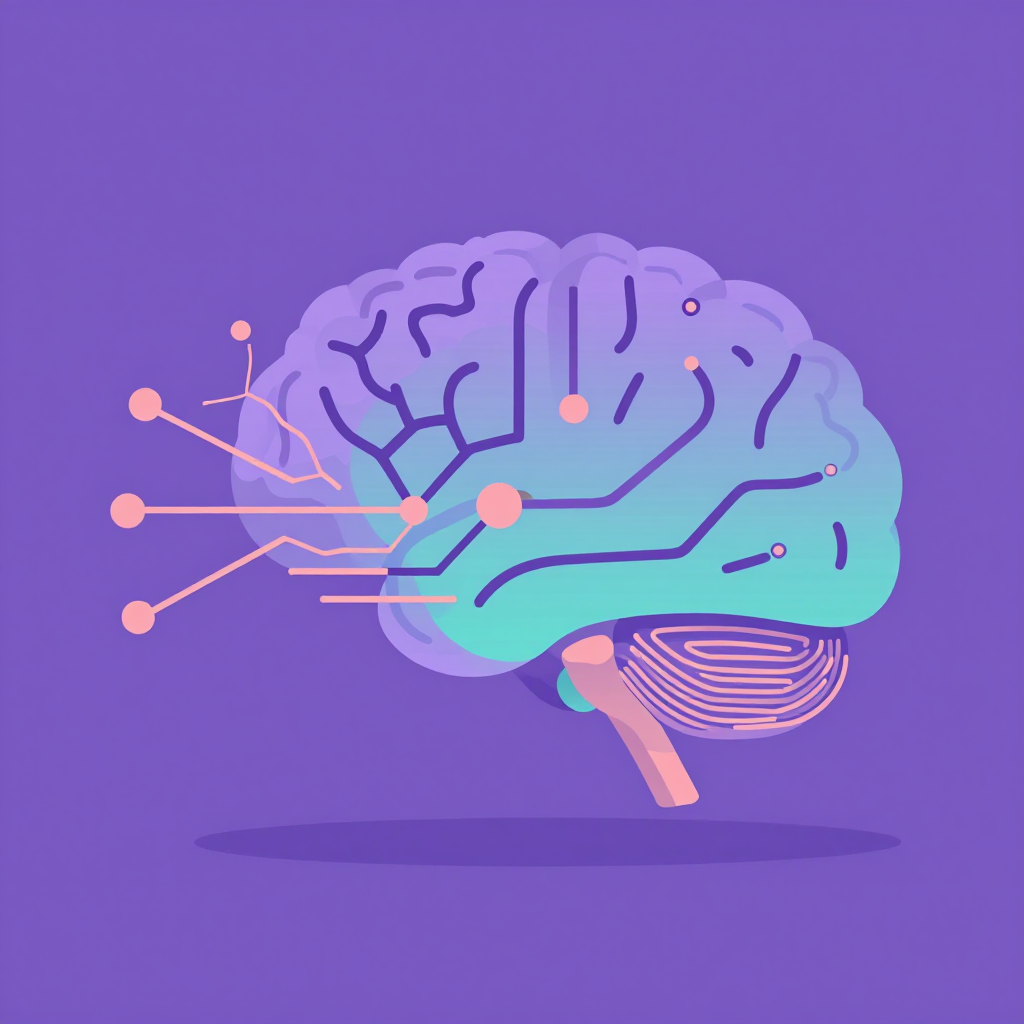
The fruit fly connectome paints a vastly different picture. Analysis of the BANC dataset revealed that motor control is highly decentralized and modular. The neural circuits of specific appendages, such as a leg, function largely as autonomous local modules. These local modules perform the primary processing of local sensory inputs and direct nearby motor activity. Instead of receiving continuous, step-by-step commands from the head, these local circuits communicate laterally with each other. For example, during walking, the circuits managing individual legs share feedback directly with adjacent leg circuits to synchronize movement patterns and coordinate gait.
The role of the brain, therefore, appears to be less about micromanagement and more about modulation and context setting. The brain sends high-level parameters—such as overall speed, directional bias, or behavioral state flags—while the local nerve cord modules execute the structural details of movement. Co-first author Alexander Bates explained, "Our findings suggest that control for actions is highly distributed in local modules that link up and work together in different ways." This modular architecture adds a layer of resilience and efficiency, allowing the animal to respond immediately to localized disruptions (like slipping on a surface) without waiting for a signal round-trip to the brain.
Cross-Species Universality and Scaling the Map
The fruit fly connectome represents a landmark for comparative anatomy. A primary goal of Drosophila research is identifying general organizational principles that operate in more complex central nervous systems. While a mouse brain contains around 70 million neurons, and a human brain houses 86 billion, the fundamental architectural motifs—such as feedback loops, sensory-motor bottlenecks, lateral inhibition, and modular execution nodes—are highly likely to be shared.
Indeed, researchers are already actively looking for these structures in mammalian models. Dr. Wei-Chung Allen Lee and his team are currently investigating whether similar distributed, modular motor circuits govern coordination in mice. "I would be shocked if this is unique to the fly," noted Helen Yang. "We don't have this level of resolution in other animals yet, but we know that they have a lot of these local circuits." The fruit fly connectome acts as a vital Rosetta Stone, helping neuroscientists formulate much more detailed, testable hypotheses for vertebrate experiments.
Evolutionary Architecture: Lessons for Artificial Intelligence
The organizational strategies discovered in the connectome also hold profound implications for the development of artificial intelligence and robotics. Modern deep learning models, while incredibly capable at processing text or static imagery, struggle to navigate physical spatial environments with the energy efficiency and real-time adaptability of simple biological organisms. An adult fruit fly executes navigation, obstacle avoidance, foraging, and predator evasion while consuming a minuscule fraction of a microwatt of power.
By analyzing the structural layout of the BANC dataset, computer scientists can design artificial neural network architectures modeled after the fly's distributed control system. This intersection of neuroscience and computing echoes recent studies on convergent predictive processing in the human brain and AI, which show how biological efficiency informs next-generation artificial networks. Rather than routing all sensory inputs through a centralized processing system, robotic controllers can employ local, interconnected control loops modeled after the fly’s nerve cord modules. This reduces computational overhead, cuts down response latency, and dramatically improves energy efficiency. Additionally, virtual physical agents can be trained inside computational simulations using wiring diagrams shaped by the fly's connectome, allowing for a deeper exploration of how specific network structures generate self-organizing behavioral intelligence.
The Horizon of Connectomics
The release of the completed fruit fly connectome marks the beginning, not the end, of an expansive scientific endeavor. Researchers plan to enhance the dataset by overlaying chemical information, such as the expression of neuropeptides and neurotransmitter receptors. While the current connectome maps structural connections, mapping the chemical identity of each synapse is essential to predict whether a connection is excitatory, inhibitory, or modulatory.
Furthermore, because the complete dataset is freely accessible online to the global scientific community, it represents a democratization of neuroscience. The open-access resource, supported in part by the U.S. BRAIN Initiative, National Institutes of Health, and National Science Foundation, will enable smaller research laboratories to perform high-level circuit analysis without the need for expensive imaging infrastructure. As tools for automated EM mapping and AI alignment continue to mature, the path is being paved to map even larger nervous systems, eventually bringing functional connectomics to the threshold of mammalian scale.