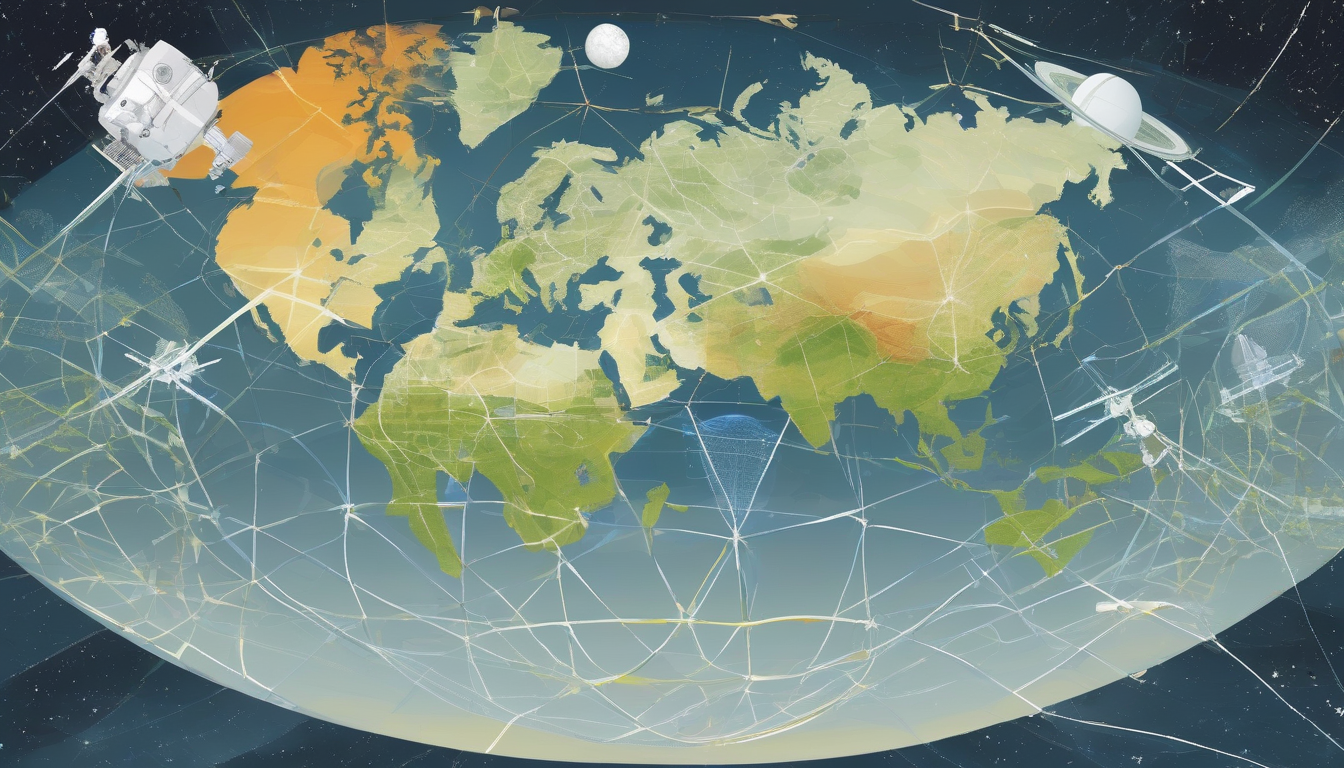
The climate, that complex, interconnected machine that sustains us, is shifting. At its core, the greenhouse effect—a natural process that’s kept our planet habitable for eons—is fundamentally changing. It’s no longer just a balancer; it’s an accelerator. Human activity, mainly burning fossil fuels, is thickening our atmospheric thermal blanket.
This isn't speculative. It’s measurable. And, perhaps surprisingly, some of our deepest insights come from the very tools we use to peer into the cosmos.
The Mechanisms: Why the Planet is Warming
The greenhouse effect is essential. Sunlight streams toward Earth, with about half of that energy penetrating the atmosphere to be absorbed by our surface. That surface, in turn, radiates this energy back as infrared heat. Here’s where the "blanket" comes in: greenhouse gases capture a portion of that energy, preventing it from immediately escaping into space.
It's a delicate, natural balance. But we’ve disrupted it.
When we add greenhouse gases at this scale, we’re thickening that blanket. Heat that should be radiated away is being held onto, trapped near the surface. The result is a slow, methodical increase in global temperature, a trend clearly established since the mid-20th century. According to data from NASA, this anthropogenic intensification is the defining climate issue of our era.
Greenhouse Gases: The Invisible Drivers
It’s not just one thing. Several different substances act as these thermal trappers, and they each bring different properties to the table. As detailed by the EPA, these include:
- Carbon Dioxide (CO2): This is the workhorse of greenhouse gas inventory. It enters the atmosphere through both natural processes (volcanoes are a classic example) and human-driven ones—fossil fuel combustion, deforestation, and industrial chemical reactions. The challenge with CO2 is its ubiquity and the sheer volume released.
- Methane (CH4): If CO2 is the workhorse, methane is a thoroughbred. It’s significantly more potent in its heat-trapping capability, even if it stays in the atmosphere for a shorter duration. Sources are diverse: leaks from oil and gas production, agriculture, livestock digestion, and the decomposition of waste in landfills.
- Nitrous Oxide (N2O): Emitted through industrial processes, agricultural activities, and the combustion of various fuels, this gas represents a substantial—if often overlooked—component of our warming climate.
- Fluorinated Gases: These synthetic marvels—hydrofluorocarbons and the like—are powerful. Their heat-trapping potential can be orders of magnitude higher than carbon dioxide, making them a significant focus for mitigation despite being emitted in smaller overall quantities.
Understanding the Global Warming Potential (GWP) of these gases—a measure of how much energy a unit of mass absorbs—is how we compare their relative impacts. It’s how scientists turn abstract emissions figures into a unified understanding of what’s happening in our air.
How Space Exploration and Astronomy News Shape Our Climate View
We often think of climate science as a ground-based endeavor. It is, but it’s just as much an observation from above. NASA—along with researchers who constantly monitor space exploration and astronomy news—is bringing unparalleled transparency to this issue.
When we look at Earth from the perspective of an explorer, we gain a unique, holistic vantage point. Sophisticated satellite missions aren't just for astronomy; they are the eyes of our climate policy. NASA’s Earth science missions provide the data needed to track these gases, monitor the melting of ice sheets, and watch as sea levels respond to the creeping change in temperature.
For those of us tracking both Earth’s health and the broader wonders of the universe, sites like Space.com offer a bridge, providing essential space exploration and astronomy news that helps clarify why caring for our home planet is as critical as exploring beyond it. The tools we built to study distant atmospheres on other worlds are now the same tools we use to diagnose our own.
Bridging Perspectives: Climate, AI in Mental Health Care, and Our Shared Future
The scale of the climate change challenge can feel overwhelming. However, our capacity for innovation is expanding just as quickly as the problem itself.
It’s fascinating to see how the methodologies in climate science mirror advancements in other, seemingly distant fields. Consider, for instance, the application of artificial intelligence in mental health care. In that field, researchers are using advanced machine learning models to parse vast datasets, identifying subtle, complex patterns in mental health stressors that would be impossible to catch using traditional screening.
Climate scientists are doing the exact same thing with our atmospheric data. They’re leveraging similar technological advancements, such as hybrid forecasting models, to parse complex, messy, and massive datasets, identifying emerging trends almost as they form. Both fields rely on a core principle: when we improve our ability to analyze data at scale, we improve our capacity to act before a problem becomes irreversible.
Whether it’s tackling a crisis in healthcare or managing the evolution of our atmosphere, the prescription is the same: rigorous, data-driven science, persistent monitoring, and a willingness to adapt our strategies as the evidence unfolds. We’re in a period of unprecedented observation, and that, more than anything, is our greatest tool for building a more sustainable future.
The atmosphere is definitely changing. But the tools we have—from the satellite missions launched by NASA—which rely on critical support like the Artemis II network—to the new, AI-driven analytical techniques—are evolving right alongside it. We aren’t just witnessing the change; we’re finally learning how to translate it into action.