
Cloud Security Incidents
Articles about cloud security breaches, credential theft, and incident response
From Evolutionary Bias to Collective Resilience: A New Approach to American Civility
As we celebrate America’s 250th anniversary, the pervasive atmosphere of stress and division may seem overwhelming. By leveraging insights from psychology and neuroscience, we can understand the cognitive biases driving our current fractures and purposefully reconstruct more constructive, resilient forms of civic dialogue.

Polymarket Commits to Full User Reimbursement Following $3M Supply-Chain Breach
An analysis of the Polymarket $3 million supply-chain breach, focusing on the dangers of frontend trust in third-party vendors, from a security & compliance analyst perspective.
AI Visibility Rankings Shift Between Runs: How Many Queries You Really Need to Trust the Data
New research shows that AI visibility metrics fluctuate significantly across queries because generative models add randomness to citations. A preprint by IQRush and a University of St. Gallen study confirm that a single snapshot is mostly noise— reliable comparison requires stabilizing rank order AND differences larger than the margin of error, typically 33–94 citations for most topics.

Google’s Spam Policy Now Hugs AI Answers Tight — And No One Knows How to Catch the Abuse
Google says attempting to manipulate generative AI responses in Search is spam. But new Cornell Tech research shows how easy it is to poison community pages—and why enforcement still feels like chasing smoke.

A Security & Compliance Analyst Watches Google Business Profile Dashboards Go Blank While Public Reviews Stay Put
Business owners are reporting that their Google Business Profile review dashboards show 'no reviews yet' even though the public-facing listing continues to display hundreds of reviews. The discrepancy appeared in force around July 9, 2025, and Google has not confirmed a cause. The issue follows a separate review-disappearance bug from roughly a week earlier that Google did acknowledge and resolve.

Oracle's 40% Slide, BIS AI Bubble Warnings, and The Kettle on the Risk of a Tech Meltdown
Oracle shares drop over 40% in July 2026 as the Bank for International Settlements warns that an AI bubble could take down the broader economy; The Register’s Kettle podcast examines whether hyperscalers and banks are finally sounding the alarm on overinvestment.
Parallel Processing in the Brain Is the Key to Your Cloud Security Incident Response Playbook
New simultaneous EEG-fMRI findings confirm the human connectome operates on multiple asynchronous streams—mirroring exactly how cloud environments process identity, DLP, and compliance telemetry. Here's why security & compliance analysts must rethink incident response as parallel stream correlation instead of linear incident timelines.
The Office You Left Behind: Why Remote Work Is the Real Career Killer for Young Professionals
New data tracking 243 million hires reveals that remote work, not AI, is collapsing entry-level hiring. Here's how physical distance breaks the mentorship pipeline and what structured hybrid systems can do to fix it.

Microsoft’s Binlog MCP Server Empowers AI Assistants to Diagnose MSBuild Failures and Analyze Performance via Natural Language
A preview tool released June 17, the Microsoft Binlog MCP Server enables AI assistants like GitHub Copilot to investigate build failures, trace property origins, analyze bottlenecks, and compare builds using natural language queries on MSBuild .binlog files.

We Can Take Power From a Plasma: Realta Fusion’s Direct-Electricity Breakthrough
Realta Fusion powered a lightbulb using electricity harvested directly from fusion plasma—the apparent first by any private company—and showed how skipping steam turbines could slash the path to net-positive fusion.
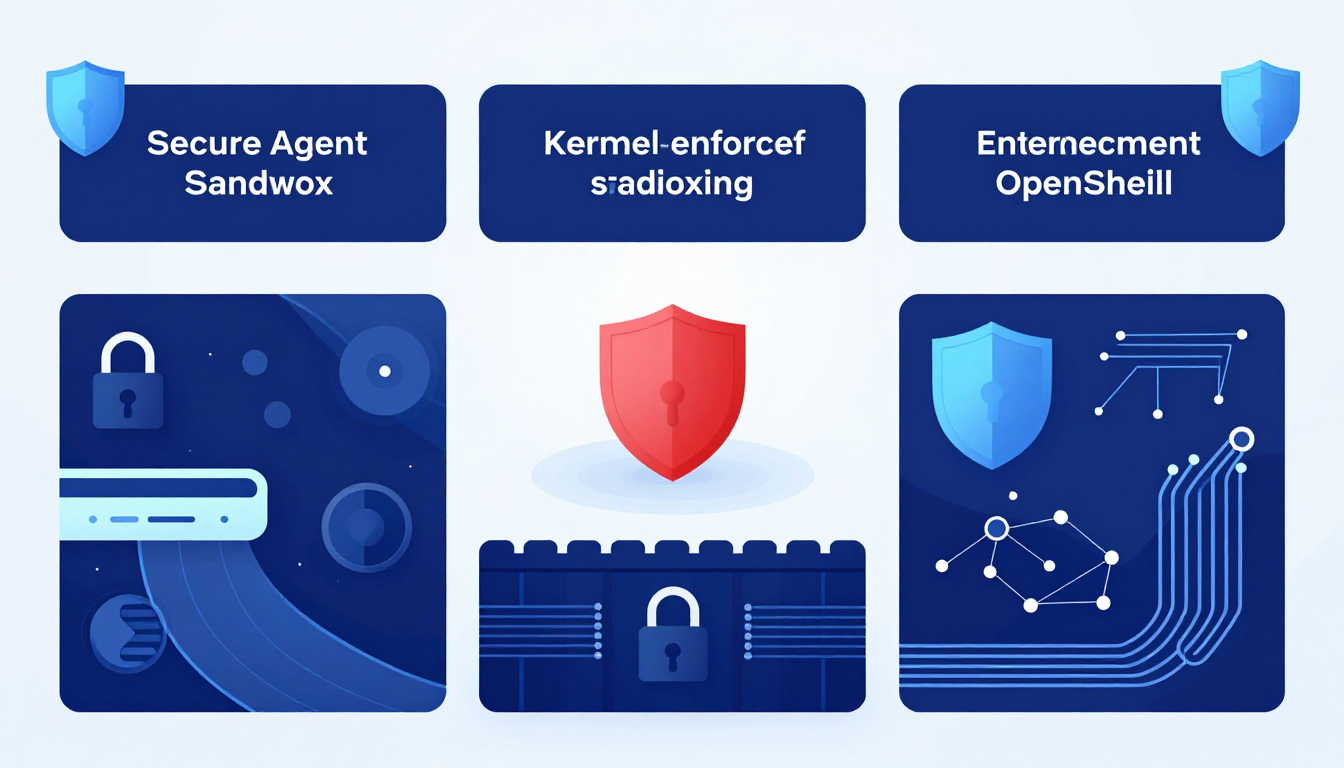
Red Hat’s Secure Agent Sandbox: Three Layers of Protection for Autonomous AI
Enterprise AI agents that execute code and interact with production infrastructure demand robust security boundaries. Red Hat’s OpenShell provides kernel-enforced sandboxing across three distinct modes, each suited to different stages of agentic deployment—from development to production.

Parisian Startup ZML Challenges Nvidia Market Dominance with New Inference Server
ZML, a Paris-based AI startup endorsed by Yann LeCun, has launched ZML/LLMD, an inference-performance server designed to run large language models efficiently across diverse AI hardware, including Nvidia, AMD, Apple, and Intel chips.