
Culture & Society
Art, media, philosophy and the social effects of technology.
Culture Isn’t a Poster on the Wall: How Founders Actually Build It (And Why Most Fail)
A deep dive into the intentional practices founders use to shape culture—from hiring rituals to leadership accountability—and why most companies default to chaos instead of coherence.
The Silent Epidemic of Smell and Taste Loss: Why It Hits Harder Than You Think
New clinical data reveals that losing smell and taste isn't a minor nuisance — it's a chronic condition whose depression rates, safety risks, and quality-of-life damage rival diabetes, stroke, and Parkinson's disease.
Why Parents Cultivate Self-Esteem: A Societal Imperative, Not Just Sentiment
The high value parents place on self-esteem stems not from empty praise, but from the demands of a hyper-individualized society that requires children to become self-determining agents with minimal external support.
A Democrat Who Says His Party Is Dying
Doug Schoen, a Democratic strategist who helped win elections for Bill Clinton, now warns that his party is alienating its base with far-left policies — and it’s costing them power.

Why AI Can’t Count Hiragana in Kanji Readings (And Why That’s Okay)
A deep dive into how Japanese morphology breaks AI's assumptions about character counting, the role of okurigana, and why linguistic ambiguity isn't a bug—it's the feature.
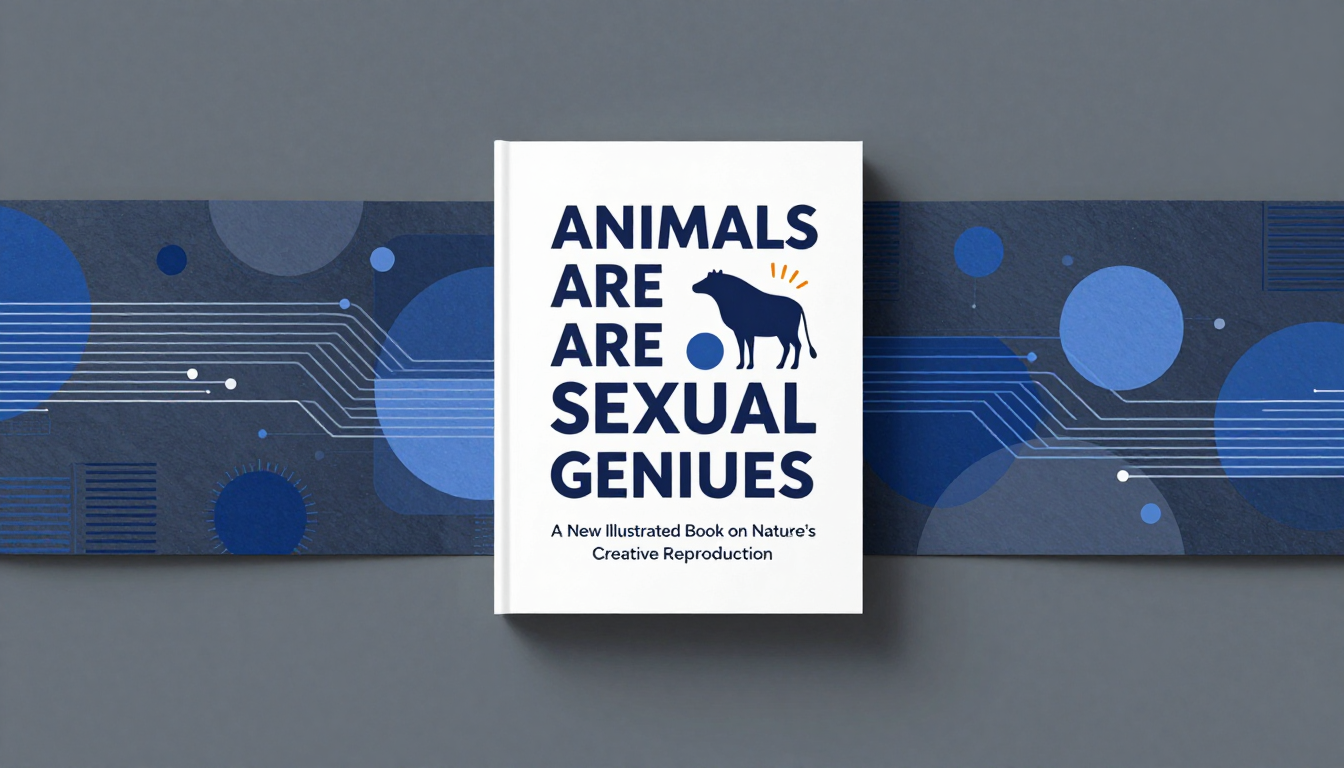
Animals Are Sexual Geniuses: A New Illustrated Book on Nature's Creative Reproduction
A beautifully illustrated new book by artist and environmentalist Perrin Roosevelt Ireland explores the astonishing diversity of animal sexual behavior—from climate-driven mating changes to same-sex pairing and consent—revealing that sexual diversity is biodiversity.

The Quiet Case for Gay Men and Sex Clubs
An evidence-based exploration of the psychological and social benefits of sex clubs for gay men, drawing on clinical research and lived experience.
The Penguin Paradox: How Mistakes Shape Language Itself
A Wits University study shows that children's systematic errors and AI's layered architectures share a hidden mechanism: language evolves to become learnable, generation after generation.
Great Apes Don’t Think Like Us — And That’s the Point
How does ape cognition differ from human intelligence? New research challenges the 'distorted mirror' model, showing that great apes have unique mental architectures. Learn why comparing apes to humans requires looking at the questions *they* are built to answer, not just our own metrics.
Language-Specific Hardware, Universal Maps: Unveiling the Bilingual Hippocampus
An exploration of single-neuron language mapping in the hippocampus, detailing how bilingual brains maintain conceptual unity using shared neural geometries.

Intel's Handheld Gaming Ambitions: An Analysis of the New Arc G-Series
A breakdown of Intel's entry into the gaming handheld market with its Arc G3 processors, comparing them against the established AMD Ryzen Z-series.
Mapping the Nerve Cord: How a New Connectome Challenges Theories of Motor Control
Researchers have mapped the full synapse-level central nervous system connectome of an adult fruit fly, challenging long-standing theories of a centralized command hub and demonstrating that motor control is highly distributed.