
Neuroscience
The brain, neural systems and cognitive neuroscience.
The Precedent Shortcut: Why Brains Drop Reciprocity the Moment Hierarchy Appears
Small shifts in perceived social hierarchy fundamentally alter how human brains process reciprocal generosity, moving from strict equivalence to precedent-based expectations.

Paper Beats Tablets for Story Comprehension, Brain Scans Reveal
A University of Tokyo fMRI study using manga stories finds that reading on paper reduces frontal brain activation during narrative integration, suggesting paper's spatial and tactile cues help the brain organize story information with less cognitive effort than digital tablets.
Why You Lean Toward Bright or Dark Keys — And What It Says About Your Brain
Your preference for major or minor keys isn't random — it tracks with personality traits and lights up different brain circuits, according to psychology research.
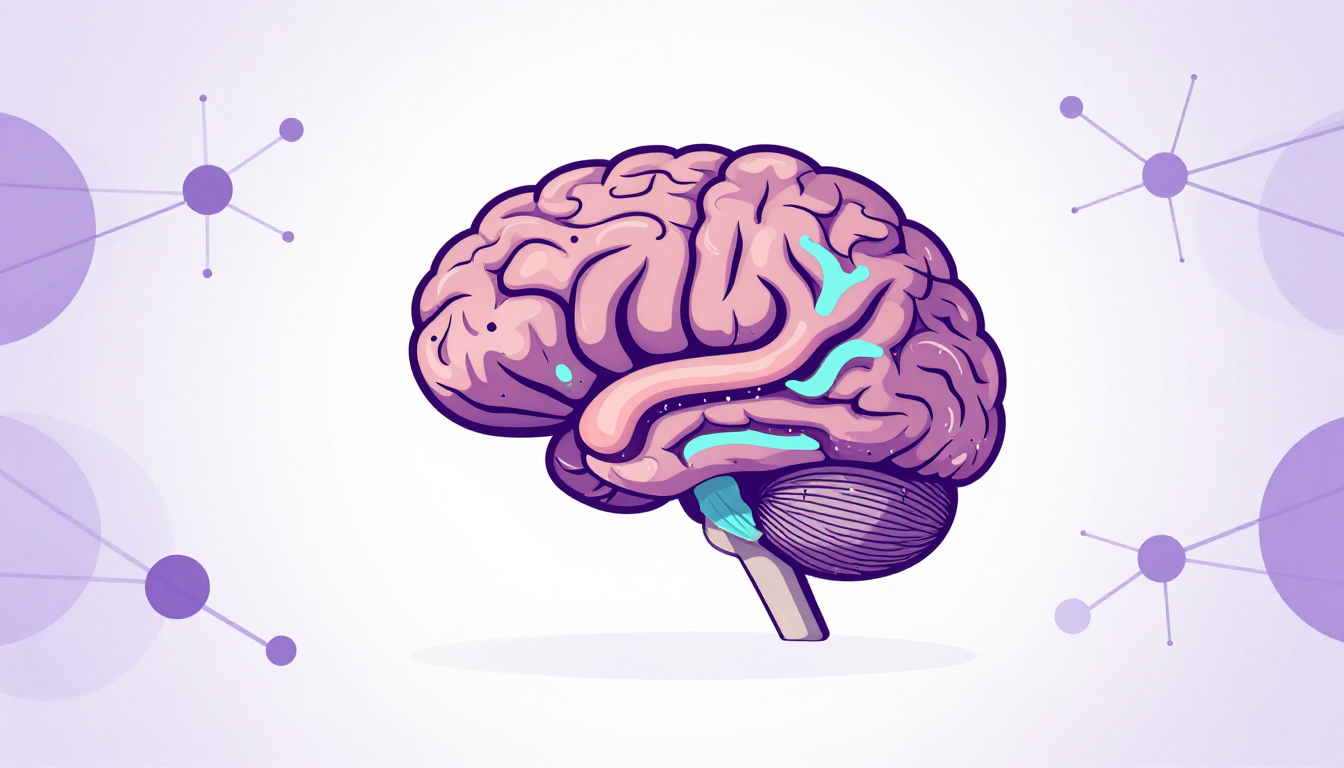
When the Brain's Armor Crumbles: How Cerebellar Nets Trigger Autism Social Deficits Through ARNT2
Kanazawa University researchers trace autism social deficits to a precise mechanism: perineuronal nets in the deep cerebellar nuclei degrade across both environmental (VPA) and genetic (Chd8) models, triggering ARNT2 transcription factor surges that silence cerebellar output neurons and disconnect midbrain-thalamus social circuits — with ARNT2 suppression alone fully rescuing behavior.
Progress Blindness: Why Your Brain Lies About Getting Closer
Behavioral science reveals why we're systematically poor judges of our own progress during change, and how measurable feedback closes the gap between intention and reality.
Brains Win the Bedroom: Female Chickadees Select Extra-Pair Mates by Spatial Memory
New research reveals that socially monogamous female mountain chickadees actively seek extra-pair copulations with males possessing superior spatial memory — a heritable survival trait critical for food-caching in harsh environments. Over three breeding seasons, 70% of nests contained extra-pair young, overwhelmingly sired by cognitive elites.
Small Probiotic Dose, Measurable Mood Lift: What the PRODG Geriatric Trial Actually Found
A 24-week pilot trial found that supplementing standard antidepressant care with Lactobacillus helveticus and Bifidobacterium longum produced modest but meaningful reductions in depressive and anxiety symptoms among adults 60+, alongside elevated BDNF biomarkers — though quality-of-life gains did not differ from placebo.
When the Brain Becomes the Instrument: How Neural Resonance Theory Rewrites Music Perception
Neural Resonance Theory (NRT) proposes that music isn't just processed by the brain—it physically vibrates through it. A landmark 2025 Nature Reviews Neuroscience paper by Edward Large, Caroline Palmer, and colleagues argues that our neural oscillations literally sync with musical frequencies, turning the nervous system into a resonating instrument. This 'bottom-up' model challenges predictive coding by showing that consonance, rhythm perception, and even the 'missing pulse' phenomenon arise from biophysical resonance rather than learned expectations.
Your Coffee Sweetener Is Rewiring Your Brain—Here’s Why
New studies show that sucralose, the artificial sweetener in diet sodas and sugar-free products, may be affecting brain function, triggering hunger signals, disrupting gut bacteria, and causing inflammation in brain cells—challenging the assumption that zero-calorie sweeteners are harmless.
The Brain That Walks: How Adaptive DBS Is Rewriting Parkinson’s Future
Researchers at UCSF have developed a closed-loop deep brain stimulation system that adjusts in real time to improve walking gait and reduce falls in Parkinson's disease patients, a significant shift from conventional continuous stimulation.
A Dose of Psilocybin Woke Up Her Brain: The Alzheimer’s Patient Who Spoke Again After a Decade of Silence
A single, supervised dose of psilocybin triggered a dramatic but temporary reversal of severe dementia symptoms in an elderly woman, revealing how the brain’s latent circuits may bypass degenerative damage—if only for a fleeting window.
Chemistry Isn't Magic—It's Your Brain on Conversation
Forget charisma. Real connection isn't about being magnetic—it's about triggering dopamine, mirroring subtly, and activating positive memories. Here's how to engineer rapport using neuroscience, not tricks.