
Neuroscience
The brain, neural systems and cognitive neuroscience.
Brain's Master Clock Keeps Sensory Predictions in Sync as Bodies Change
A new study identifies the MCA nucleus as a central timing hub that recalibrates sensory predictions across hormonal, developmental, and evolutionary timescales in weakly electric fish.
How a Neural Merry-Go-Round Powers the Brain's Internal Clock
New research reveals rotating spiral brain waves that propagate across cortical networks, serving as a biological clock that coordinates sensation and action in space and time.

Beyond Retrieval: How LLMs Navigate Meaning Through Latent Association
Large Language Models do not simply look up information; they operate by navigating complex, probabilistic networks of meaning, creating a digital reflection of human associative thought.
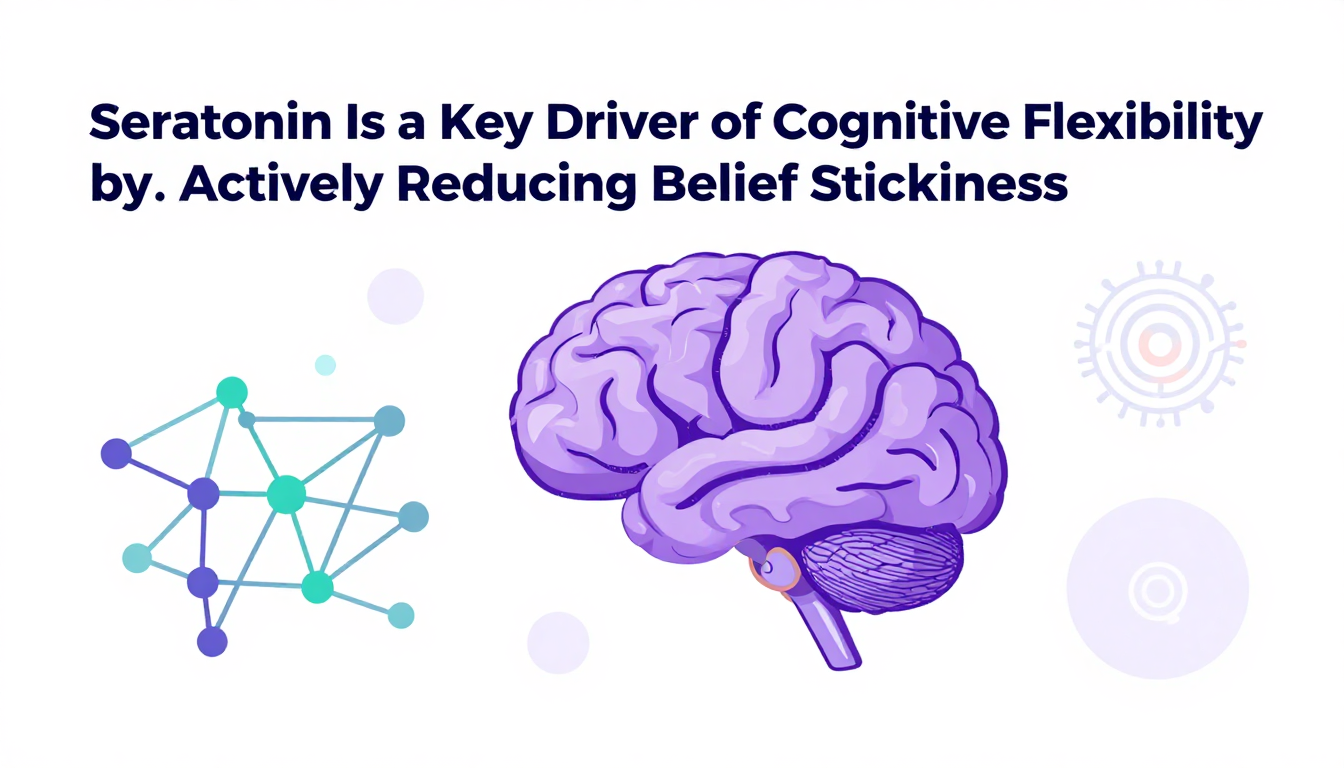
How Serotonin Helps the Brain Update Its Beliefs — And What That Means for OCD Treatment
A new computational psychiatry study reveals that serotonin directly reduces 'belief stickiness,' the cognitive failure to abandon outdated ideas despite new evidence. The findings reframe OCD as a state-inference breakdown rather than a habit disorder and suggest that pairing SSRI medication with psychotherapy in the same session could dramatically improve treatment outcomes.
Older Adults Face Major Brain Health Knowledge Gap, Failing to Realize Everyday Habits Reduce Dementia Risk
A new University of Michigan poll reveals that while nearly all adults 50+ prioritize brain health, fewer than half know everyday lifestyle modifications can actively reduce dementia risk. National data from the Alzheimer's Association shows 9 in 10 Americans value brain health but only 1 in 10 know how to protect it. Only 36% engage in daily physical activity, and just 23% have discussed brain health with healthcare providers.
The Brain's Memory Switchboard: How Reused Circuits Keep Learning Alive Without Overwriting the Past
How the hippocampus uses a switchboard of reused neurons—firing in divergent patterns for incoming and outgoing memory traffic—to solve the decades-old puzzle of plasticity versus stability in learning.
How Serotonin Helps the Brain Let Go of Obsessive Thoughts
A new study reveals that serotonin directly reduces 'belief stickiness'—the cognitive failure to abandon outdated ideas despite contradicting evidence—offering a biological explanation for why OCD patients struggle to update their mental models and suggesting new timing strategies for combining medication with therapy.
Is Cannabis-Triggered Psychosis a Distinct Brain Disorder?
New Yale research suggests cannabis-induced psychosis may be more than drug intoxication — it could represent a unique subtype of psychotic illness with its own clinical, cognitive, and brain-signature profile.
A Common Cold Virus Can Start Parkinson’s — And We Just Proved It
Texas A&M researchers show that a naturally occurring mouse virus triggers dopamine neuron loss and gait decay identical to human Parkinson’s — no toxins, no gene edits, just a viral hit-and-run.
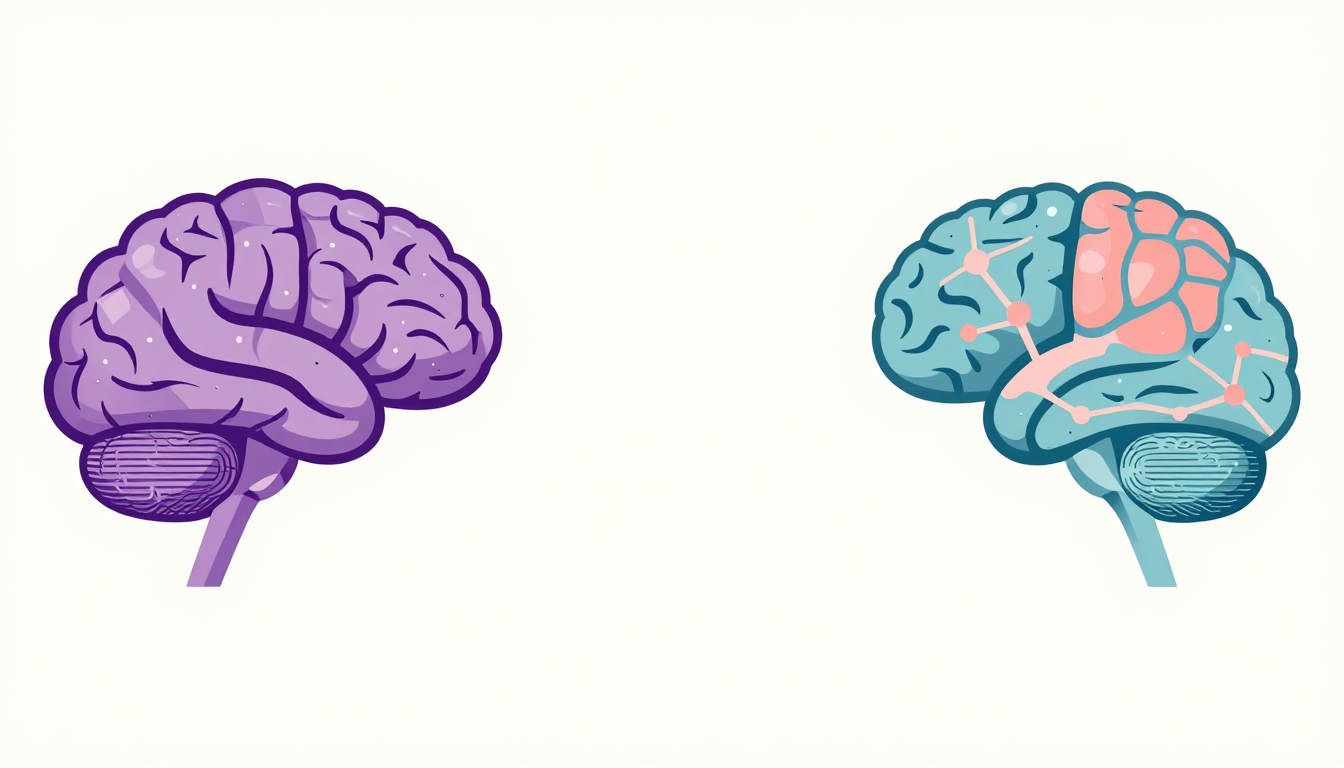
Autism’s Dual Brain Wiring: How Synaptic Silence and Immune Overdrive Define Two Biological Subtypes
A landmark 2026 study reveals autism splits into two reproducible biological subtypes: one marked by reduced brain connectivity linked to synaptic dysfunction, the other by excessive connectivity tied to neuroinflammatory pathways — transforming diagnosis and treatment.

Serotonin as a Cognitive Eraser: How One Dose Rewires the Brain’s Belief Updating in OCD
New research reveals serotonin doesn’t just improve mood—it directly slashes belief stickiness, the cognitive failure to update outdated mental models. This breakthrough reframes OCD treatment around a precise 2–4 hour window where a single SSRI dose primes the brain for therapy.
The Rewind Gap: Why Analog Media's Friction Built Better Brains
An 11-year-old’s ritual with Mary-Kate & Ashley VHS tapes — rewinding, pausing, rewatching — and a broken VCR that forced a pause in consumption, revealed how media’s true power lies not in content, but in the cognitive rituals and attentional scaffolding it creates. Drawing on the Psychology Today article, this piece explores how analog media’s physical constraints fostered deeper cognitive engagement than today’s infinite-scroll digital feeds.