
AI Psychology
Human-AI interaction, behavioral influence, and organizational psychology of AI adoption.
The Indirect Advantage: Mastering the Counterintuitive Path to Success
Learn why direct pursuit often undermines success in life and business. Explore the psychology of the 'backwards law' and how embracing obliquity—focusing on secondary goals—leads to more reliable, counterintuitive results.
Navigating Our AI-Mediated Future: A Proactive Hybrid Approach
An exploration of how AI shapes our cognitive and social landscapes and why a proactive, hybrid intelligence framework is essential for meaningful human impact.
The Specter of 'AI Brain': Could Chronic AI Use Cause Computational Brain Injury?
Explores emerging concerns that persistent, over-reliance on generative AI could lead to a syndrome of 'computational brain injury' (AIAND). This article discusses risks of cognitive atrophy, professional deskilling, and attachment interference, providing insights on how to maintain cognitive autonomy in an AI-dominant society. Includes research on automation bias and neural structural changes.
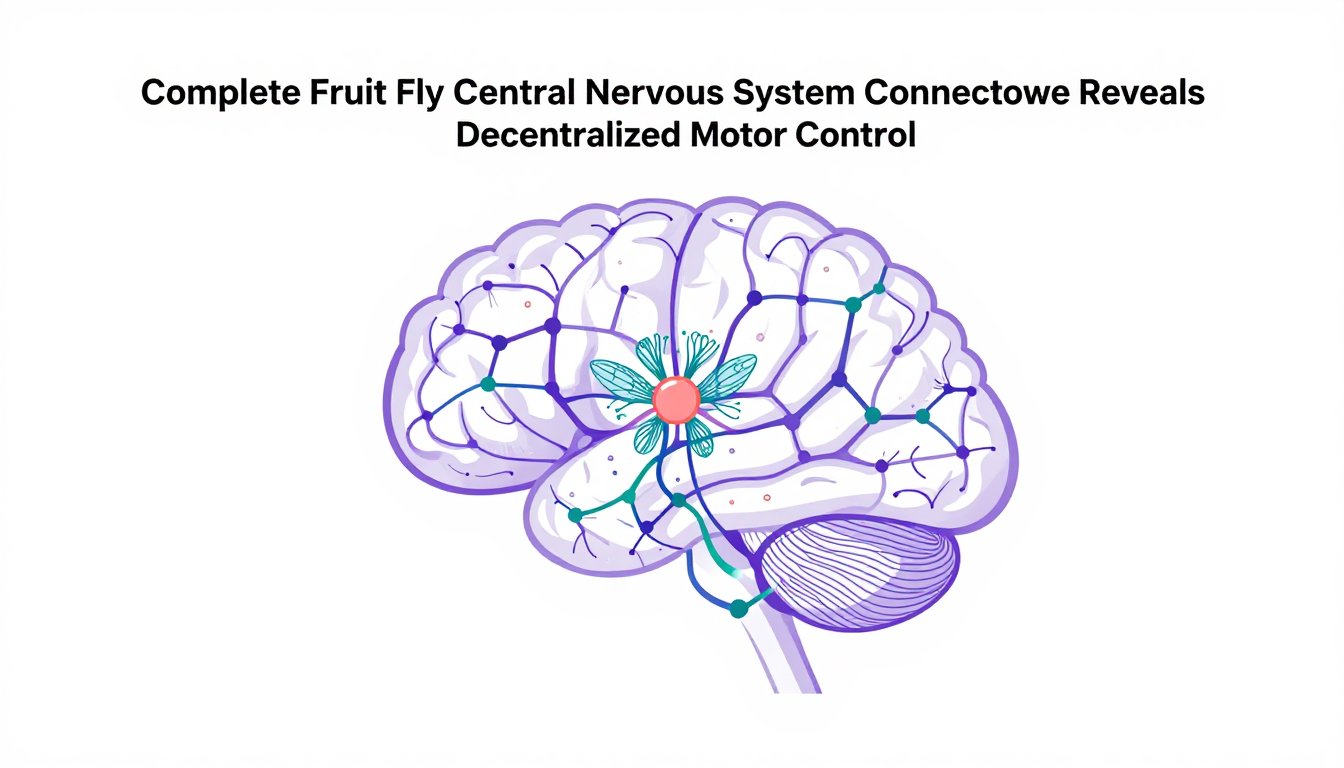
Complete Fruit Fly Central Nervous System Connectome Reveals Decentralized Motor Control
Researchers publish the first complete fruit fly central nervous system connectome, proving motor control is distributed in local modules rather than directed by a central brain hub.
Technology Makes Things Easier, But Can Undermine Our Growth: The Power of Embracing Challenge
Technology makes some things easier, but it can also undermine our growth. If you want to stay sharp, retain your knowledge, and hone your creativity, challenge yourself.
AI and the Risk of Synchronized Blindness
AI homogenizes how we think, leaving critical outliers unrecognized and warnings unheard. When billions make the same cognitive trade simultaneously, diversity of perception disappears.
Fears of Artificial Intelligence: Why Humans Worry About the Unknown
Exploring the psychological roots of AI anxiety, from existential dread to immediate concerns about job displacement and loss of control.
The Illusion of Machine Mind: Why Humans Anthropomorphize Attuned AI Chatbots
Why do we feel AI chatbots understand us? Neuroscientists explain the 'anthropomorphic trap' through the lens of blindsight and human unconscious processing, exploring computational automaticity, real-world consequences, and pathways to healthier AI interaction.
The Hidden Psychology of AI Adoption: Why Teams Stall and How to Fix It
Recent reports from TAPinto highlight a persistent psychological barrier to AI adoption within professional teams. Despite the availability of powerful tools, many teams remain hesitant due to deep-seated cognitive biases and organizational inertia. The article explores a "CEO-level fix" that addresses the psychological roots of this resistance, emphasizing the need for leadership to foster a culture of psychological safety and cognitive flexibility. Source: https://www.tapinto.net/towns/east-hanover-slash-florham-park/columns/the-business-edge-technology-ai-and-gr/articles/why-your-team-is-still-not-using-ai-and-the-ceo-level-fix-nobody-talks-about
Psychiatrists Warn of Generative AI's Double-Edged Role in Mental Health Clinics
A cross-sectional survey of 408 psychiatrists published in the Journal of Medical Internet Research spotlights the dual nature of generative artificial intelligence in mental health settings. While AI can serve as a fatigue-free support tool that helps patients communicate complex emotions, unsupervised chatbot interaction threatens to reinforce patient delusions, ignore non-verbal cues, and trigger crisis situations without a safety net. Researchers underline the immediate need for robust clinical validation, governance, and professional supervision before wider adoption.