
AI Psychology
Human-AI interaction, behavioral influence, and organizational psychology of AI adoption.
The Behavioral Mismatch: Why Algorithms Feed Your Vigilance, Not Your Values
An explanation of the gap between our stated desire for positive content and the negative feeds we actually scroll, rooted in economics and evolutionary biology.
Rethinking Authority: Beyond the Myth of the 'Person in Charge'
An exploration of why the assumption that every relationship or group requires a leader is flawed, drawing on historical and biological evidence to suggest a shift toward valuing diverse contributions as the foundation of true equality.
Beyond Consensus: The Hidden Risks of AI-Driven Cognitive Homogenization
As AI systems permeate decision-making across society, they risk narrowing our collective perception by fostering 'synchronized blindness.' Platform lead Marlowe Chen explores how automation bias and cognitive fatigue homogenize human thought and diminish systemic resilience. Also, read our analysis of rigid strategies in The Success Paradox in Leadership.
The Iterative Mirror: How Human Language Development and AI Evolution Converge
New research reveals that the structural evolution of human language, driven by iterated learning, mirrors the emergence of capabilities in deep learning neural networks, highlighting deep architectural principles common to both.
The Paradox of Effort
Some goals become harder to achieve the more directly we pursue them. An exploration of the psychological and strategic paradox of why indirect effort often yields superior results.
The Proactive Human in an AI-Mediated World
Navigating the complexity of an AI-mediated world requires proactive human agency and a hybrid intelligence approach. Discover more about Hybrid Sovereignty and AI Deskilling. This article explores the ABCD risks—agency decay, bond erosion, climate conundrum, and divided society—and introduces the POZE framework for cultivating a prosocial A-Frame mindset.
Serotonin Is a Key Driver of Cognitive Flexibility by Actively Reducing Belief Stickiness
Understanding how serotonin modulates cognitive flexibility by reducing belief stickiness—the tendency to cling to outdated assumptions despite contradicting evidence—and its implications for mental health, decision-making, and AI systems.
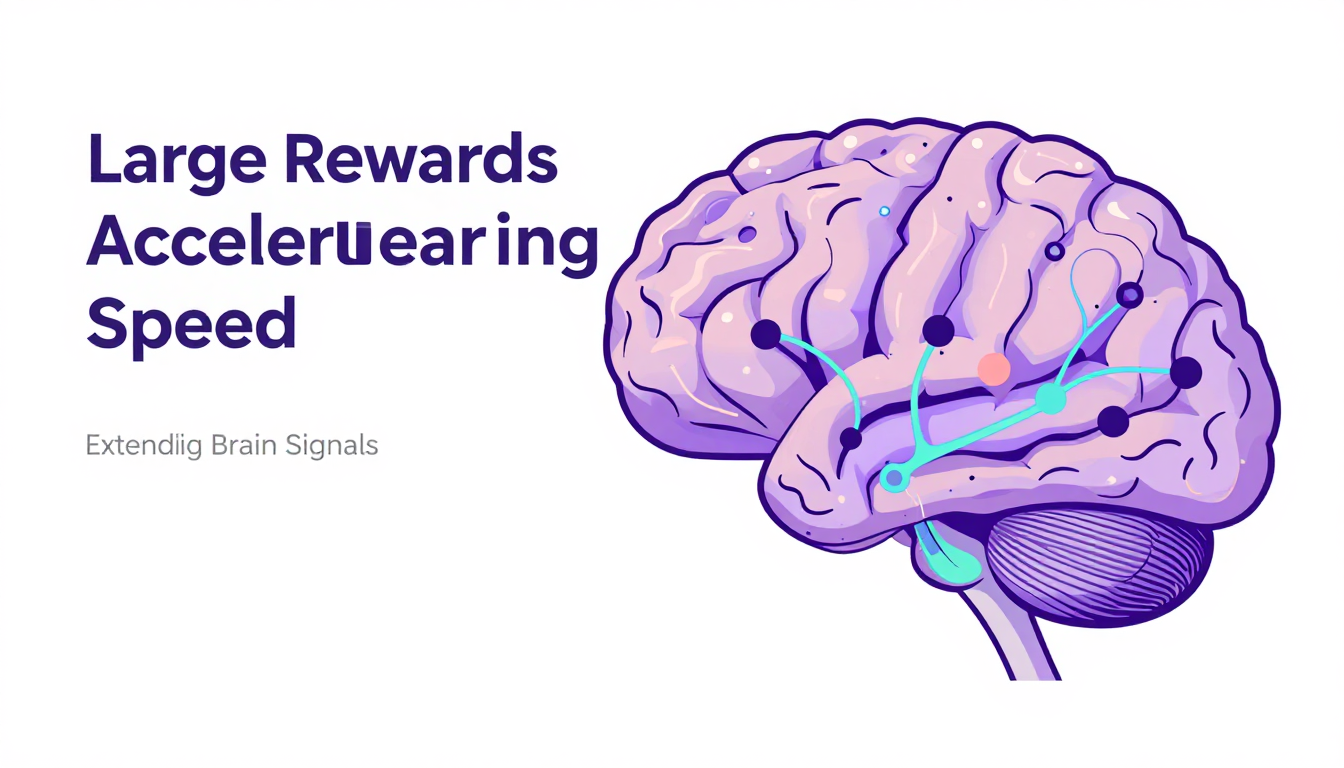
Large Rewards Accelerate Learning Speed by Extending Brain Signals
Paradigm-shifting neuroscience research reveals that large rewards dramatically speed up learning not through repetition alone but by extending the duration of dopamine signals in the brain's motivation networks.
LLM Attention Collapse: Stroop Task Reveals Structural Flaw in Transformer Executive Control
New research exposes a catastrophic performance collapse in LLM attention mechanisms when executing the psychological Stroop task, revealing fundamental architectural limitations in transformer-based executive control systems.
The Illusion of AI Consciousness: How Unconscious Processing and Anthropomorphism Distort Perceptions of Machine Intelligence
Research into human unconscious processing and anthropomorphism provides a framework for understanding why complex AI systems are perceived as conscious, distinguishing behavioral mimicry from subjective awareness.
The AI Dependency Paradox: How Chatbot Reliance Weakens Independent News Verification
While AI chatbots can initially boost fact-checking accuracy by 21%, a new MIT Media Lab study reveals a disturbing long-term dependency. As users habituate to AI-assisted verification, their ability to independently detect misinformation significantly degrades, creating a 'GPS effect' where the human mind loses its inherent news-literacy map.
AI Brain Rot: A Deskilling Case Study
Case study of Mitchell Coburn's resignation over AI brain rot, exploring occupational deskilling and cognitive load. Related research on artificial sentience can be found in our deep dive on the Illusion of AI Consciousness.