
PublishLens Article Library
Explore source-grounded articles across engineering, applied AI, science, business, and policy, with practical context and clear topic desks for every reader.

Artificial Intelligence AI Cybersecurity: How Ransomware Groups Are Weaponizing Healthcare Hubs
A deep dive into the 35% surge in cyberattacks on healthcare service providers, analyzing real-world disruptions from Mississippi to Germany—and how AI-native security models can shut down supply chain ransomware loops.

Oak Steps Out of Stealth to Fix the Identity Mess AI Agents Are Making Worse
Co-founded by serial entrepreneur Shai Morag, Oak emerges with $60M to deliver an AI-native unified control plane that replaces legacy IAM tools with real-time access mapping and revocation—ending the era of periodic reviews in a world where AI agents operate at scale. Learn about how AI governance and identity security intersect for autonomous systems.

How Robinhood Cut Security Access Delays by 20% for Developers and Incident Responders
Robinhood's new SERA platform uses passkey-based access approvals to eliminate VPN and managed-laptop friction, cutting approval time by 20% for both engineering teams and incident responders.

Why the Security & Compliance Analyst Must Question OpenClaw's 'Switzerland of AI' Foundation
OpenClaw has transitioned into a nonprofit foundation to act as the 'Switzerland of AI,' but security & compliance analysts warn of major IAM, supply chain, and incident response risks.

Windows 10’s Last Stand: The 570-Flaw Patch That Bought Us Until 2027
Microsoft's final extended security update for Windows 10 patches 300+ vulnerabilities, enforces TDI transport registration, and quietly shifts Secure Boot certificate deployment — a last gasp before the OS exits stage left.

BINND AI Model Predicts DNA Binding Patterns for Scalable Computing
Researchers at NC State University developed BINND, a deep learning model that predicts hypercomplex DNA-DNA binding with 83.5% accuracy using a dataset of 144 million sequence pairs, solving a critical scaling bottleneck for DNA-based data storage and computing applications.
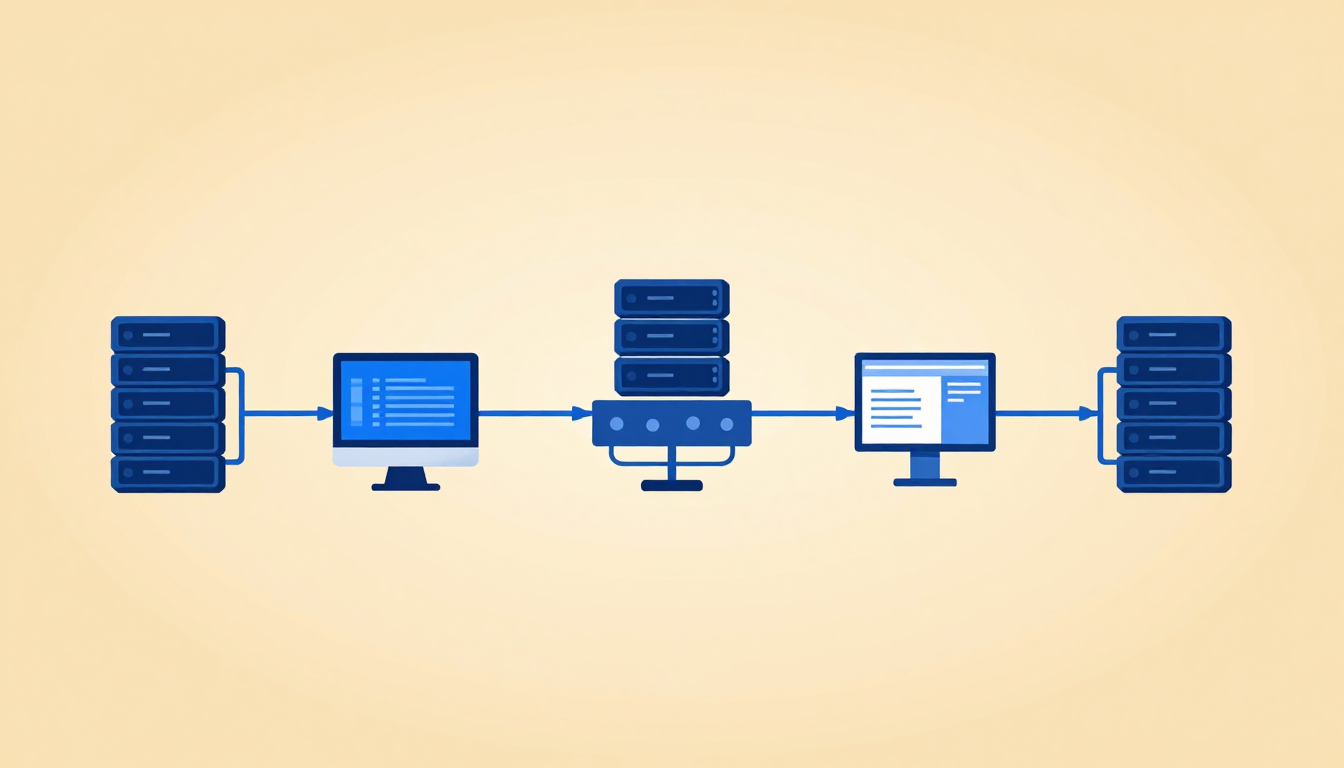
Shim: The Tiny Bootloader That Saved Linux Inside Microsoft's Secure Boot
The shim bootloader was invented as a cryptographic bridge to extend UEFI Secure Boot to Linux devices and utility software — solving the problem of unsigned kernels in a signed-boot world.

Optimizing AI Infrastructure: How ACRouter Dynamically Allocates Models to Slash Coding Expenditures
An analysis of ACRouter, an open-source framework that routes coding tasks based on compiler and test framework execution feedback, reducing LLM costs by 2.6x.

Phishing Compromises Sensitive Data for 1.4 Million Xsolis Records
A phishing attack on healthcare technology firm Xsolis exposed the sensitive data of nearly 1.4 million individuals, according to recent disclosures regarding a security incident from early 2026.
The Hidden Cost of Free AI Engineers: How Cloud Lock-In Quietly Deepens
Cloud providers deploy embedded engineers to help scale generative AI — but their incentives don’t align with yours. Here’s how forward-deployed engineers quietly increase lock-in, consumption-based billing, and vendor-controlled architecture.
AI Developer Tools, India’s AI Boom, and the Real Value Behind the HCL Datacenter Bet
The AI economy is shifting—not from smarter models, but from smarter infrastructure. That’s where India, HCL, and AI developer tools startups are reshaping the next wave of value.
Beyond POST and GET: Understanding the HTTP QUERY Method
A breakdown of the new HTTP QUERY method, explaining why it was needed to replace misused POST requests for complex searches, and how its inherent idempotency unlocks new possibilities for caching and reliability.