
Blog
Insights, guides, and updates from the ProBackend team.

Why Dogs Send Pee-Mail: The Science of Canine Scent-Marking Behavior
Research shows dogs pee for a variety of reasons beyond simple bladder emptying — from scent-marking territory to social signaling. This article explores the science behind canine peeing patterns, including dry-marking, over-marking, and the "pissing match" phenomenon.

The CEO's AI Delusion: Why Tech Leaders Can't Tell the Hype From Reality
Box CEO Aaron Levie says tech CEOs are 'uniquely prone to AI psychosis' — distant from the last mile of work, they mistake prototype demos for productivity gains. New data on 2026 layoffs, the ClickUp '100x org' experiment, and peer-reviewed research on the AI productivity paradox reveal how far executive belief has outrun evidence.

Why Your Best Strategies Are Secretly Killing Your Future
The tactics that made you successful are now blinding you to threats. Here’s how to spot the trap before it’s too late.
Why Sleep Isn’t Rest: The Brain’s Silent Cleanup Crew
New human PET imaging reveals that sleep deprivation forces measurable synaptic overload—proving sleep isn't relaxation, it's a mandatory cellular reset.
Your Eyes Lie to You in Court — How Deepfakes Exploit the Brain's Trust in What It Sees
AI-generated video and audio are shattering the courtroom assumption that 'seeing is believing.' Psychology explains why our brains are hardwired to trust visual evidence — and how deepfakes turn that evolutionary advantage into a legal vulnerability.
Romanian National Sentenced to 56 Months for Oregon Government Network Intrusion and Data Trafficking
A Romanian national was sentenced to 56 months in federal prison for hacking into an Oregon state government computer network, selling stolen access and personally identifiable information to buyers, and targeting dozens of other U.S. victims in a cybercrime scheme that caused at least $250,000 in losses.
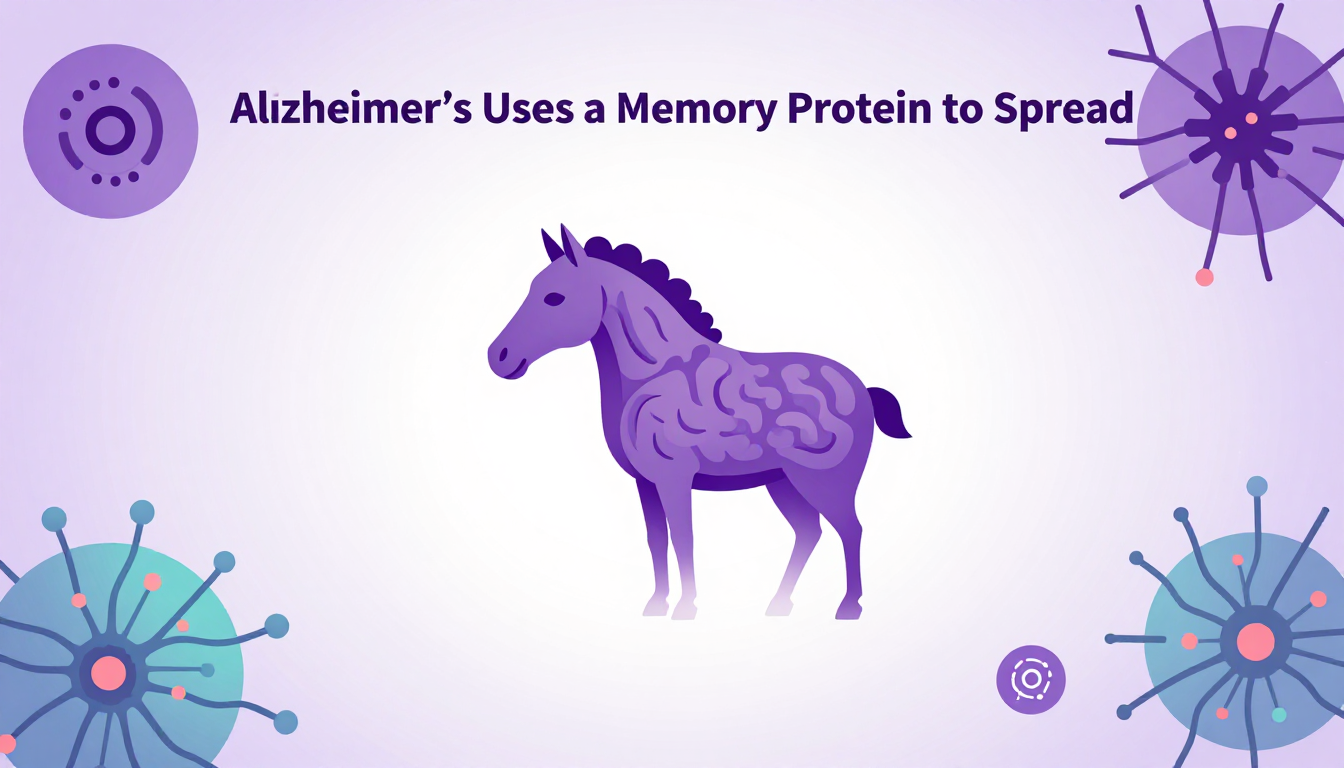
The Trojan Horse in Your Brain: How Alzheimer’s Uses a Memory Protein to Spread
Researchers have uncovered that toxic Tau proteins hijack Arc-containing extracellular vesicles to spread between neurons, presenting a critical 'mid-flight' therapeutic target for slowing Alzheimer's disease progression.

Regulatory Interoperability vs. Data Security: Google Confronts the EU's Open-Access Directives on Android and Search
An analysis of the cybersecurity and privacy concerns raised by Google regarding the European Commission's proposals under the Digital Markets Act to open Android AI permissions and share granular search metrics.

Federal Reserve Standstill and Middle East Hopes Keep Investors on High Alert
Analyzing the transition in investor sentiment as premarket futures pause ahead of critical employment data, a hawkish Federal Reserve stance, and negotiations over Middle East trade routes.

Beyond the Gender Grievance: Deconstructing the 'Boy Crisis' Through Class, Mental Health, and Algorithmic Influence
An investigation into why the 'boy crisis' narrative is a flawed lens that merges class divides, a universal youth mental health crisis, and automated algorithmic pipeline dynamics into a single gender-grievance debate.

Federal Networks Face Tighter Response Windows Under CISA's Revised Risk-Prioritized Directive
A detailed analysis of CISA's Binding Operational Directive (BOD) 26-04, which revamps federal vulnerability patching with accelerated 3-day deadlines based on real-world threat indicators.

Ambani’s AI Revolution: Reliance's Push for a Homegrown AI Ecosystem in India
Mukesh Ambani is positioning Reliance Industries as a national champion in India's AI race, leveraging Jio’s massive reach to embed AI into everyday communication and home services, with an aim to create a sovereign AI stack.