
Neuroscience
The brain, neural systems and cognitive neuroscience.
Your Messy Counter Is Loud: What Clutter Actually Does to Your Brain
A cluttered home doesn't just look bad — it quietly taxes your attention, spikes cortisol in some people more than others, and traps households in a feedback loop with anxiety. What the research actually says.

How Activating the Brain’s Serotonin Center Influences Behavior and Motivation in Mice
Expanded article summarizing a study on optogenetic activation of serotonin neurons in awake mice, showing effects on behavior, motivation, and brain connectivity.
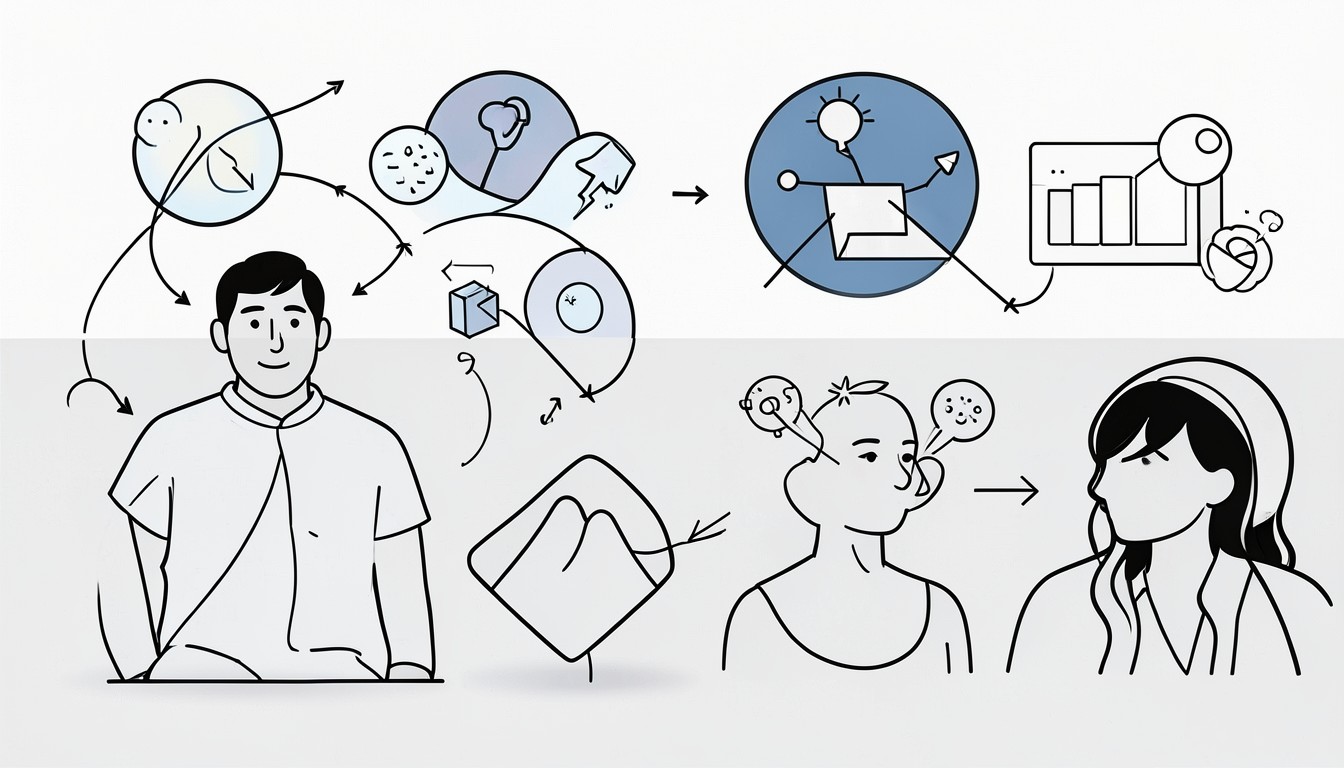
LLMs and Behavioral Mathematics Scale Analysis of Human Decision-Making Texts
A new study combines Large Language Models and behavioral mathematics to analyze human decision-making text data at scale, using fine-tuned LLMs to decode thousands of free-text justifications and validate them against objective choice mathematics.
How Generative AI Reinforces and Amplifies Human Distorted Beliefs
Expanded analysis on how generative AI reinforces and amplifies human distorted beliefs, incorporating distributed cognition theory and insights from Neuroscience News.

How the Brain Secretly Crunches Probabilities to Decide What Matters
Article on the human brain's mathematical probabilistic representation of what it considers important in our surroundings, based on a 2019 Nature Communications study by UPF researchers.

Listening to the Brain: How Sound Can Command Neurons
A neuroscientist's approach to non-invasively controlling neurons using sound waves (ultrasound) instead of light or surgery, using virus-delivered sound-sensitive proteins.
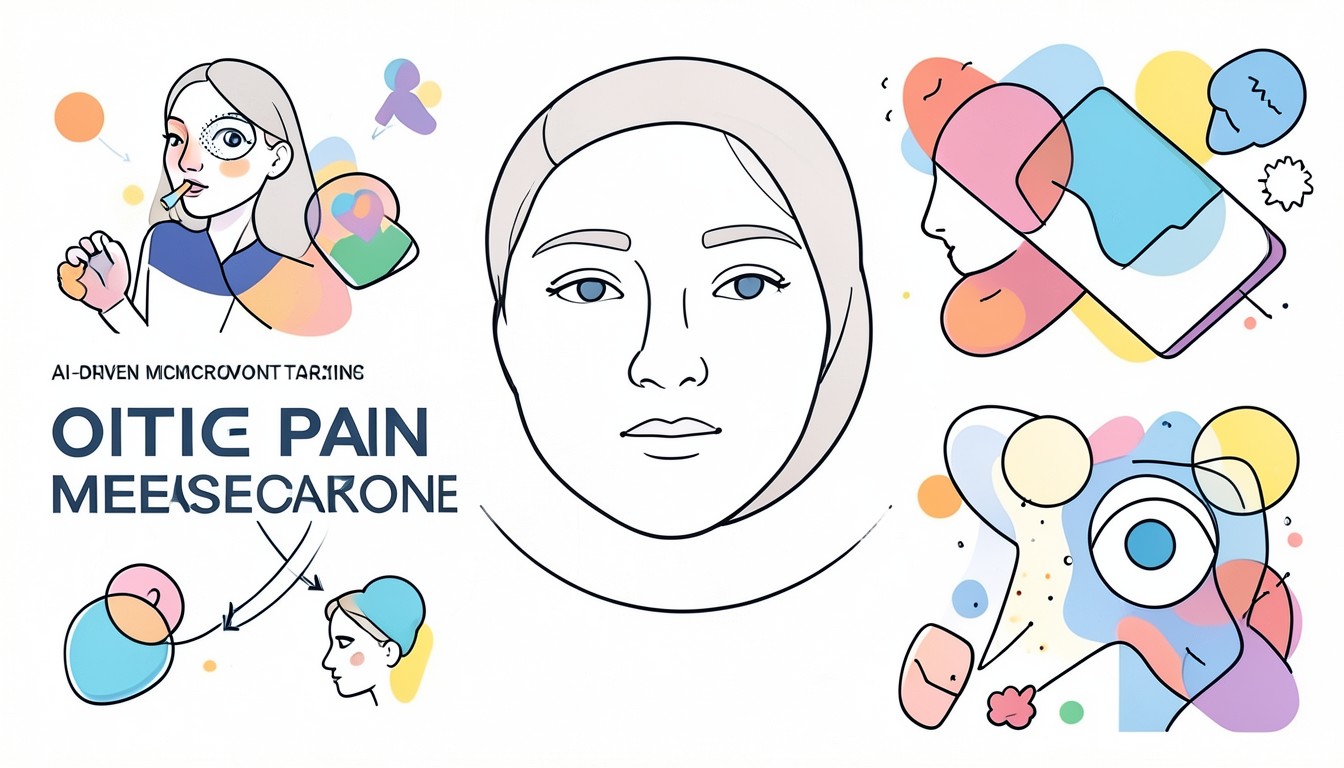
AI-driven facial micromovement tracking offers objective pain measurement beyond subjective scales
A computational neuroscience study from Rutgers University uses AI and high-speed video analysis to quantify human pain by tracking invisible facial micromovement spikes, offering an objective alternative to subjective 1-to-10 pain scales and enabling diagnosis for nonverbal patients.
When AI Becomes a Confidant: Science Explores Human-Attachment Bonds
Neuroscience News feature exploring research on human emotional attachment to AI, including a Japanese study introducing a scale to assess attachment-like bonds with AI.
Teen Stress Rewires Brain Energy Genes, Study Finds
Rat study reveals that excessive stress during adolescence causes persistent changes in prefrontal cortex gene expression tied to mitochondrial bioenergy functions, leading to adult anxiety, reduced sociability, and cognitive impairment.
How Music Literally Becomes Part of You: Neural Resonance Theory Takes Shape
An international study confirms Neural Resonance Theory, showing that music perception arises from brain and body oscillations that sync with rhythm, melody, and harmony — with implications for therapy, AI, and cross‑cultural connection.
How Literacy Reshapes the Human Brain in the Age of AI and Screens
A summary of research showing that literacy is a profound neurological catalyst that rewires memory, attention, executive reasoning, and visual perception — challenging the idea that reading crowds out older brain systems, and instead enhancing face and object recognition. The work also warns that screen reading, audiobooks, and text simplification each provide partial or different benefits, and that over-reliance on AI readability tools may stall neural development in young readers.
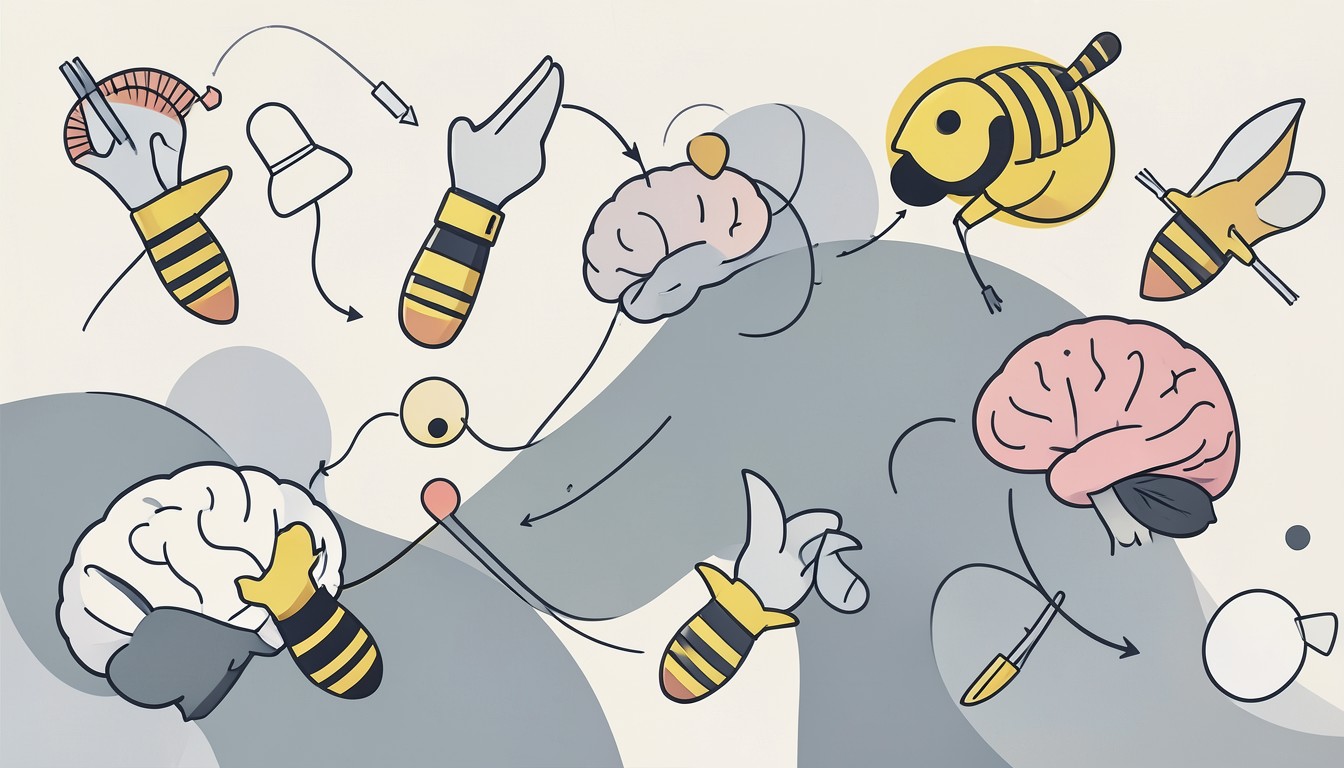
The dsx Gene Programs Honeybee Workers From Brain to Hive Duty
CRISPR edits of the doublesex gene in honeybees change foraging and brood care duration and reveal how dsx wires the mushroom body to produce inherited group-supporting behaviours.