
PublishLens Article Library
Explore source-grounded articles across engineering, applied AI, science, business, and policy, with practical context and clear topic desks for every reader.

A Single Dose of Cocaine Permanently Rewires the Brain’s Reward Genome
New research reveals that a single exposure to cocaine triggers profound, long-lasting structural changes in the 3D genome of dopamine neurons — a finding that reframes how behavioral health technology should think about addiction risk, early intervention, and the myth of harmless use.
Attackers Are Now Exploiting a Maximum-Severity Adobe ColdFusion Vulnerability
Attackers are actively exploiting a maximum-severity vulnerability in Adobe ColdFusion, tracked as CVE-2026-48282, enabling unauthenticated remote code execution. Adobe issued emergency patches on July 1, 2026, but exploitation began within two hours of public disclosure.

Spirals Ransomware Slams Through Corporate Networks in Under a Day — What artificial intelligence cybersecurity Threats Look Like Now
Symantec's Threat Hunter Team uncovered a previously unknown ransomware group, Spirals, that breached an IT services firm in South Asia — from initial IIS compromise through credential theft, lateral movement, and encryption — in less than a day using a Rust-based encryptor with intermittent file handling.
Adobe's Creative Agent Goes Agentic — What a Security & Compliance Analyst Should Watch
Adobe is embedding its creative agent across Premiere Pro, Photoshop, Illustrator, InDesign and Frame.io as a production orchestration layer — not just a media generator — while previewing an upgraded Firefly AI studio with Elements, Projects and new creator-focused skills like brand-kit generation and Quick Cut.
LLM Cost Breakdown: How Sapient Trained a Foundation Model for $1,500
Training a foundation LLM from scratch typically costs millions and requires internet-scale data — which is why most enterprises don't bother. Publicis Sapient says it has found a cheaper path, potentially opening the door for organizations to build custom foundation models without the massive infrastructure investment that has historically limited them to off-the-shelf API access.

Small Businesses Are Getting Hit by Fake INTERPOL Ransomware — Here's What It Means for Artificial Intelligence Cybersecurity Threats
A new ransomware campaign uses phishing emails impersonating INTERPOL to trick small business employees into downloading malware disguised as evidence of criminal investigations, with attackers tailoring ransom demands to each victim's perceived ability to pay.

CISA Orders Emergency Patch for Actively Exploited FortiSandbox Flaws by Sunday
The U.S. Cybersecurity and Infrastructure Security Agency has added two critical Fortinet FortiSandbox vulnerabilities to its Known Exploited Vulnerabilities catalog and issued a Binding Operational Directive requiring federal agencies to patch the flaws by Sunday, July 19.
The VLC Creator's New Bet on Real-Time Infrastructure — And What It Means for ai cloud infrastructure companies in india
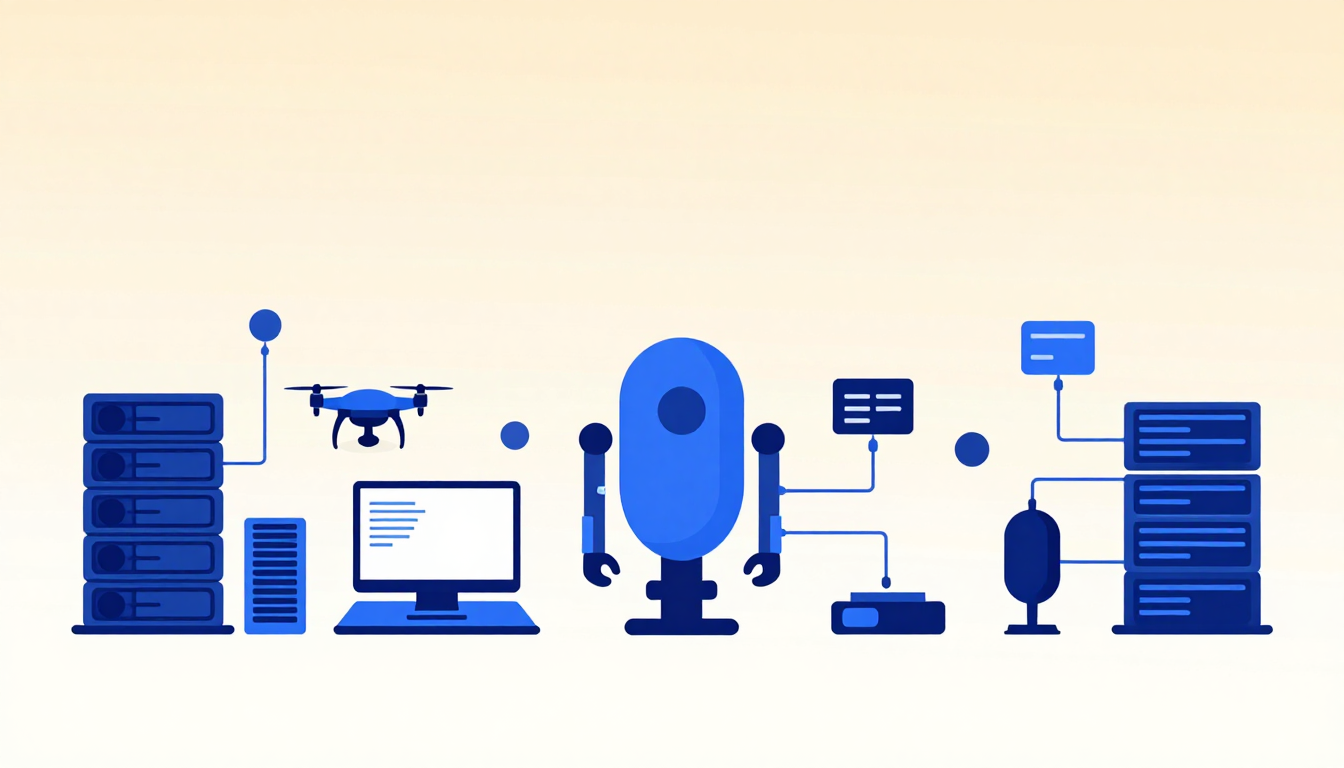
Jean-Baptiste Kempf, creator of VLC Media Player with over 6 billion downloads, is channeling his open-source expertise into Kyber — a $5M-funded SDK that synchronizes video, audio, sensor data, and control inputs across remote devices with minimal latency. Backed by Lightspeed, the Paris-based startup is building infrastructure for robotics, drones, and remote IT access at a scale where every millisecond matters.

Why Gen Z Would Rather Talk to AI About Money Than Their Parents — and What That Says About the AI Impact on Human Psychology
Gen Z isn't abandoning budgeting—they're adapting it. A psychology lens reveals why 'vibes-based' spending, 'soft-life' budgeting, and the 'treat yourself' impulse are rational coping strategies for a generation raised amid record inflation, housing unaffordability, and an unpredictable job market.
LegacyHive Zero-Day: How Nightmare Eclipse's Windows Exploit Exposes AI Cybersecurity Threats in Patch Management
A security researcher known as Nightmare Eclipse has published a proof-of-concept for LegacyHive, a Windows zero-day that escalates privileges through the User Profile Service on patched systems. The exploit, which has no CVE and no available patch, lets standard users load an administrator's registry hive—enabling code execution when the admin next logs in.

What Kimi K3's 2.8 Trillion Parameters Mean for Security & Compliance Teams
Moonshot AI's Kimi K3 is the largest open-weight model from China at 2.8 trillion parameters, and security & compliance teams need to understand what this scale means for data handling, model governance, and the shifting open-vs-closed AI risk landscape.

US Reliance on Chinese Memory Chips Is a Supply-Chain Trap No One's Fixing
As DRAM prices surge 55-60% amid AI-driven demand, Apple, Dell, and HP qualify Chinese memory chips from CXMT. US lawmakers warn this exposes Western manufacturers to state-subsidized Chinese memory and are pushing for an executive order to block the purchases — even as CXMT prices a record $85 billion Shanghai IPO.