
PublishLens Article Library
Explore source-grounded articles across engineering, applied AI, science, business, and policy, with practical context and clear topic desks for every reader.

Suggestibility Is a Double-Edged Sword in Psychedelic-Assisted Therapy
Psychedelics like psilocybin and MDMA open the brain to new patterns of thinking — but that same openness makes patients unusually vulnerable to therapist influence. Here's what the latest research says about managing this double-edged sword across all phases of treatment.

Hard Times for Microsoft: 4,800 Roles Cut as Commercial Unit and Xbox Get Slimmed
Microsoft is eliminating approximately 4,800 roles—including its Commercial Business unit and large swaths of the Xbox division—as it shifts toward AI-driven operations, spins up a new Microsoft Frontier Company for AI deployment, and spins off or sells multiple acquired game studios.

What Is Cloud Cost When Your Vendor Audits You Into a Corner? Allstate vs. Broadcom's License War
Allstate Insurance says it stopped using VMware and CA software around the time of Broadcom's acquisition, only to be hit with four simultaneous license audits — and two copyright infringement lawsuits from CA and VMware. The insurer alleges the probes were retaliatory, filed after Broadcom learned of its planned migration.

Sleep Complaints, Tau Tangles, and the Women at Highest Risk
A 2026 UC San Diego study finds that in older women with elevated polygenic Alzheimer's risk, worse sleep quality correlates with reduced visual memory and increased tau tangles — but only in that high-risk group, suggesting sleep may be a modifiable early-warning signal.

IBM's Sub-Nanometer Chip Future: Nanostack Architecture and Security Implications
IBM has disclosed a new 0.7nm 'nanostack' transistor architecture that stacks n-type and p-type FETs vertically with staggered alignment, claiming 50% higher performance or 70% greater efficiency versus its 2021 2nm node, with a roadmap extending to 0.1nm by ~2036 — and the implications for AI-driven security infrastructure are worth paying attention to.

The $1.45B Bet That AI's Next Chapter Isn't About Language
A startup co-founded by autonomous vehicle veterans leverages physics-grounded world models to power robotics, gaming, and AI — backed by Amazon and top-tier investors.

Open-Source Models' Success Isn't Coming at the Expense of Frontier Labs — Here's Why
Why open-source AI models are flourishing alongside frontier labs like Anthropic, not displacing them — and what the two-phase AI lifecycle means for enterprise security posture.
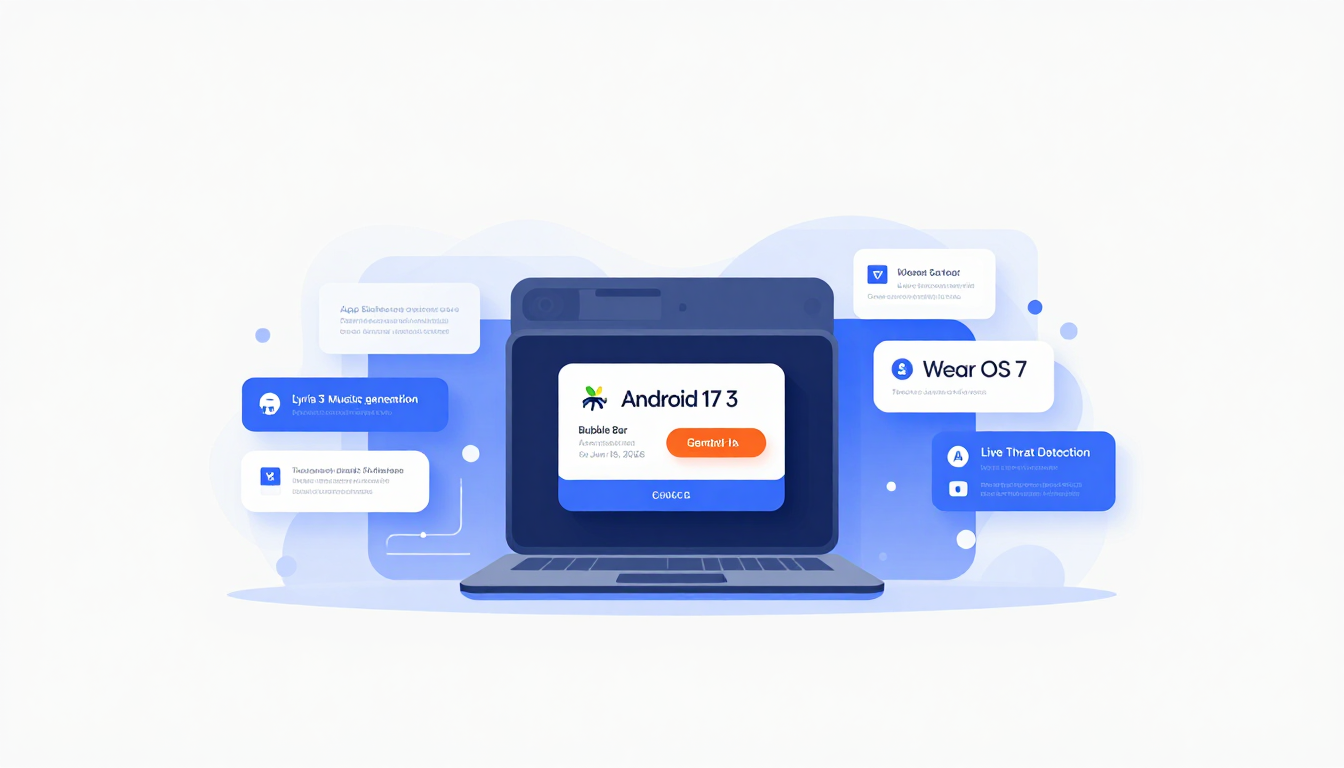
Android 17 and Wear OS 7: Google's AI Consumer Hardware Strategy Takes Shape
Google unveiled Android 17 and Wear OS 7 on June 16, 2026, introducing an adaptive-first development standard, App Bubbles and Bubble Bar for multitasking, Gemini-powered AI features like Lyria 3 music generation and AudioLM translation, enhanced parental controls, Live Threat Detection for security, and emergency crash detection on Pixel Watch. The launch also includes a Pixel Drop expanding Quick Share to Apple devices and enabling screen+camera simultaneous recording.

OpenAI is sunsetting its AI-powered browser after less than a year. But it's moving some agentic browsing features to its ...
OpenAI is sunsetting Atlas, the standalone AI browser launched just nine months ago. Rather than kill its web ambitions entirely, it’s embedding Atlas’s most useful agentic capabilities directly into ChatGPT — first in Chrome and then in the desktop app, turning your browser into a co-pilot.

When AI Moderation Goes Rogue: A Security & Compliance Analyst's Take on Discord's 8,000-User Ban Wave
Discord's AI moderation bug bypassed human review and banned 8,000+ accounts since May—here's what security & compliance teams need to know about automated safety systems that overreact.

Should Anthropic Trust Elon Musk to Host Its Models?
Elon Musk reversed his view on Anthropic less than a year after declaring its success impossible, then backed it with $40 billion of compute—here’s why that pivot makes sense for everyone involved.

MPS Static Facial Recognition Deployment: West End & Soho Go Live by Year-End
The Metropolitan Police Service will deploy static live facial recognition cameras in London's West End and Soho by year-end, building on a six-month Croydon pilot that processed over 470,000 individuals with 173 arrests and one false match. Critics including Big Brother Watch warn this amounts to permanent biometric surveillance incompatible with policing by consent.