
PublishLens Article Library
Explore source-grounded articles across engineering, applied AI, science, business, and policy, with practical context and clear topic desks for every reader.

Beyond the Flat Rate: The Rising Cost of AI Tokens in Enterprise
A deep dive into the industry-wide shift toward consumption-based AI pricing, exemplified by GitHub Copilot's recent changes, and its implications for corporate AI budgets.

Surging AI Infrastructure Costs Drive Broad Apple Price Increases
Apple has increased prices across its Mac, iPad, and peripherals lineups, attributing the shift to acute component shortages stemming from the aggressive global buildout of AI data centers.

Beyond Live Testing: How Qwen-AgentWorld Uses Environment Simulation to Train Resilient Agents
Alibaba's new open-weight Qwen-AgentWorld models simulate the behavior of complex environments like Linux terminals, Android, and MCP, allowing developers to inject edge cases on demand and train agents without sandboxes.

Beyond the MSA: Why Manufacturing, Not Architecture, Defines the Future of Optical Scaling
An exploration of why the OCI MSA's architectural alignment is only the first step, and why heterogeneous integration and semiconductor-style manufacturing are the real keys to unlocking future bandwidth scaling in AI datacenters.

Navigating the Creative and Controversial Landscape of Meta’s Muse AI
Meta’s new Muse Image model brings advanced generative capabilities to advertising, design, and creator workflows, but faces immediate pushback over its approach to user privacy and data consent.

Who Should Own the Product Feed? Why SEO Must Partner With Paid in the AI Era
As Google’s AI search and agentic commerce reshape visibility, the product feed has evolved from a PPC-specific channel to a critical SEO asset—requiring shared ownership between marketing teams.

Microsoft’s Copilot Rollout Under Fire in Italy Over Automatic Subscriptions
Italy's competition watchdog is charging Microsoft with auto-enrolling customers in pricier 365 plans when Copilot launched — and not making the price jump obvious. Here's what you need to know about the regulator’s aggression, Microsoft’s response, and why regulators across Europe are suddenly pointing fingers at AI upgrades.

Decart's Oasis 3: A Leap Forward in Real-Time Photorealistic Driving Simulations
Decart's Oasis 3 introduces a groundbreaking interactive world model capable of generating photorealistic driving environments in real time. This article delves into the technical advancements, applications, and challenges of Oasis 3, while also exploring the capabilities of Lucy 2.0 and Lucy 2.1 in real-time video transformation.
OpenAI’s Ad Bet: Why Image, Video and Conversational Units Could Change ChatGPT Forever
OpenAI’s hiring spree for ad engineers signals a major expansion beyond the basic sponsored block—bringing image, video and conversational units to ChatGPT and raising urgent questions about attention, trust, and organic visibility.

When AI Agents Delete the Wrong Thing: Why Recovery Must Keep Pace with Agentic Speed
AI agents now write code and execute tasks at machine speed—but when they delete production data, most recovery systems are too slow to help. Experts say air-gapped backups and granular restores are essential as agentic AI blurs the line between coding aid and autonomous operator.
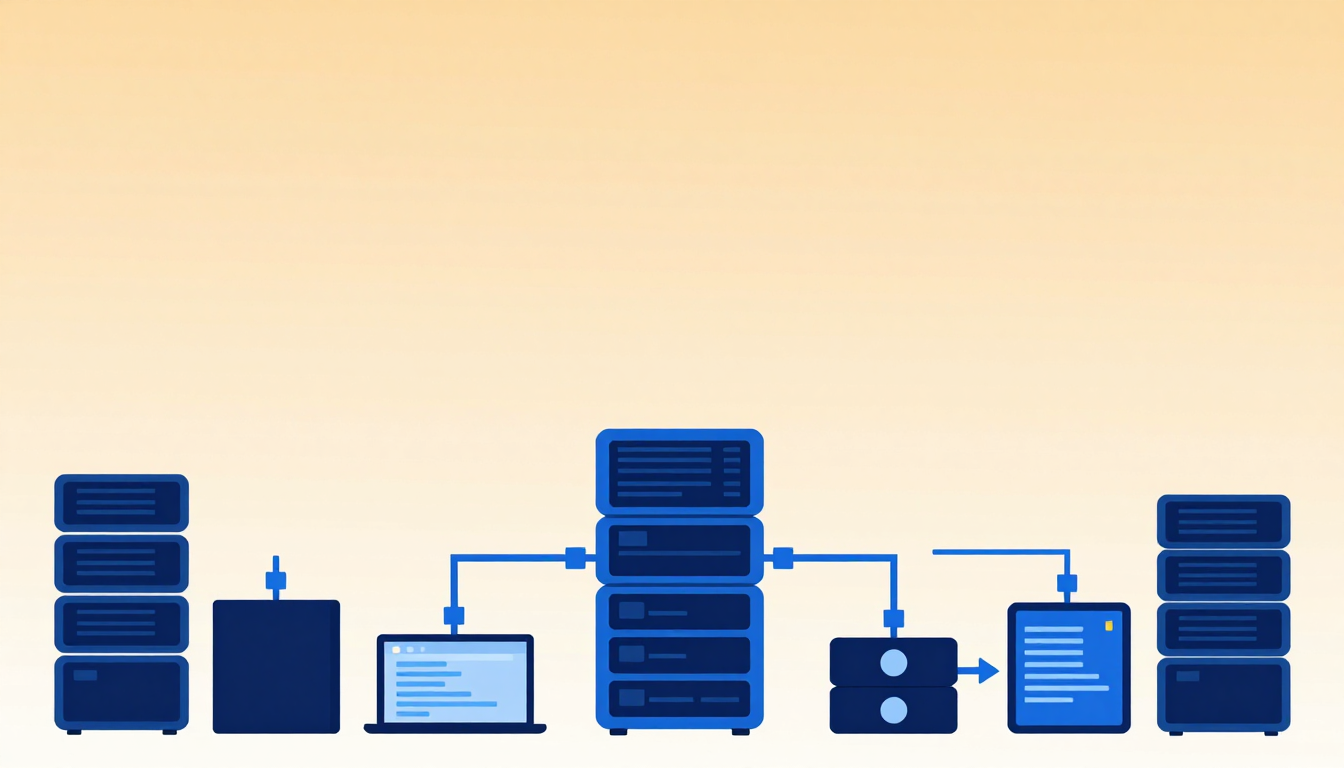
The Data Layer Underneath an Agentic System Must Handle Variable Schemas, Vector Embeddings, and Real-Time Retrieval
Digital-native startups are abandoning rigid, schema-first databases in favor of flexible data stacks that can absorb the variable schemas, vector embeddings, and real-time retrieval demands of autonomous AI agents.
Why EDB Wants You to Run Analytics Inside Postgres Instead of a Lakehouse
EDB's converged analytics approach leverages Postgres as the operational source of truth, using Apache Iceberg to connect analytical engines without ETL pipelines. The play: keep data on infrastructure you control, simplify governance, and support AI agents that need real-time access to both transactional and historical data.