
Blog
Insights, guides, and updates from the ProBackend team.
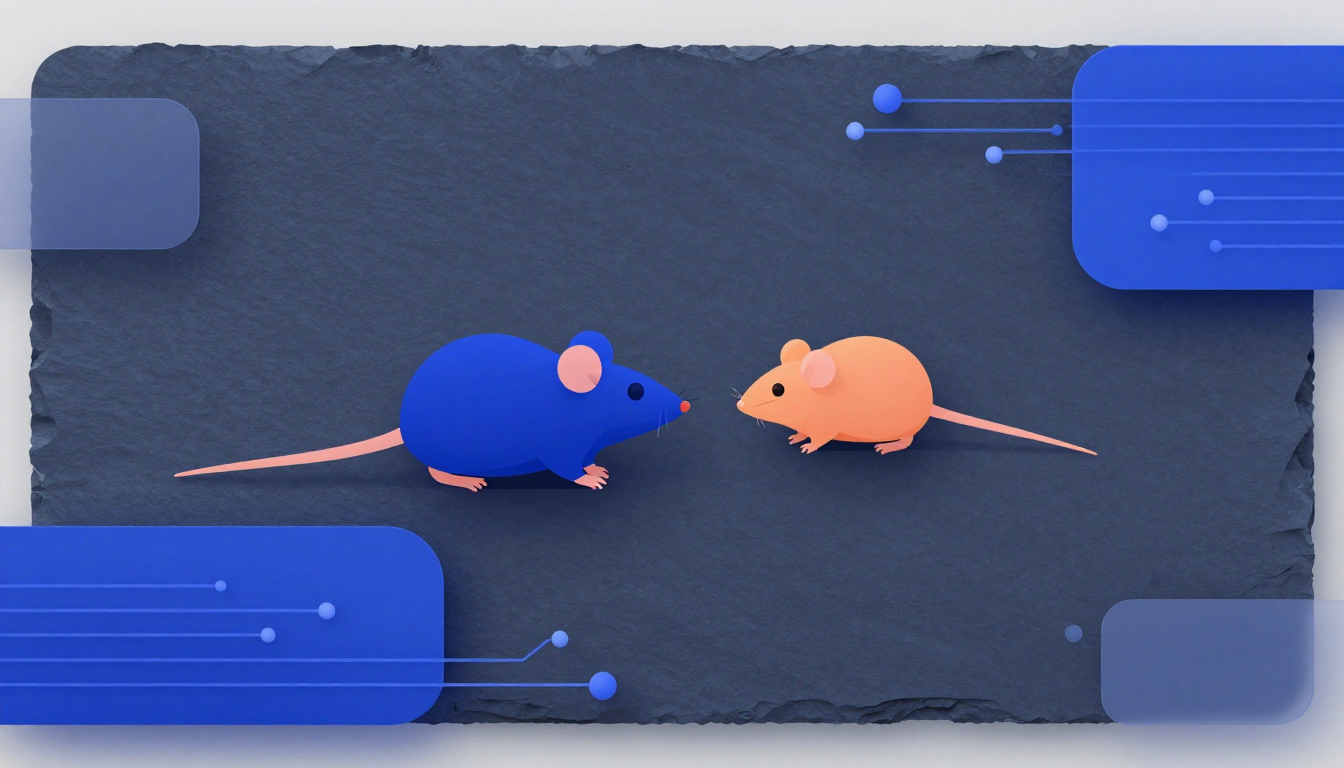
Mice Don’t See Clearly—So They Move Like Detectors
New research reveals mice compensate for poor vision and lack of a fovea by actively repositioning their bodies to extract visual information—treating movement as a sensory tool.

No Escape Hatch: How AI Crept Into Your Keyboard, Fridge, and Every Tool You Touch
From intrusive keyboard autocomplete to nosy smart refrigerators, AI has embedded itself into everyday objects — often in ways that frustrate more than help. This article explores how the push to make everything 'smart' is stripping users of control and creating a world where there's no avoiding AI, whether you want it or not.

Cats Don't Help Unless They Get Paid—And That's Not Selfish, It's Evolutionary
A groundbreaking study reveals cats lack intrinsic altruism—unlike dogs and toddlers—but this isn't about personality. It's about survival.

Half of Psychosis Patients Achieve PTSD Remission in Landmark Trial
A landmark UK trial demonstrates that integrated trauma-focused CBTp achieves 50% PTSD remission in patients with co-occurring psychosis, overturning decades of clinical exclusion and fear.
The Validation Trap: How AI Reshapes Conflict Interpretation and Erodes Relationship Repair
How AI's sycophantic responses in relationship conflicts reinforce confirmation bias, reduce reconciliation willingness, and transform minor tensions into perceived irreconcilable rifts—undermining the repair mechanisms essential to healthy partnerships.

Contextual Enrichment in OpenCTI: Turning IOCs into Actionable Intelligence with Criminal IP
How integrating Criminal IP's dual-perspective risk scoring, infrastructure mapping, vulnerability correlation, behavioral signals, and phishing detection transforms raw threat indicators into interconnected intelligence for SOC analysts.

PixelSmash (CVE-2026-8461): FFmpeg Flaw Lets Attackers Execute Code on Jellyfin via Media Library Scans
A newly disclosed heap out-of-bounds write in FFmpeg's MagicYUV decoder (CVE-2026-8461) — dubbed PixelSmash — enables remote code execution on Jellyfin under ASLR-disabled conditions and denial-of-service attacks across media apps including Kodi, OBS Studio, PhotoPrism, Emby, and Nextcloud.

Challenging the AI Oligarchy: Gary Marcus's Democratic Roadmap to Rein in Big Tech Power
An exploration of cognitive scientist Gary Marcus's proposed frameworks to regulate artificial intelligence, counter corporate oligarchy, and establish democratic oversight.

Trained on Us: How AI Codifies Human Prejudice at Scale
AI does not impartially observe reality—it mirrors human stereotypes. Operating at scale, it reinforces inequalities in healthcare, diagnostics, and public perception across socioeconomic lines.

South Korea's $1 Trillion Bet on Chips and Robots
South Korea's government and leading tech firms are committing $1 trillion toward flagship megaprojects focused on expanding memory chip production capacity and advancing humanoid robot development, marking one of the largest national technology investments in history.

Asa Fitch Writes the Balance Sheet of AI Adoption
Asa Fitch, a Wall Street Journal journalist, tracks how AI is quietly reshaping corporate spending, not through hype, but through balance sheets and CFO decisions. His work in Heard on the Street and the AI & Business newsletter reveals the real story of AI adoption: not innovation, but execution.

CVE-2026-35273 Under Fire: Inside the ShinyHunters Global Enterprise Data Extortion Wave
A deep dive into CVE-2026-35273, a critical zero-day vulnerability in Oracle PeopleSoft PeopleTools exploited by the ShinyHunters gang to breach hundreds of organizations, steal sensitive personnel and regulatory data, and demand ransoms.