
Blog
Insights, guides, and updates from the ProBackend team.

Google’s Liz Reid’s Personalization Promise: Hopeful, Incomplete, and Worth Testing
Google's Liz Reid argues personalized search and preferred sources help niche publishers surface—though without public data, small sites must test claims on their own traffic before trusting the lift.

Java’s First Real Shot at Value Types: Project Valhalla Enters JDK 28
Oracle engineer Lois Foltan has confirmed Java’s Project Valhalla — specifically JEP 401 for value classes and objects — is finally landing in the OpenJDK mainline, targeting JDK 28. Don’t expect it to be production-ready yet: this is just the preview ramp, and value semantics will still need patience.
FuriosaAI Takes Lisbon — And the Power Math Actually Makes Sense
FuriosaAI's RNGD accelerators are now live at Equinix's Lisbon datacenter. For a South Korean chip startup that's been quietly building power-efficient inference silicon since 2017, the European debut is less about offloading inventory and more about betting on sovereign AI compute — with a chip that sips 180W while delivering serious FP8 throughput.

OpenAI's GPT-5.5 Instant Is Learning to Read Between the Lines
OpenAI is shifting from models requiring heavy hand-holding to systems that better infer user goals, as seen in the updated GPT-5.5 Instant model's improved intent understanding and constraint handling.
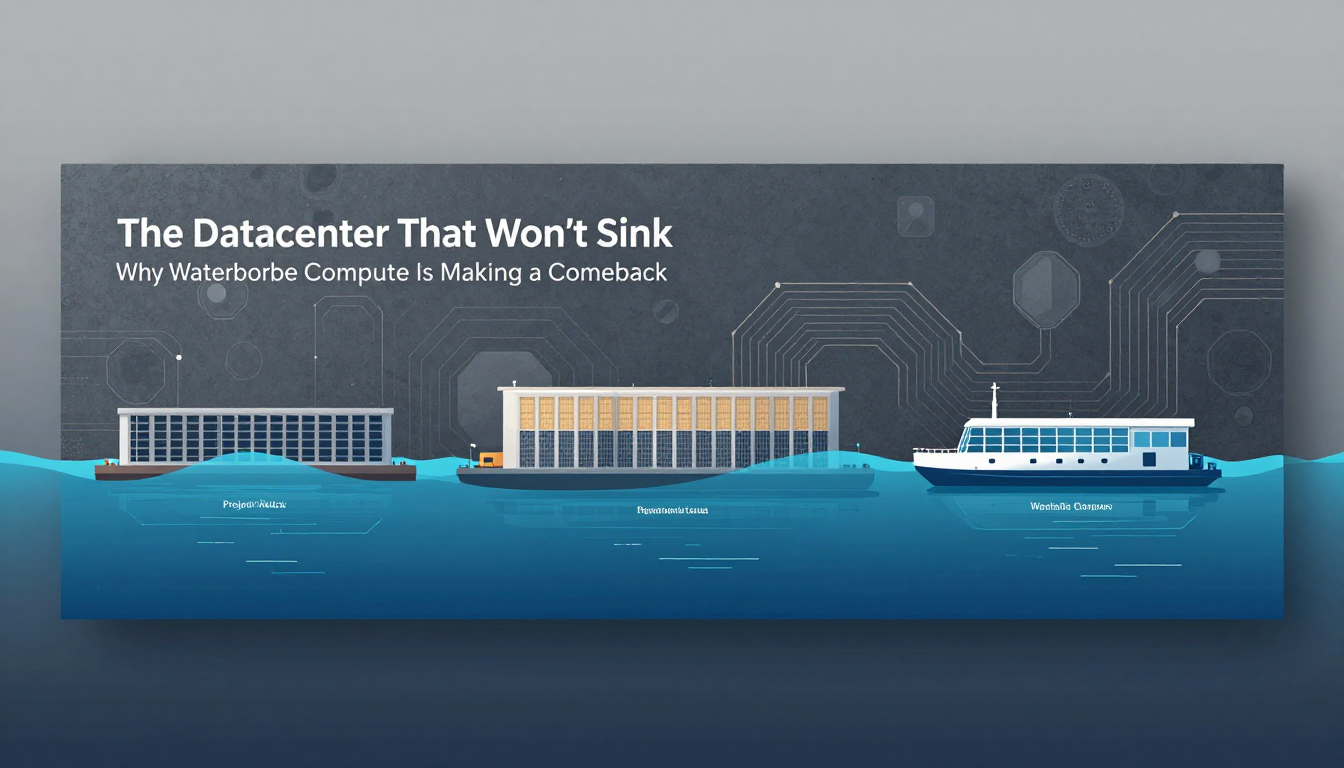
The Datacenter That Won't Sink: Why Waterborne Compute Is Making a Comeback
From China's offshore wind-powered underwater facility to Microsoft's surprisingly low-failure Project Natick, from Nautilus Data's operational barges to Panthalassa's wave-powered deep-ocean structures — waterborne datacenters are no longer a novelty. Here's the full landscape of why operators are dipping back into the water, what actually works, and where the hard limits lie.
Cloud Repatriation: The Shift from Hyperscale Cloud to Dedicated Infrastructure
Explore the driving forces behind cloud repatriation, including cost, performance, compliance, control, and portability pressures, and understand why enterprises are moving workloads from hyperscale cloud to dedicated infrastructure.

The $1,500 Foundation Model: Sapient’s HRM-Text Evades the Transformer Tax
Researchers at Sapient developed HRM-Text, a Hierarchical Recurrent Model that replaces standard Transformers with a highly sample-efficient architecture, enabling 1B-parameter foundation model training for approximately $1,500.

Anthropic's Fable 5 Is So Paranoid About Safety It Won't Say Hello Back
Anthropic's Claude Fable 5 model is triggering safety classifiers on innocuous prompts like "Hello" and flagging the word "cancer" as a biosecurity risk. The company has admitted the safeguards are too stringent and is scrambling to fix them — but the real story is what this reveals about AI safety theater.

Google AI Mode Now Surfaces Recipe Links at Top of Responses with Creator Attribution
Google's June 30, 2026 update to AI Mode places prominent recipe site links at the top of relevant responses, displaying creator names, ratings, and ingredient counts — a response to publisher feedback on content attribution in AI-generated summaries.

Sakana AI's Data Consent Pledge: What It Means for Enterprise AI Adoption
Sakana AI commits to not using customer data or inputs for model training or fine-tuning unless clients provide explicit opt-in consent, establishing a responsible AI data governance policy.

How Google Counts Impressions in Search Console's AI Report — A Link-Centric System
John Mueller clarifies that impressions in Google’s Search Console AI report only register when a direct link to your page appears — user-activated links count once activated.

MongoDB's Native Reranking Cuts the Orchestration Tax on AI Retrieval
MongoDB embeds reranking directly into Atlas, eliminating the separate services and retry logic that typically slow down AI retrieval. The move could lower inference costs, but CIOs should weigh vendor lock-in risks before committing.