
Neuroscience
The brain, neural systems and cognitive neuroscience.
Empowering the Neurodivergent Mind: A Practical Approach to ADHD Therapy
This guide explores the neuroaffirming approach to therapy for ADHD, integrating practical tools from Cognitive Behavioural Therapy (CBT) and Acceptance and Commitment Therapy (ACT) to support children, adolescents, and adults in building a fulfilling, value-aligned life.
The Ancient Blueprint: How Lamprey Brains Reveal 450-Million-Year-Old Vertebrate Intelligence
Scientists have constructed the first comprehensive 3D single-cell atlas of a lamprey brain, uncovering that the common ancestor of all vertebrates possessed a sophisticated molecularly organized brain over 450 million years ago, with conserved gene-expression patterns strikingly similar to modern mammals.
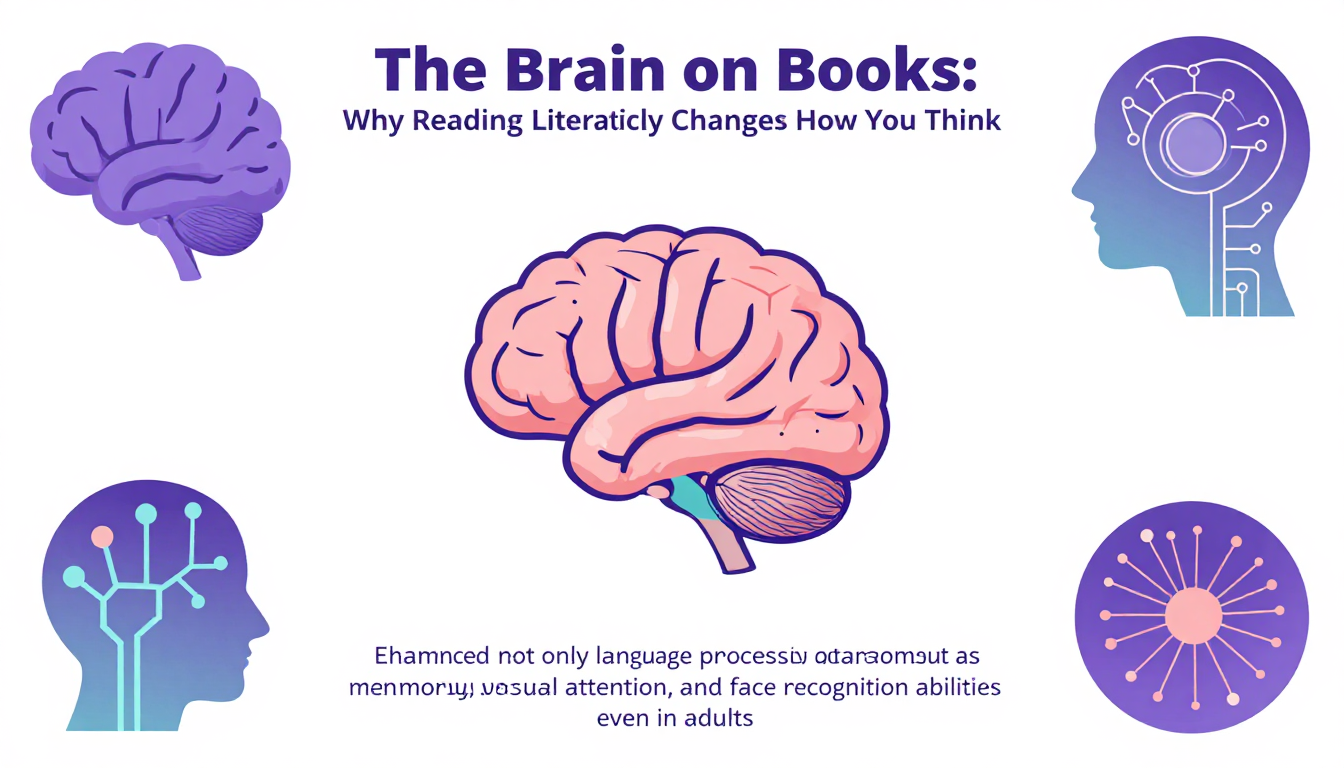
The Brain on Books: Why Reading Literally Changes How You Think
A groundbreaking neuroscientific study demonstrates that learning to read fundamentally rewires the human brain, enhancing not only language processing but also memory, visual attention, and face recognition abilities — even in adults.
Your Brain Ignores Insults to Keep You Focused
Discover how your unconscious mind acts as a gatekeeper, filtering out negative speech during deep focus. This Hebrew University study challenges our assumptions about emotional perception and explains the cognitive mechanisms behind focus and resilience. Read related articles on The Hidden Cost of AI Optimization and The Molecular Roots of Hyperarousal.
Primitive Brainstem Circuit Functions as Foundational Attention Engine
A detailed exploration of the newly discovered brainstem PLTi attention circuit and its implications for understanding ADHD and autism.
Brain's Master Clock Keeps Sensory Predictions in Sync as Bodies Change
A new study identifies the MCA nucleus as a central timing hub that recalibrates sensory predictions across hormonal, developmental, and evolutionary timescales in weakly electric fish.
How a Neural Merry-Go-Round Powers the Brain's Internal Clock
New research reveals rotating spiral brain waves that propagate across cortical networks, serving as a biological clock that coordinates sensation and action in space and time.

Beyond Retrieval: How LLMs Navigate Meaning Through Latent Association
Large Language Models do not simply look up information; they operate by navigating complex, probabilistic networks of meaning, creating a digital reflection of human associative thought.
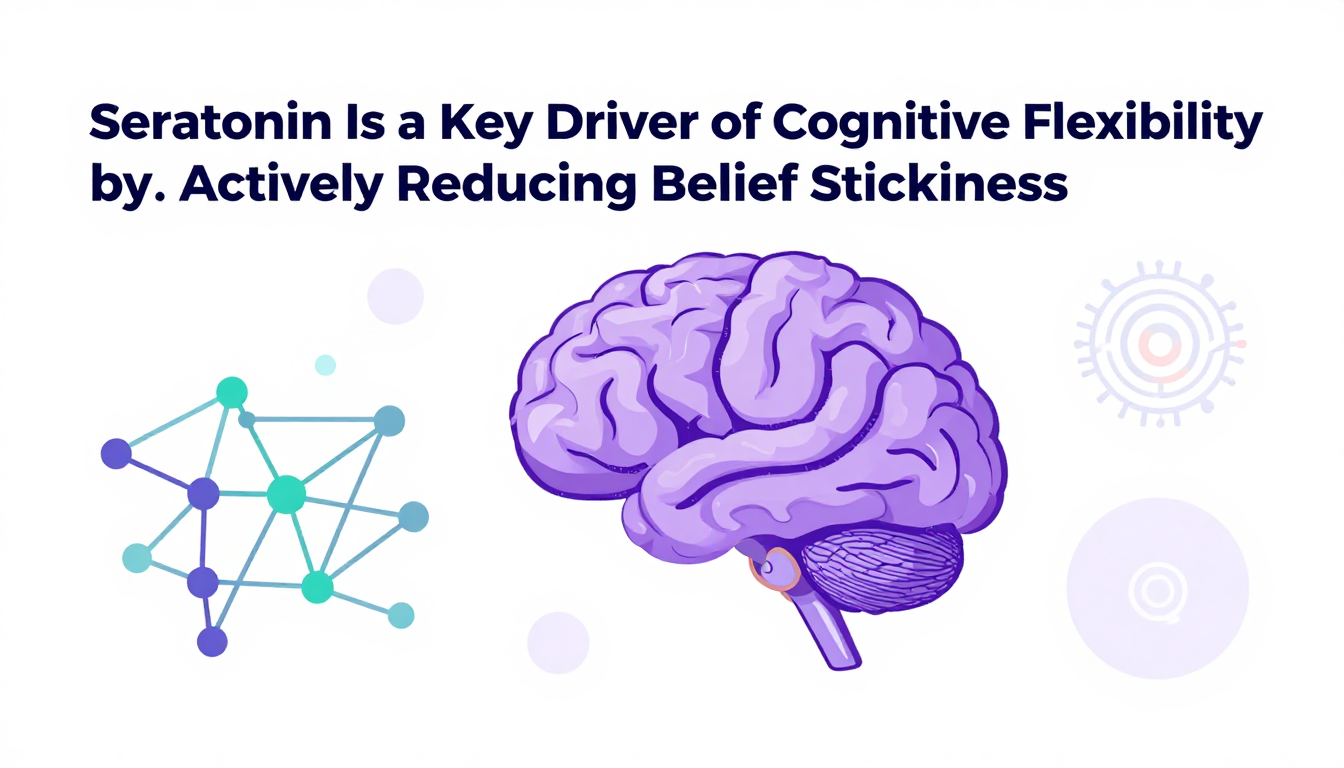
How Serotonin Helps the Brain Update Its Beliefs — And What That Means for OCD Treatment
A new computational psychiatry study reveals that serotonin directly reduces 'belief stickiness,' the cognitive failure to abandon outdated ideas despite new evidence. The findings reframe OCD as a state-inference breakdown rather than a habit disorder and suggest that pairing SSRI medication with psychotherapy in the same session could dramatically improve treatment outcomes.
Older Adults Face Major Brain Health Knowledge Gap, Failing to Realize Everyday Habits Reduce Dementia Risk
A new University of Michigan poll reveals that while nearly all adults 50+ prioritize brain health, fewer than half know everyday lifestyle modifications can actively reduce dementia risk. National data from the Alzheimer's Association shows 9 in 10 Americans value brain health but only 1 in 10 know how to protect it. Only 36% engage in daily physical activity, and just 23% have discussed brain health with healthcare providers.
The Brain's Memory Switchboard: How Reused Circuits Keep Learning Alive Without Overwriting the Past
How the hippocampus uses a switchboard of reused neurons—firing in divergent patterns for incoming and outgoing memory traffic—to solve the decades-old puzzle of plasticity versus stability in learning.
How Serotonin Helps the Brain Let Go of Obsessive Thoughts
A new study reveals that serotonin directly reduces 'belief stickiness'—the cognitive failure to abandon outdated ideas despite contradicting evidence—offering a biological explanation for why OCD patients struggle to update their mental models and suggesting new timing strategies for combining medication with therapy.